Most homes have a short list of small drywall repair jobs that nobody has gotten around to. A doorknob hole behind the bedroom door. A few nail pops in the hallway. A dent in a corner bead, a hairline crack over a door, a patch left behind by an old TV mount. Each one feels too small to call anyone about.
Together, they're a real job, and a good one to hand to a drywall pro in a single visit.
Why Small Drywall Repair Jobs Pile Up
Nobody schedules a contractor for one nail pop. So it waits. Then a doorknob goes through the wall, and that waits too. After a couple of years, you have six or eight little problems and a vague feeling that the house looks tired.
Small repairs go faster when they're done together. Our crew sets up once, mixes compound once, and works through the whole list room by room. You get one appointment instead of eight, and the finished walls match each other.
If you're not sure whether something on your list is cosmetic or a sign of a bigger issue, our guide to the signs your drywall needs repair can help you sort it out.
What Counts as a Small Drywall Repair
Here's the kind of list we see most often on a drywall repair call in Vancouver, WA and the towns around it:
- A doorknob hole from a door swung too hard
- Nail pops, where a fastener has pushed a bump through the paint
- A dented or chipped corner bead on an outside corner
- A hairline crack over a door or window
- Loose or peeling tape along a seam
- Patches left by an old TV mount or wall shelf
- Scuffs, stains, and marks that paint alone won't cover
Every item on that list is something we repair. A few are quick. A few take several coats and some drying time. All of them go faster when we can see them together.
Walk the House and Make Your List
Pick a time with good daylight and walk through every room, including the closets, the garage, and the stairwell. Look at the walls from a few feet back, then look again along the surface with a flashlight held at a low angle. Side light shows bumps, ridges, and cracks that flat light hides.
Don't forget the ceilings. Cracks and stains up there are easy to miss until the light changes. If a ceiling crack is long, wide, or runs along a seam, read our post on ceiling cracks and truss uplift before you decide it's minor.
Write down each spot by room and location. "Hallway, left of bathroom door, three nail pops" is a perfect entry.
Mark and Photograph Every Spot
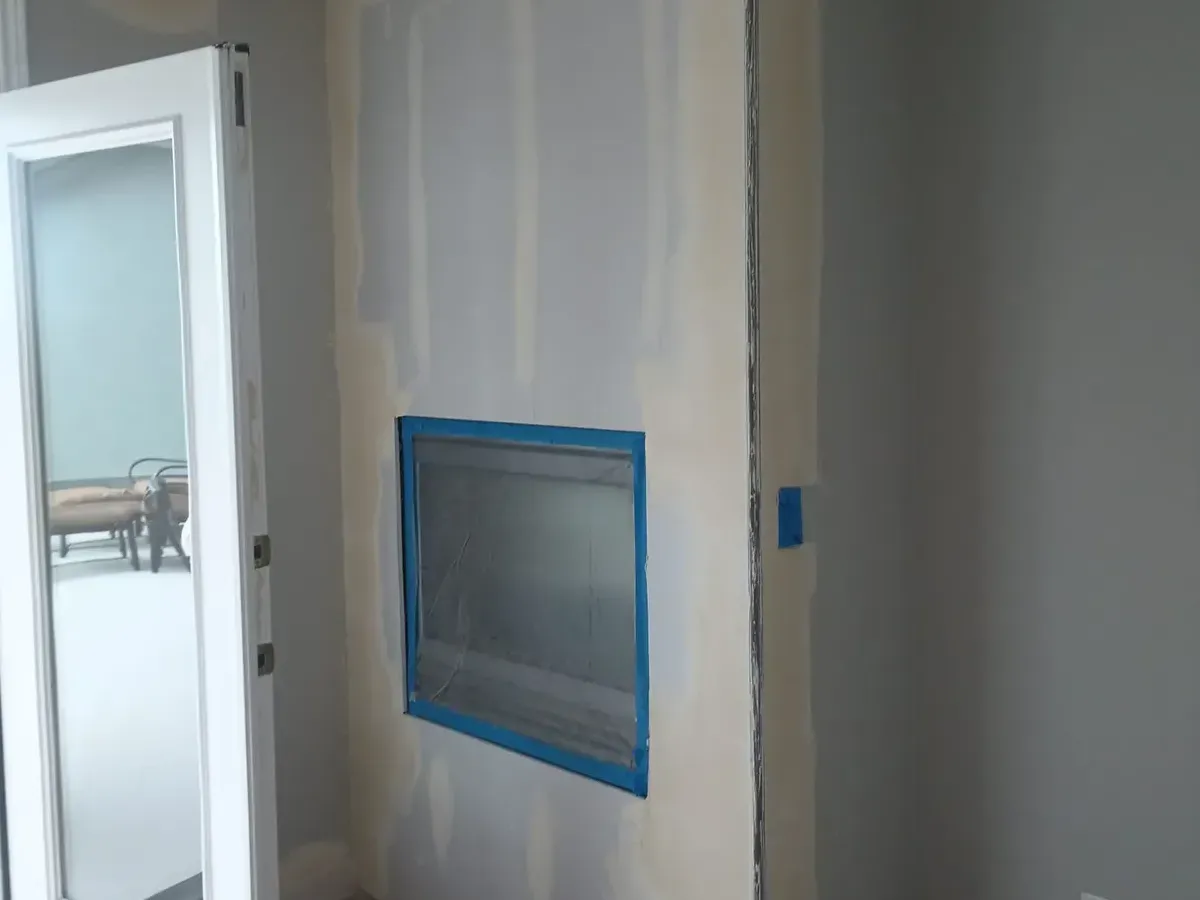
Once the list is done, put a small piece of painter's tape next to each spot. Blue tape peels off clean and won't hurt your paint. It also means nothing gets missed on the day, and nobody has to guess which of the four dents in the hallway you meant.
Then take two photos of each spot. One close up, and one from across the room so we can see where it sits. Add the room name to each photo or keep them in order.
Send the photos with your list when you contact us. It helps our crew plan materials and time before anyone drives out, and it makes the estimate conversation much shorter.
What We Need to Know Before the Visit
A few details change how we plan a small drywall repair visit:
- What your walls and ceilings look like, such as smooth, knockdown, or orange peel
- Whether the paint is flat, eggshell, or something glossier, and if you have leftover paint
- Whether any stain is fresh, still damp, or has come back after painting
- Which rooms we can reach easily, and where furniture needs to be moved
A stain that keeps returning means water is still getting in. That's a plumbing or roofing question first, and we work alongside those trades. We fix the drywall once the source is dealt with, which keeps the repair from failing later.
Why Texture and Paint Are the Hard Part of a Small Drywall Repair
Filling a hole is simple. Making it vanish is the skill. Your eye catches a repair when the texture is a little too flat, a little too heavy, or the sheen of the paint doesn't match the wall around it.
Matching a texture by hand means reading the pattern on your wall and reproducing it, then blending the edges so there's no visible border. We cover how that works in our post on matching drywall texture after a repair, and our hand texture service handles the more custom patterns.
Paint is the other half. A patch that looks fine in the compound can flash through the paint if the primer step is skipped. Our guide to a drywall patch showing through paint explains why, and our painting crew can prime and touch up the repaired spots.
When a Drywall Pro Beats a General Handyman
A good handyman is a great call for plenty of home jobs. Hanging a shelf, swapping a fixture, fixing a door. Many handymen can fill a nail hole without trouble, and for one tiny dent that might be all you need.
A drywall repair handyman and a drywall pro start to differ when the list grows or the finish matters. Drywall is our trade, so these are the situations where we'd suggest calling us:
- Your walls or ceiling have a texture that has to match
- A patch needs several coats of compound with drying time between each
- The repair is on a ceiling, where light shows every flaw
- You're repainting, selling, or hosting and the finish has to be clean
How a Multi-Repair Visit Runs, and Why It Takes More Than One Trip
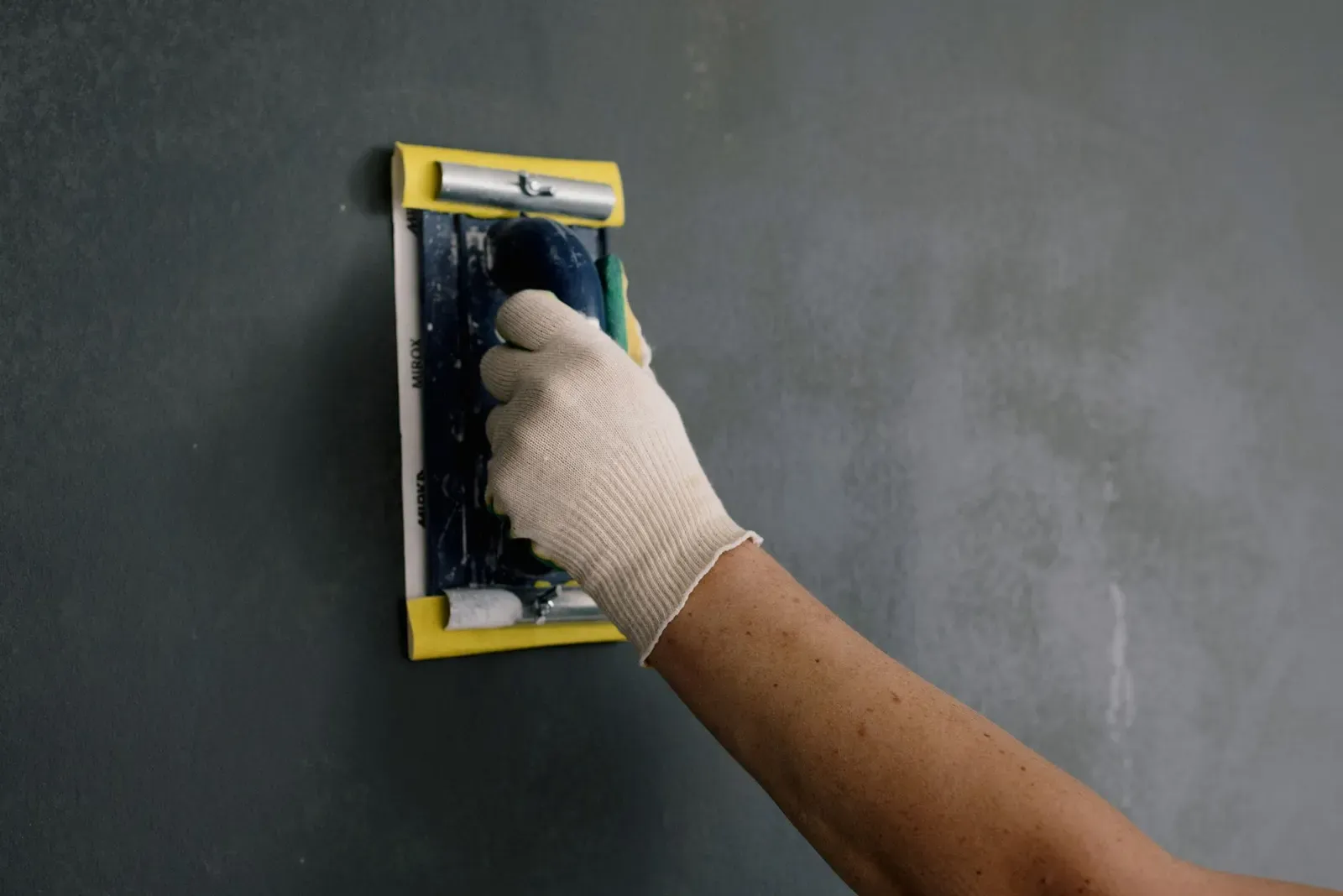
Joint compound dries slowly, and a patch needs more than one layer. We apply a coat, let it dry, sand, and apply another. Texture and primer come after that. Rushing the drying leads to cracks and shrinking later, so you can expect our crew to return for the later steps.
On the first visit, we protect your floors and furniture, open up each repair, and apply the first coats across the whole list. We come back for the finish coats, texture, and sanding. Paint touch-up comes last.
Our post on how long drywall repair takes goes through the timeline in more detail. For a plain hole, see how to patch a hole in drywall.
Good Times to Schedule Small Repairs
A few moments make bundling especially worthwhile:
- Before painting a room, so the new paint covers the fixes in one go
- Before listing your house, when buyers notice every dent and crack
- After a move-out, when furniture and shelves leave marks behind
- Before holiday guests arrive, when the hallway and living room are on display
Reaching out a few weeks ahead gives us room to fit in the return trips. If you're also thinking about how the job gets priced, our post on what affects a drywall repair quote explains what we look at.
Small Drywall Repair in Vancouver, WA and Clark County
If you've got a list sitting in your head, we'd be glad to help you turn it into one tidy job. AvilaCo Drywall repairs small and large drywall problems for homeowners in Vancouver, WA, Camas, Battle Ground, Ridgefield, and across Clark County.
Send us your photos and your list, and we'll tell you honestly what's a quick fix and what needs more. Whichever contractor you choose, Washington L&I offers a contractor verification tool where you can look a business up by name, license, or UBI number.
Contact AvilaCo Drywall for a free estimate.
Common Questions
Is a Small Drywall Repair Worth Calling a Drywall Contractor For?
Yes, especially when you have several. Bundling them into one visit saves setup time, and a drywall pro can match your texture and finish so the repairs disappear. One tiny nail hole you can handle yourself. A list of six is a good job for us.
Can a Drywall Repair Handyman Do the Same Work?
For a simple fill, often yes. When a repair needs texture matching, multiple coats with drying time, or work on a ceiling, a drywall specialist usually gets a cleaner result. Both have a place, and we're happy to tell you which one fits your list.
How Do I Find Drywall Repair Near Me?
Look for a contractor that works in your town and shows photos of repairs like yours. Check them in the Washington L&I verification tool, then send photos of your list for a quick read. We serve Vancouver, WA, Camas, Battle Ground, Ridgefield, Washougal, and Hazel Dell.
Why Does a Small Repair Need More Than One Visit?
Joint compound has to dry between coats, and texture and primer come after that. Skipping the drying time causes cracks and visible patches. We plan the return trips up front so you know the schedule before we start.
What Should I Do Before the Crew Arrives?
Mark each spot with painter's tape, take photos, and clear the area around the walls. Move small furniture and decor. Our crew protects floors and larger pieces, and we'll ask about your paint color and sheen so the touch-up matches.