Ceiling cracks in winter that close again by June
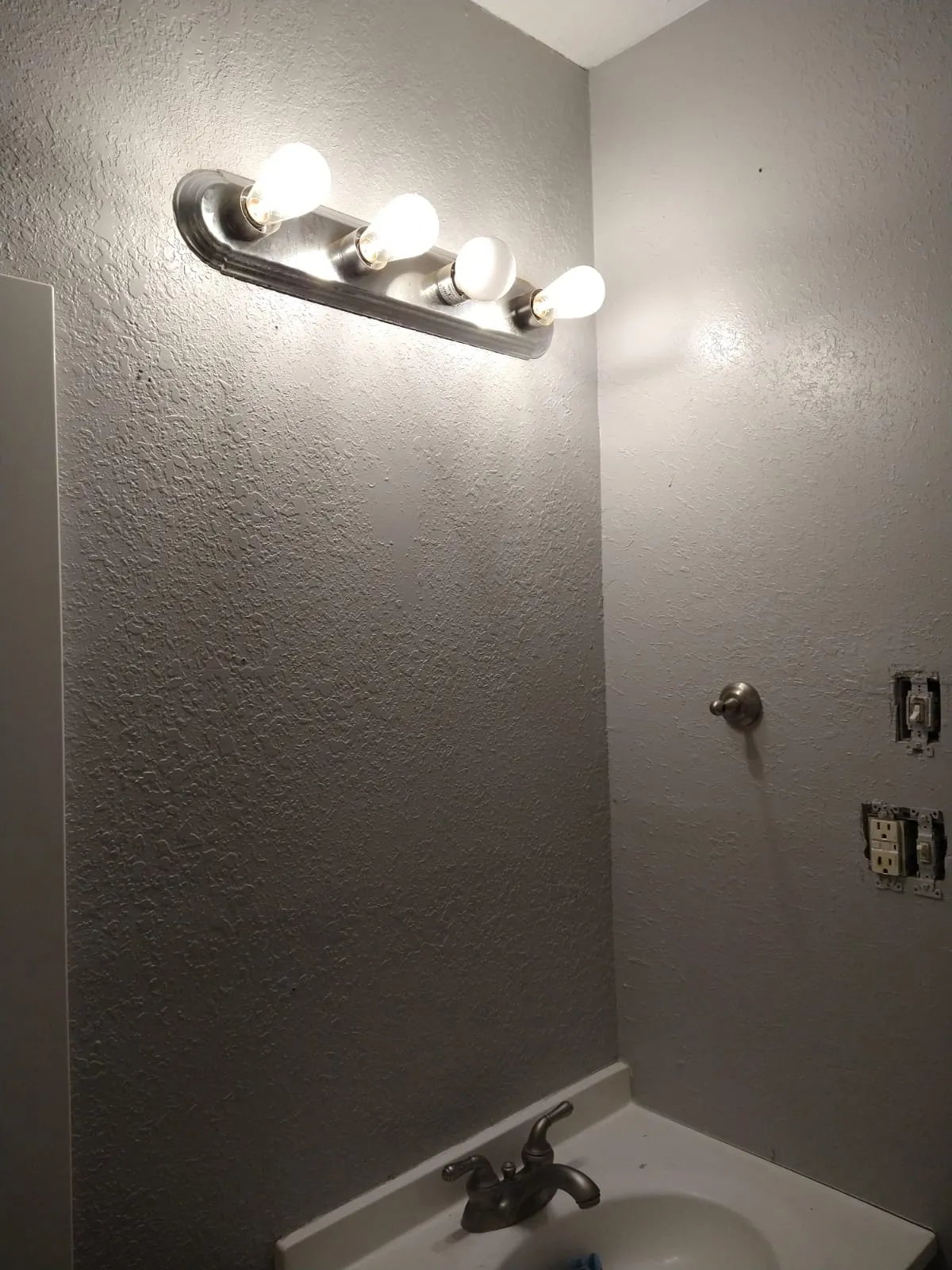
A gap between wall and ceiling that opens in November and disappears by June is truss uplift. It's seasonal movement in your roof trusses, it happens in thousands of Clark County homes every heating season, and your foundation is fine. The crack runs horizontally along the top of an interior wall, it's usually a quarter inch to half an inch wide, and it comes back in the exact same place year after year.
We get the call in December and January, and the homeowner is usually already worried. The internet told them a ceiling crack means the house is settling. Foundation companies buy ads against that fear for a reason. But a crack between wall and ceiling that heals itself every spring isn't settlement. Settlement doesn't reverse.
Almost every subdivision built in Clark County since the 1980s was framed with roof trusses instead of stick-built rafters. Trusses go up fast, they span farther, and they're what you have over your head in Battle Ground, Ridgefield, Felida, and most of east Vancouver, Washington. Truss framing is also the reason this particular crack exists at all.
What truss uplift actually is
A roof truss is a triangle. The bottom chord is the horizontal member that runs the full width of the house and carries your ceiling drywall. The upper chords form the slope of the roof, and web members tie the whole thing together. All of it is dimensional lumber, and lumber changes size when its moisture content changes.
In winter, those two halves of the truss live in completely different environments. The bottom chord is buried in attic insulation, sitting right above your warm, heated, dry living space. It loses moisture and shrinks slightly. The upper chords are up in a vented attic that's cold and damp all winter in southwest Washington, so they pick up moisture and grow slightly.
Shorter on the bottom, longer on top. The truss bows upward in the middle like a very slow archer's bow. The ends stay put because they're bearing on your exterior walls, but the center of that bottom chord lifts, and your ceiling drywall lifts with it.
The truss bears directly on the top plate. It carries roof load down through that wall, so the truss end can't lift off it. The ceiling corner stays tight all year.
The truss spans right over the top of them and carries no load there. Nothing pins the bottom chord down. When the truss arches, the ceiling rises and the wall stays where it is. That's your gap.
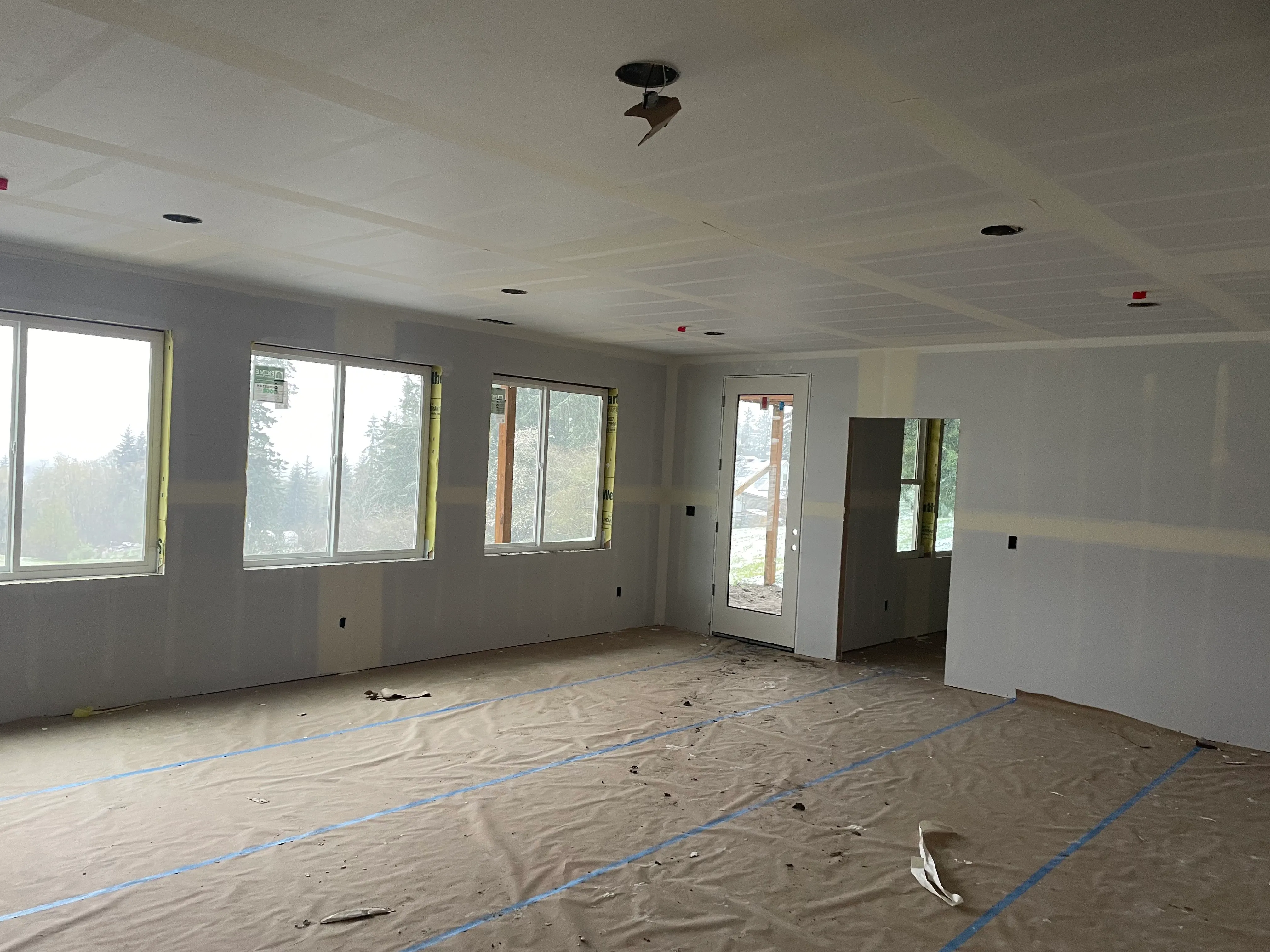
That's the whole diagnosis right there. Walk the house and look at where the crack is. Truss uplift picks the hallway walls, the closet walls, the wall between two bedrooms. The living room exterior wall with the big window is tight as ever.
Is a ceiling crack a foundation problem? How to tell
Truss uplift and foundation movement leave different fingerprints, and you can tell them apart yourself in about ten minutes. Foundation problems are progressive, they show up in more than one system, and they never reverse. Truss uplift is seasonal, it's confined to one line, and it undoes itself.
Signs that point to truss uplift:
- The crack is horizontal and runs along the wall-ceiling line
- It only appears on interior partition walls
- It opens in cold weather and closes in late spring
- It comes back in the same place, the same width, every year
- Doors, windows, floors, and trim are all behaving normally
Signs that mean you should call a structural engineer instead of a drywall crew:
- Doors and windows that stop latching or start sticking and never recover
- Stair-step cracks in brick, block, or the foundation wall itself
- Floors that slope, bounce, or feel out of level across a room
- Diagonal cracks running off the corners of door and window openings
- A crack that keeps getting wider season over season instead of closing
Those two lists almost never overlap. If your only symptom is a ceiling crack where wall meets ceiling that vanishes in June, nobody needs to touch your foundation. Our post on the signs your drywall needs repair covers the other cracks worth paying attention to, including the diagonal ones above door frames.
Why re-mudding the crack between wall and ceiling never holds
Every spring somebody tapes that joint, floats it out, textures it, paints it, and feels good about the result. Every November it splits open again in the same line. This is the number one reason we hear "the crack between wall and ceiling keeps coming back."
Joint compound is rigid once it cures. Paper tape and mud are engineered to make two pieces of drywall behave like one continuous surface, which is exactly what you want on a flat wall and exactly wrong on a joint that travels a half inch twice a year. The mud has no give. So when the truss lifts, the joint has to fail somewhere, and it fails along the weakest line, which is the one you just repaired.
Caulk is the other common attempt, and it lasts a little longer because it's flexible. But paintable acrylic caulk stretched a half inch will tear, ridge up along one edge, or peel the paint off the wall face when it lets go. You'll get one winter, maybe two.
The joint isn't damaged. The joint is moving. Fixing it means giving it somewhere to move.
The fixes that work on a gap between wall and ceiling
There are two real repairs for a gap between wall and ceiling, plus one thing that has to be checked first. Which one fits depends on how the room is trimmed and how much of the house is affected.
Crown molding fastened to the ceiling only
This is the simplest fix and it works every time. Crown molding gets installed the normal way at the ceiling, nailed into blocking or into the ceiling framing, and then nothing fastens it to the wall. No nails into the top plate, no caulk along the bottom edge, no paint bridging the joint.
When the truss arches in December, the crown rides up with the ceiling and slides down the face of the wall. The bottom edge of the molding moves maybe a half inch, and because it's a shadow line rather than a painted seam, you never see it. In April it settles back down. The gap is covered permanently and it never cracks, because there's nothing rigid spanning the moving joint.
A floating corner with clips or L-bead
When crown molding doesn't suit the room, the repair moves into the drywall itself. We cut the ceiling board back along the affected wall, then stop fastening the ceiling to the truss bottom chord within about 16 to 18 inches of the partition. Instead the edge of the ceiling board is carried by drywall clips fastened to the top plate of the wall, so the corner is tied to the wall rather than to the truss.
Now when the truss lifts, the ceiling board flexes gently across that free 16 to 18 inches instead of tearing at the corner. The bend is spread over more than a foot of board, so it's invisible from the floor. An L-bead at the corner does a similar job by giving the ceiling a clean terminated edge with a reveal, so the two planes are never mudded rigidly together in the first place.
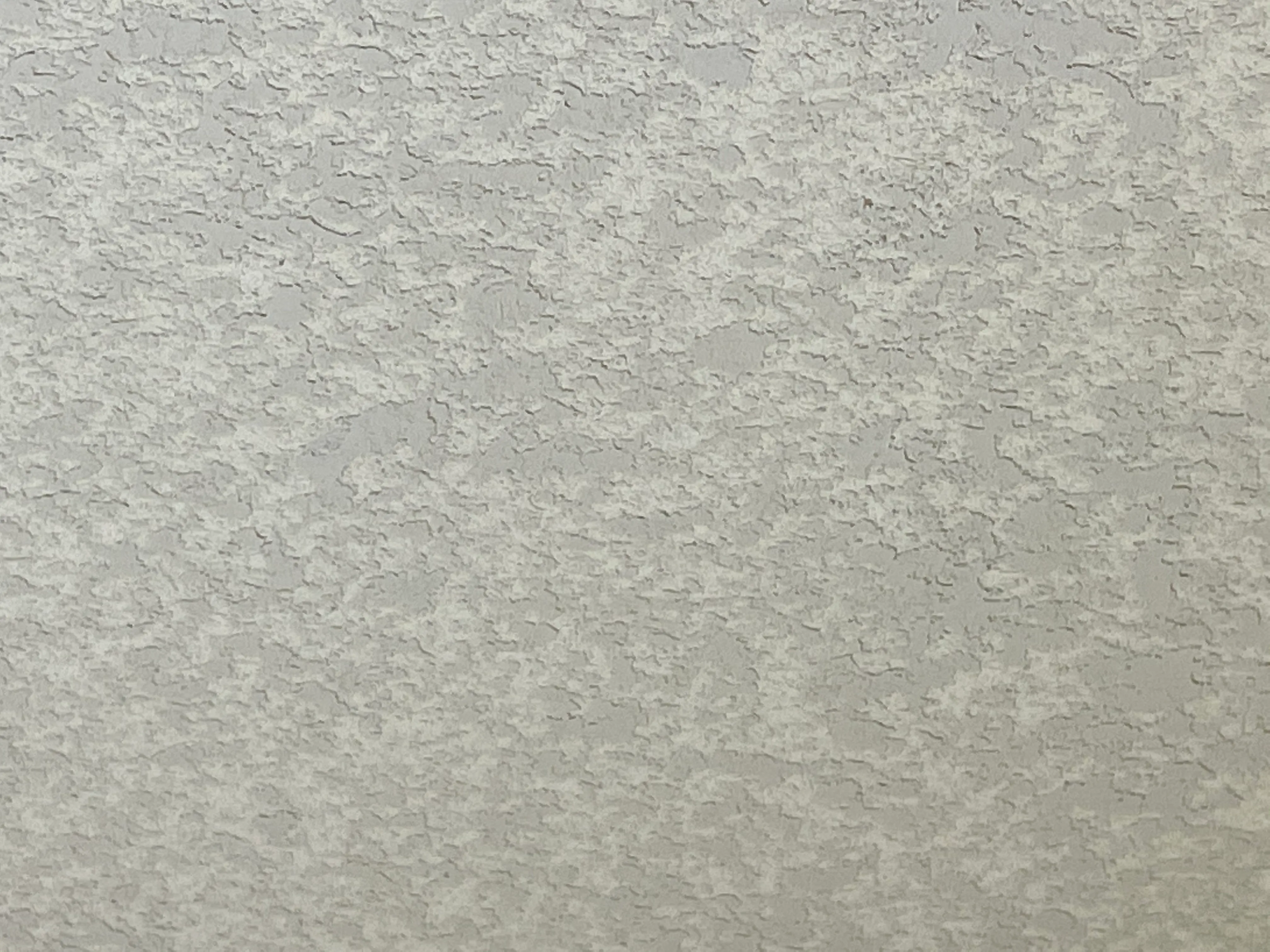
This is the detail a lot of homeowners have never heard of, and it's genuinely a drywall trade repair. It gets taped, coated, and sanded like any other corner, and then the ceiling texture has to be blended back into the existing knockdown or orange peel so the patch disappears. Hand texture matching is what separates a repair you can't find from one you'll notice every time you walk in.
When the lid needs refastening first
Sometimes the gap is bigger than truss uplift alone explains, and the reason is that the ceiling drywall was under-fastened when the house was built. Screws that missed framing, screws spun through the paper, or too few of them across a wide span all let the lid sag and move more than it should.
We check that before we detail the corner. Refastening the lid means adding screws into the truss chords on proper spacing, dimpling them correctly without breaking the paper face, then filling and finishing every screw head. If the ceiling is loose, no corner detail in the world is going to hold, so the lid gets sorted out first. That's standard practice on a ceiling drywall repair for us either way.
Does adding attic insulation make truss uplift worse?
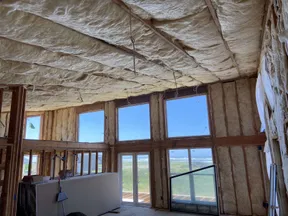
It can make it more noticeable, and that catches people off guard. Deeper attic insulation does a better job of keeping heat in the house, which means the bottom chord of the truss stays warmer and drier while the attic above stays colder. That's a bigger difference in moisture content between the top and bottom of the truss, and a bigger difference means more arch.
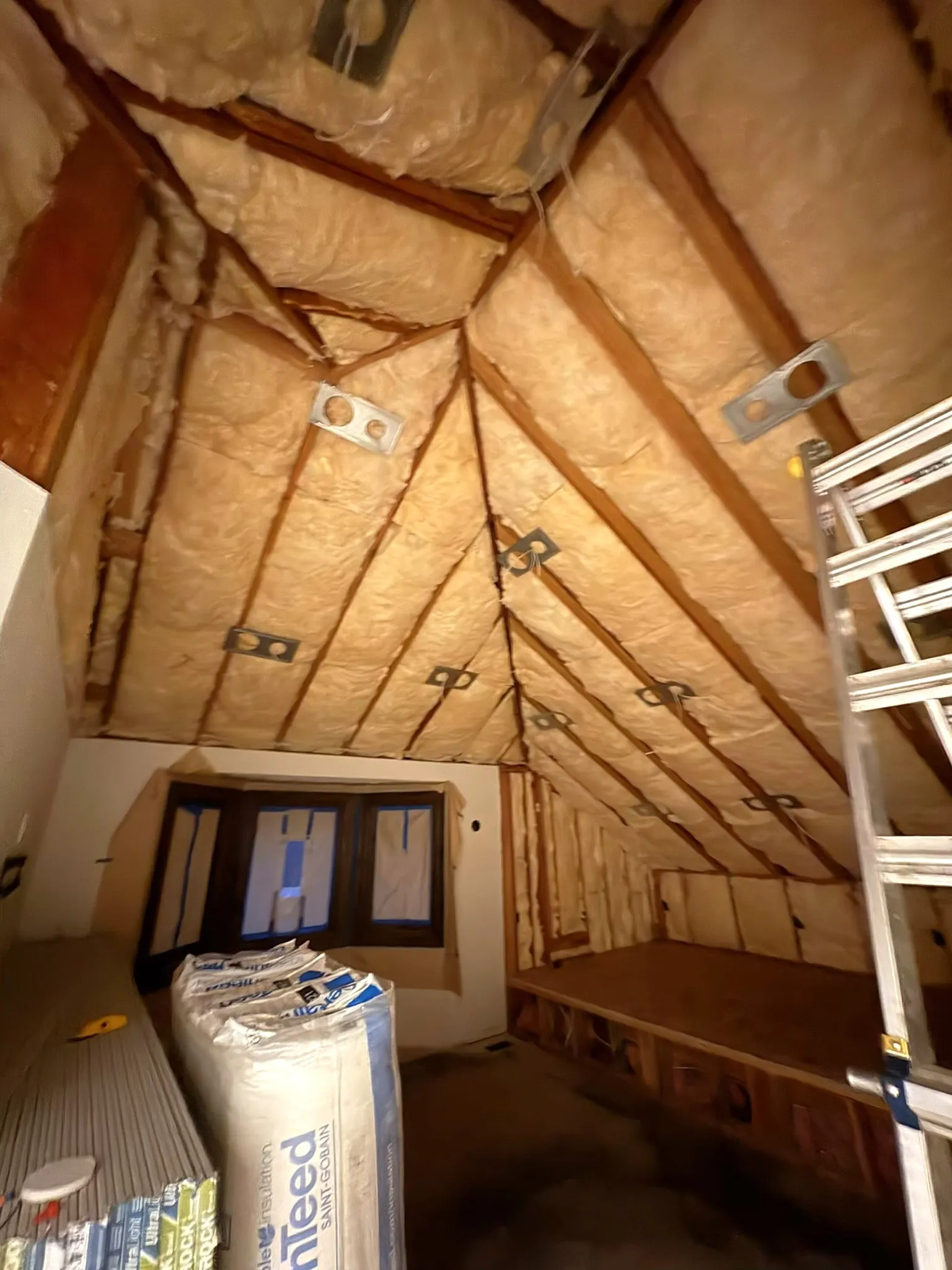
We see the pattern often enough to expect it. A homeowner blows the attic up to current insulation levels in October, and in December there's a gap along the hallway ceiling that was never there before. The insulation didn't break anything. It changed the conditions enough that movement which was always happening finally became visible.
Don't undo the insulation over it. A warmer, drier, cheaper-to-heat house is worth far more than a hairline you can cover with molding, and pulling insulation back out of an attic to chase a cosmetic crack is a bad trade. We install attic and wall insulation and we fix these corners, and we've never once recommended less insulation as the solution. Fix the corner detail and keep the R-value.
When to schedule the repair
Timing matters more on this repair than on almost anything else we do. The floating corner detail has to be set while the crack is open, because that's when we can see the actual travel and place the fastening line where it belongs. Do it in July with everything closed up tight and you're guessing at a movement you can't measure.
The window is between the first genuinely cold week and the spring thaw. In Clark County that's roughly late November through March, and the middle of that window is the best time to look at it. If you're reading this in August because you remember the crack from last winter, the right move is to get on the schedule now and have us out when it opens.
Crown molding is more forgiving and can go up any time of year, since it covers the joint regardless of where the truss happens to be sitting that week. So if your ceilings are getting trimmed anyway, that work isn't season-dependent.
Every repair is quoted per job after we look at it, and you can request a free estimate to get on the calendar.
AvilaCo Drywall handles ceiling and wall repair across Clark County, from truss uplift corners in Battle Ground to patch and texture work in Ridgefield and Vancouver, Washington. If you've got other questions about how we work, our drywall FAQ covers the common ones. Otherwise call us at (360) 904-3878 and we'll take a look at that ceiling.