A water stain spreading across your ceiling is one of those things you spot from the couch and try not to think about. Don't do that. A water-damaged ceiling almost never fixes itself, and every day that wet drywall sits up there, the repair gets bigger and the bill gets higher.
We get these calls year-round in Clark and Cowlitz Counties, but they spike from October through May when the rain doesn't let up. Roof leaks, failed pipe joints, a tub upstairs, condensation on a cold attic line. The water finds its way down, and the ceiling is usually where it shows up first.
Here's how to tell what you're dealing with, what ceiling water damage repair costs in 2026, and when a patch will do versus when that section of drywall has to come out.
Why ceiling water damage spreads faster than wall damage
Drywall is gypsum wrapped in paper, and paper drinks up water. On a wall, gravity pulls moisture down and out. On a ceiling, the water pools on top of the drywall and the board holds the weight while it soaks. That's why a ceiling can go from a small stain to a sagging, bulging mess in a way a wall rarely does.
A ceiling also hides its own damage. The leak might be a roof penetration ten feet away from the stain, traveling along a rafter before it drips down. So the wet spot you see is almost never the whole story. By the time a brown ring shows up on the drywall, the insulation above it is usually wet too, and wet insulation stays wet for a long time.
In an older home in Longview or Kelso, you've also got decades of settling and an attic that breathes differently than a new build. Cold attic air plus warm moist indoor air equals condensation on the underside of the roof deck, and that drips onto the ceiling drywall the same way a leak does.
Signs of a water-damaged ceiling
Some of these are obvious. Some get missed until the damage is bad.
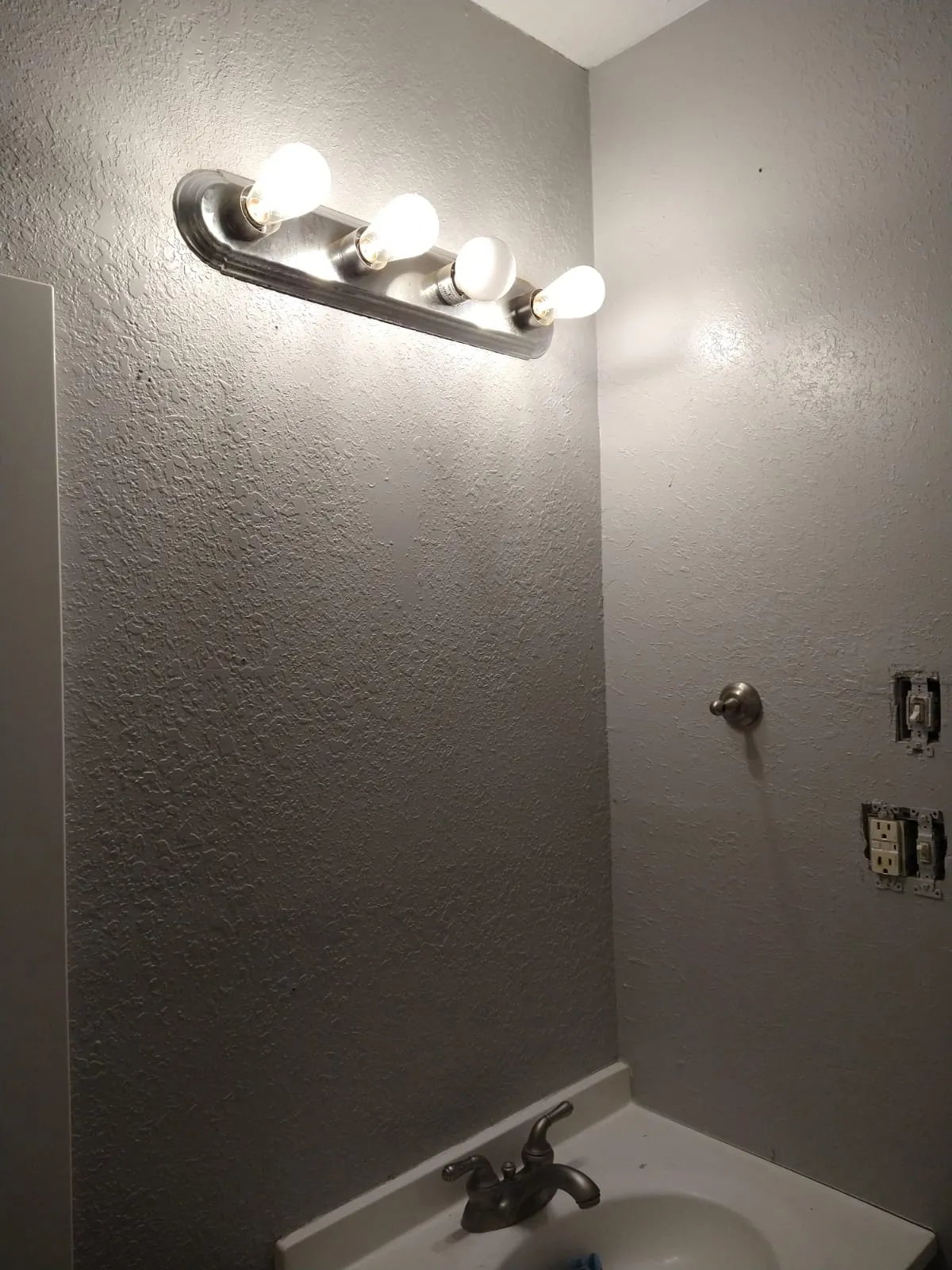
Brown or yellow rings. The classic water stain. That ring is mineral residue the water left behind as it dried. A faint stain means a small or old leak. A dark, layered stain with rings inside rings means water has come through more than once.
Bubbling or peeling paint. When the paint on a ceiling starts to blister or peel, water is getting into the drywall face from above and pushing the paint off. This is a sign the drywall itself is wet, not just stained.
Sagging or a soft spot. If the ceiling dips, bulges, or feels spongy when you press a broom handle against it, the gypsum core has absorbed enough water to lose its strength. Sagging ceiling drywall is a safety issue. It can let go and come down, so don't poke at it and don't park anyone under it.
A musty smell. Sometimes you smell a water-damaged ceiling before you see it. A persistent musty odor in a room, especially a bathroom or a room under an attic, points to moisture sitting somewhere it shouldn't.
If the damage is on a wall instead of overhead, the read is a little different. We broke that down in our guide on signs your drywall needs repair.
What to do first when you find water damage
Before you call anyone about the drywall, deal with the water. The repair is pointless if the leak is still active.
Stop the source. Shut off the water if it's a plumbing leak. If it's the roof, get a tarp over it or call a roofer. The drywall repair comes after the water is under control, never before.
Relieve a bulge. If a section of ceiling is sagging and holding water, it can drop all at once. If you're comfortable doing it, putting a small hole at the low point lets the water drain into a bucket instead of bringing the whole panel down. If that makes you nervous, leave it and keep everyone out of the room.
Dry it out. Open the space up, get air moving, run a fan or a dehumidifier. The faster it dries, the better your odds of a simple repair instead of a replacement.
Take photos. Before you clean anything up, photograph the damage from a few angles. If you end up filing an insurance claim, those first photos matter.
The 48-hour mold clock
This is the part homeowners underestimate. According to FEMA and the EPA, mold can start growing on wet building materials within 24 to 48 hours. Drywall paper is cellulose, and cellulose is food for mold. Add the moisture and the warmth from your house, and a water-damaged ceiling becomes a mold problem fast.
That clock is the whole reason we tell people not to sit on it. A leak you catch and dry within a day or two is usually a patch. The same leak ignored for two weeks means wet insulation, mold on the back of the drywall, and sometimes mold on the framing. Now you're looking at removal, treatment, and a much larger repair.
Clark County's wet season makes this worse. From fall through spring, indoor humidity stays up, and that gives mold the conditions it wants for months at a stretch. If you find a water-damaged ceiling in Vancouver, WA in January, the clock is already running.
Repair or replace? How we decide
Once the area is dry, the call comes down to the condition of the drywall.
Not every ceiling line is water. If a crack opens along the top of an interior wall every cold season and closes again by summer, nothing is leaking. That's the seasonal gap between wall and ceiling that truss uplift causes, and it needs a different fix.
A patch works when the drywall is dry and still firm, the stain is the only thing left behind, and there's no mold and no sag. We cut out the affected area, set new board, tape, mud, and match the texture. You'd never know it happened.
Replacement is the move when the drywall is soft, sagging, or crumbling, when the insulation above it is soaked, or when there's mold behind the board. Soft drywall can't be saved. It comes out, the cavity gets inspected and dried, wet insulation gets pulled, and fresh board goes up.
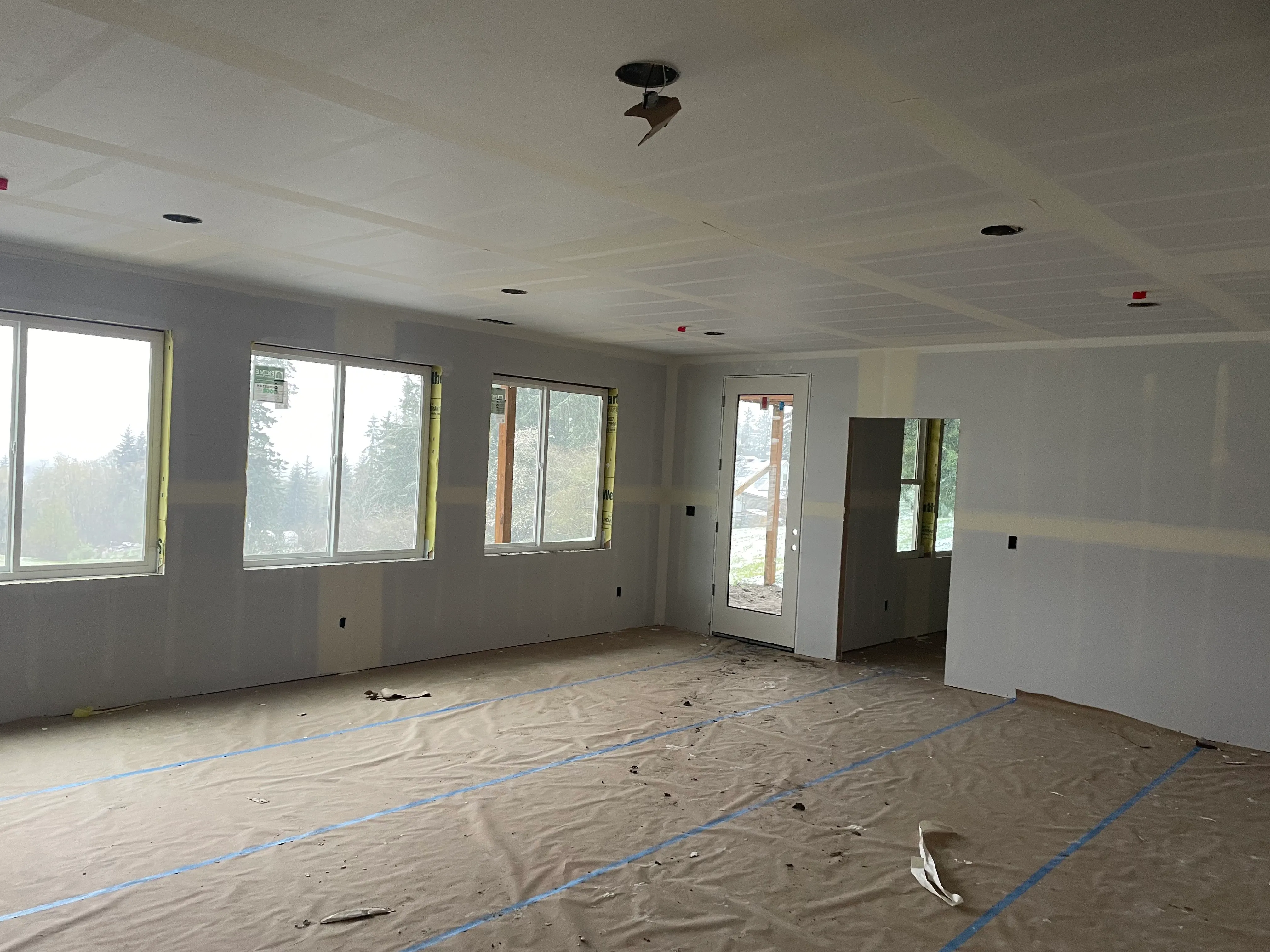
Most jobs land somewhere in between, a few square feet of ruined ceiling surrounded by perfectly good drywall. In that case you don't replace the whole ceiling. A good ceiling repair and drywall repair crew cuts out just the damaged section, patches in new board, and blends the texture so the repair disappears into the rest of the ceiling.
What ceiling water damage repair costs
Cost is the question everyone actually wants answered, so here are real 2026 ranges. Every ceiling is different, but this is the ballpark.
Minor (stain only, drywall still solid): roughly $150 to $500. This is a patch or skim, a stain-blocking primer, and a texture match. The kind of thing a single visit handles.
Moderate (a section of ceiling drywall replaced): roughly $500 to $2,500. Now you're cutting out wet board, possibly swapping insulation, retaping, and matching texture across a bigger area.
Severe (large area, wet framing, mold remediation): $2,500 and up, sometimes well past $5,000 once remediation and structural work get involved.
For reference, 2026 cost data from Angi puts ceiling drywall repair around $45 to $90 per square foot installed, and most water damage repairs in the $500 to $2,000 range. The big swing depends on how far the water traveled before anyone caught it, which loops right back to that 48-hour window.
We don't quote ceiling repair sight unseen, and you should be skeptical of anyone who does. We come look at it, check what's behind the drywall, and give you a firm number with no surprises after.
How we repair a water-damaged ceiling
Here's what the work looks like once the leak is handled and the area is dry.
Assess and confirm dry. We check the drywall and the cavity above it with a moisture meter. If it's still wet, nothing goes back up until it dries. Patching over wet board is how you end up doing the same repair twice.
Remove the damage. Soft and stained drywall gets cut out to clean edges, usually back to the joists. If there's wet insulation or any mold, that comes out too, and we'll bring in remediation when it's warranted.
New board and finish. Fresh drywall gets cut to fit and fastened to the framing. Then it's tape, multiple coats of joint compound, and sanding between coats. Ceilings are less forgiving than walls because light rakes across them and shows every flaw, so the finish work matters even more up there.
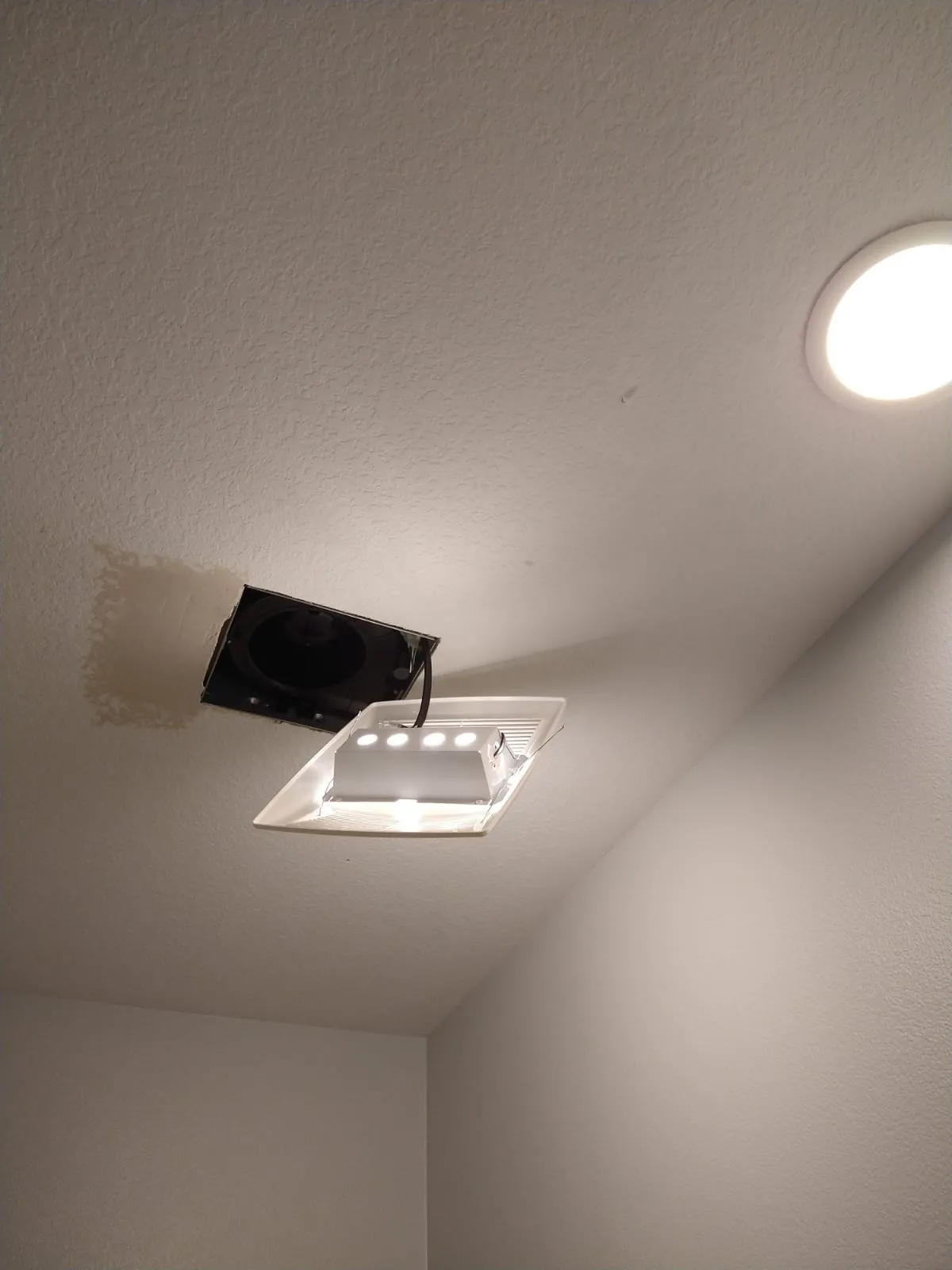
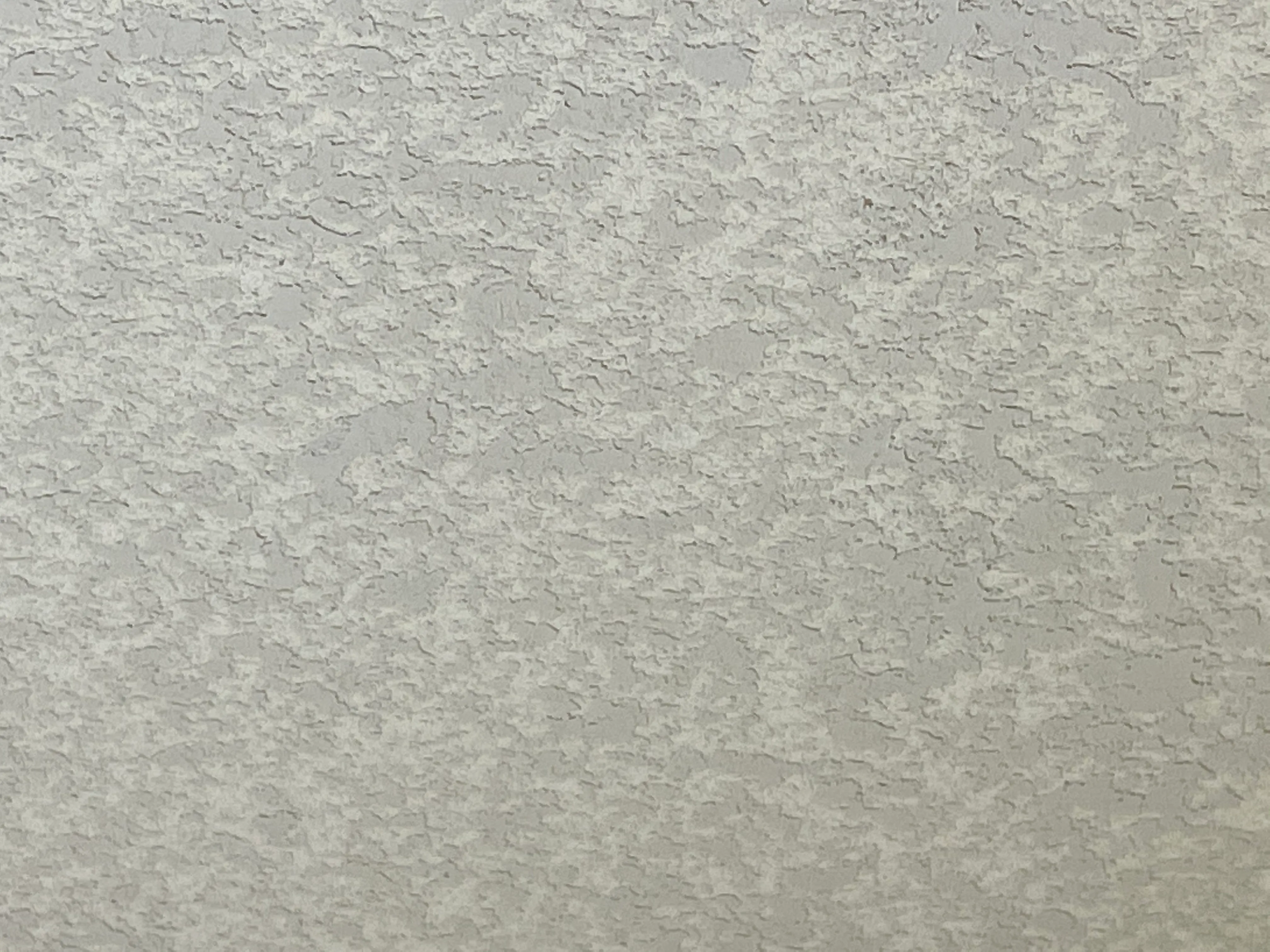
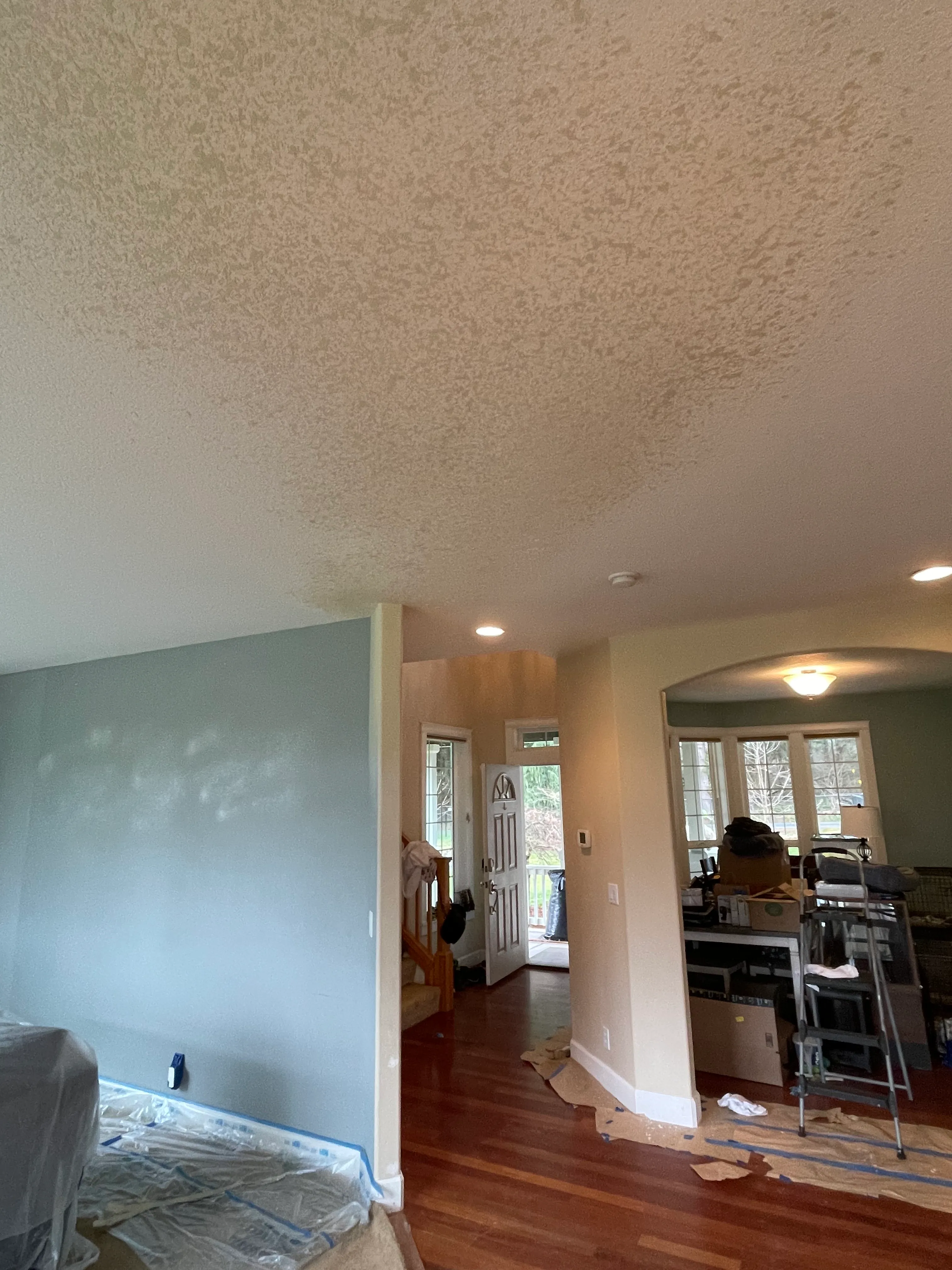
Texture match. This is the part that makes or breaks a ceiling repair. Knockdown, orange peel, smooth, or popcorn, the patch has to match what's around it. A flat patch in a textured ceiling stands out from across the room. Matching it takes the right tools and a lot of practice, and it's one of the things we're known for across Clark and Cowlitz Counties.
Prime and paint-ready. We seal the repair with a stain-blocking primer so nothing bleeds through later, and hand it back ready for paint. If the whole ceiling needs a coat to blend, we can handle that too.
Will insurance cover it?
Sometimes. Homeowners insurance generally covers water damage that's sudden and accidental, like a pipe that bursts or an appliance line that fails. It generally won't cover damage from a slow leak you knew about, or from deferred maintenance like a roof that's been failing for years.
That's another reason the timeline matters. If you act fast and document the damage, you're in a much better spot with a claim than if the damage looks like it's been building for months. We're not insurance people, so check with your provider, but we're happy to work alongside your adjuster and remediation crew to get your ceiling back to normal.
Get a water-damaged ceiling looked at before it gets worse
A water-damaged ceiling is the kind of repair that only gets more expensive the longer it waits. If you've got a stain spreading, paint bubbling, or a soft spot overhead, get it looked at while it's still a patch and not a replacement.
AvilaCo Drywall handles ceiling repair and water damage drywall repair for homeowners across Vancouver, WA, Battle Ground, Camas, Ridgefield, Longview, Kelso, and the rest of Clark and Cowlitz Counties. We dry it, repair it, match the texture, and leave it looking like nothing ever happened. Reach out for a free estimate or call us at (360) 904-3878.