Standing under decades of heavy skip trowel, sharp knockdown, or patched popcorn ceiling texture leaves homeowners asking the same practical question: is it better to skim coat right over what's there, or rip all the sheetrock out down to the studs and hang fresh board?
Both paths end in crisp, modern flat walls and ceilings. The wrong choice, however, either wastes thousands of dollars on unnecessary tear-out and trim removal or pours labor into salvaging soft, wavy gypsum that never sits flat. Here's how an experienced Southwest Washington crew calls it during a walkthrough.
When skim coating existing drywall makes more sense
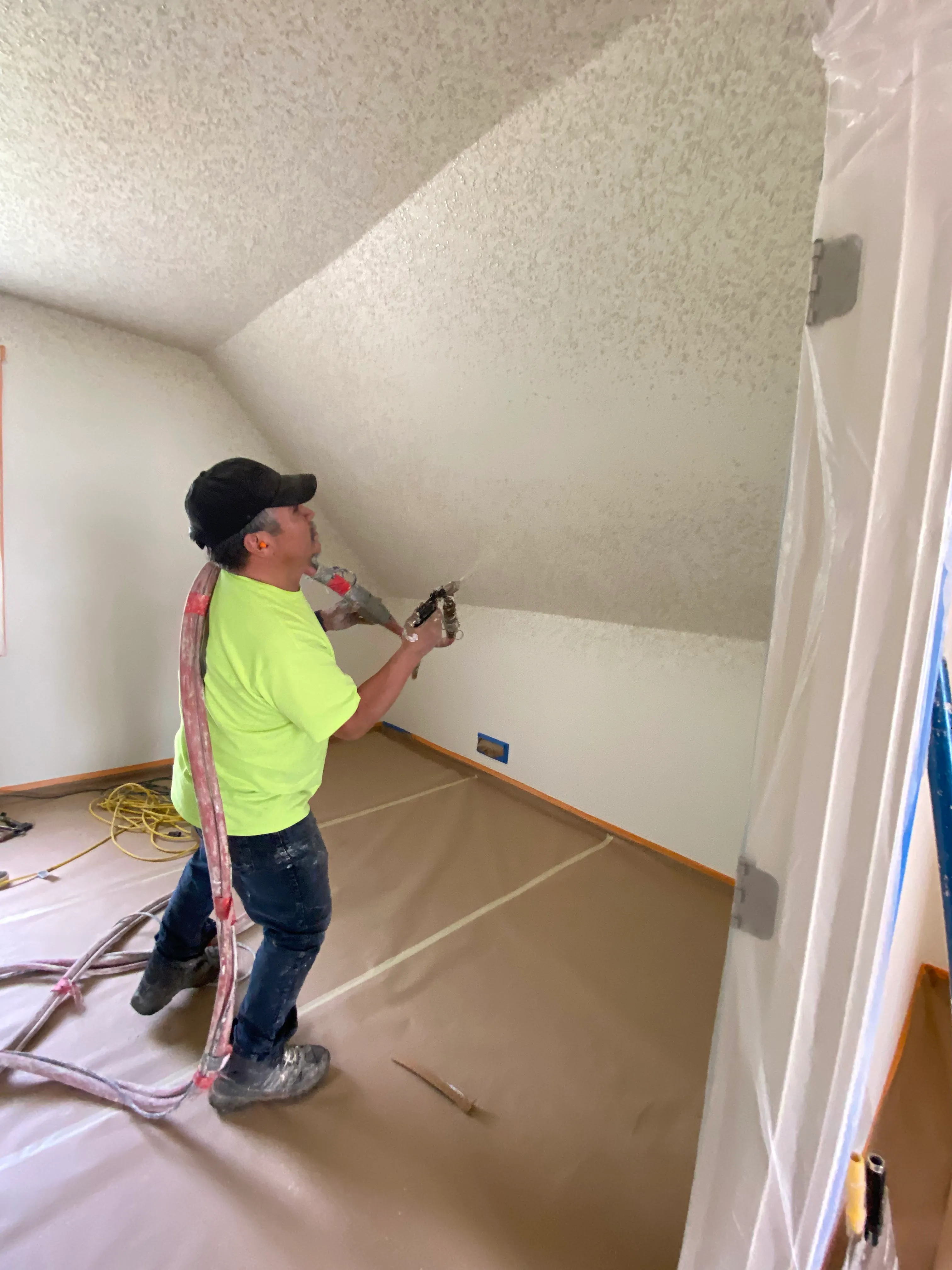
If the existing drywall is solidly screwed to straight framing, dry, and free of widespread water rot or heavy bowing, skim coating walls and ceilings almost always wins. We scrape back sharp high spots, seal any exposed paper brown spots left by wallpaper stripping, float two or three tight coats of joint compound across every square inch, pole-sand under work lights, and prime with PVA.
The biggest savings isn't even on the drywall line item. You keep all existing window jamb extensions, door casings, outlets, baseboards, HVAC registers, and recessed can trims in place without tearing half your trim carpentry apart. Look at our Vancouver ceiling skim coat project where heavy old ceiling texture came flat without pulling a single sheet down.
When tearing out or overlaying new drywall is smarter
Skim coating cannot straighten framing waves spaced six feet apart, re-bond delaminated water-soaked paper, or fix thin 3/8-inch ceiling board sagging between 24-inch trusses. Replacement or a 1/4-inch to 3/8-inch new overlay makes sense when:
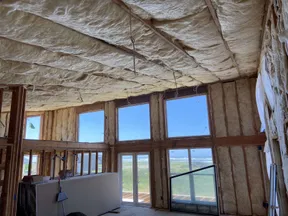
- Walls are already down to studs: You're moving walls, rewiring, replumbing, or adding new cavity insulation anyway.
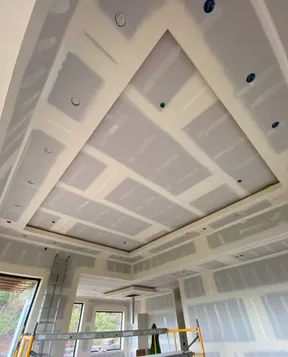
- Ceilings have failing seams or heavy painted popcorn: Hanging clean new sheets over dated ceiling texture is sometimes faster and flatter than wet scraping multiple painted coats. See our popcorn ceiling removal options.
- Smoke, pet odor, or deep moisture penetrated the gypsum core: No thin mud coat fixes soft crumbled sheetrock.
Dust, disruption, and time in the house compared
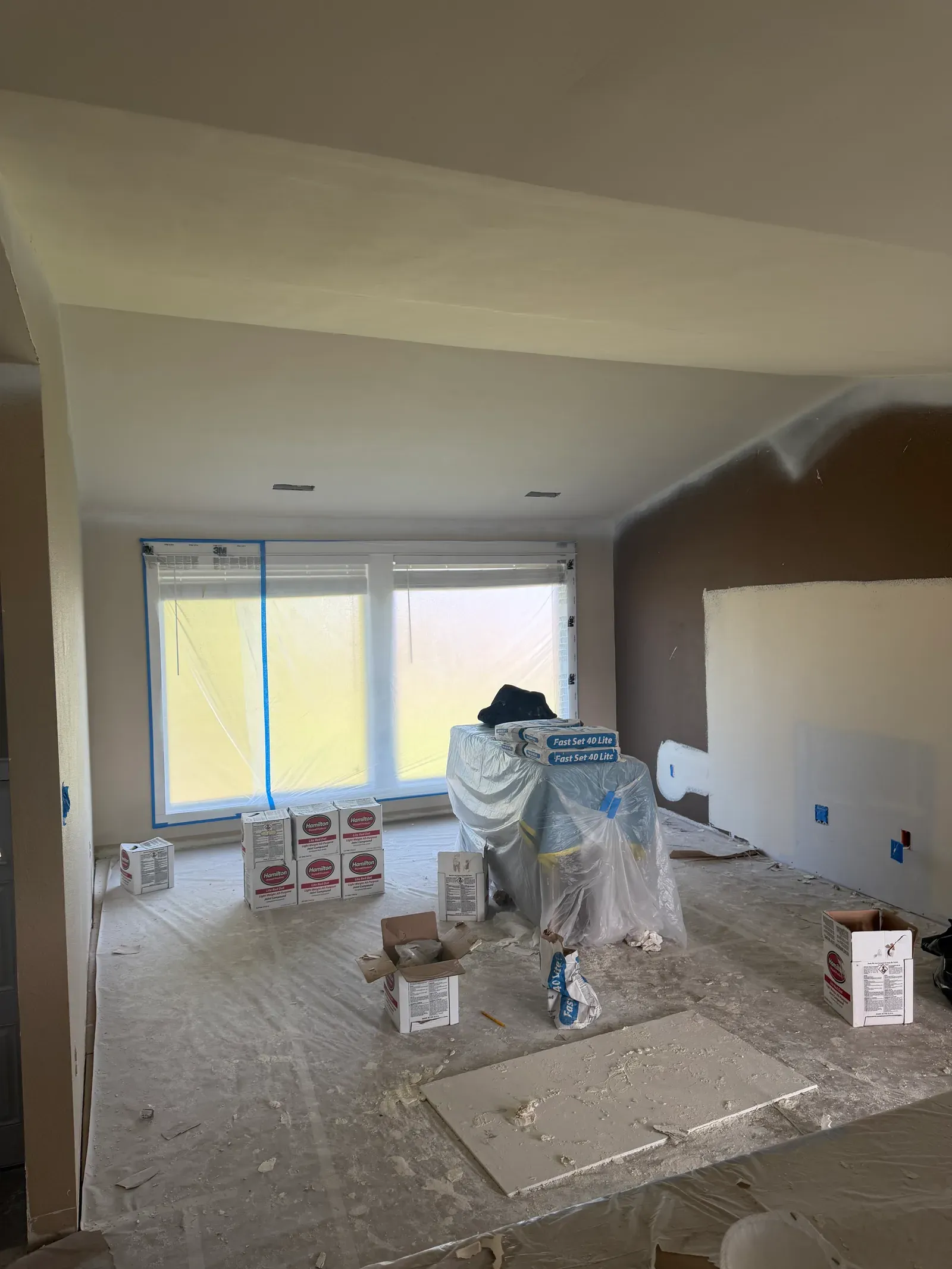
Homeowners sometimes picture skim coating as the dustier option because of sanding, while forgetting how much fiberglass insulation fibers, framing debris, and drywall dumpsters full tear-out puts inside a live home. During a skim coat, floors and cabinets stay wrapped under plastic, shop vac sanders pull dust at the pad, and work moves room by room with predictable drying stages.
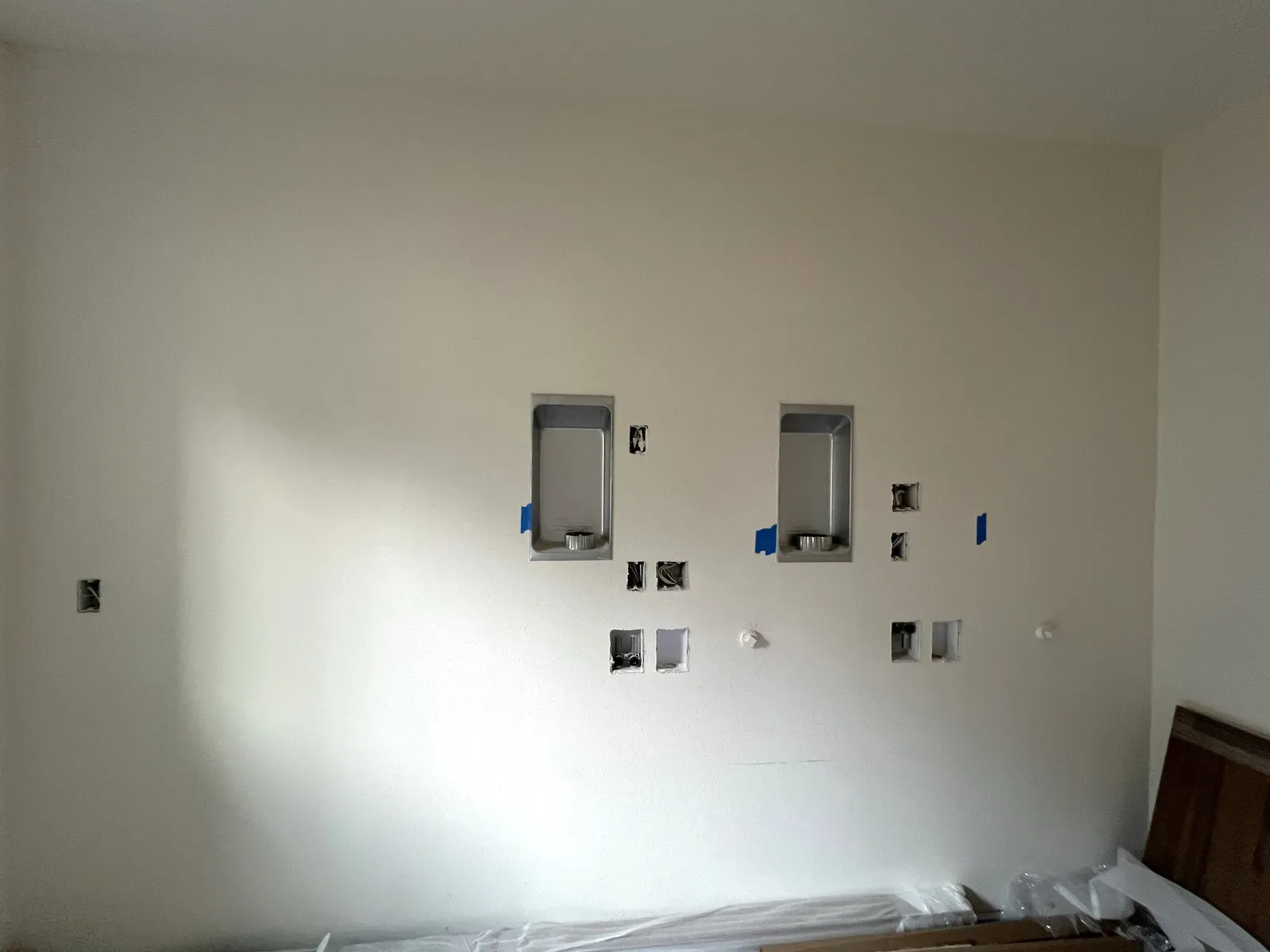
Full tear-out adds dumpster hauling, plumbing fixture disconnects, electrical device box adjustments if board thickness changes, new trim resetting, and re-insulating exterior walls. Check our drywall finish levels guide to see how ceiling finish level choices (Level 4 vs Level 5) affect smoothness under strong side light.
What pushes cost up or down on either option
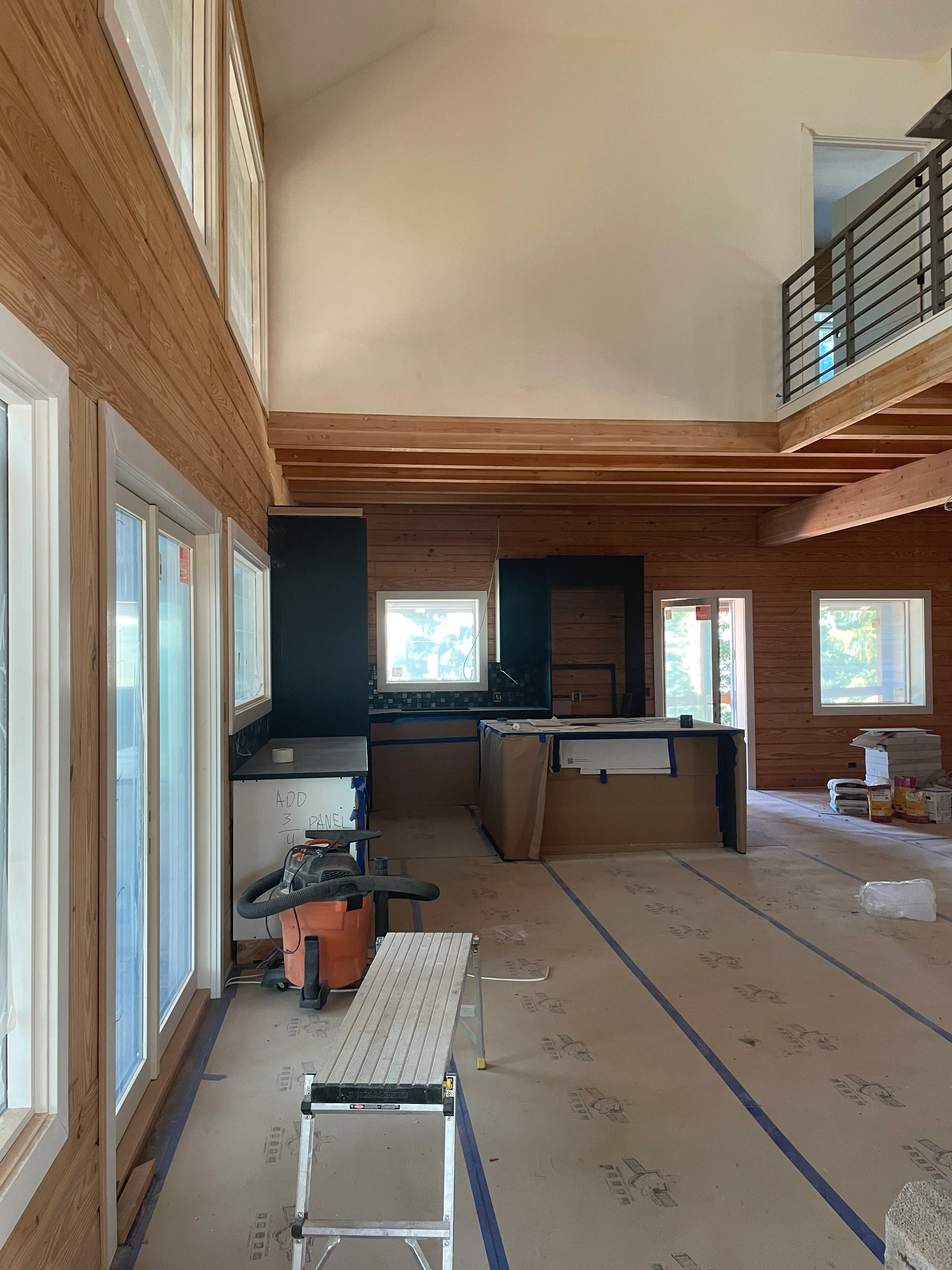
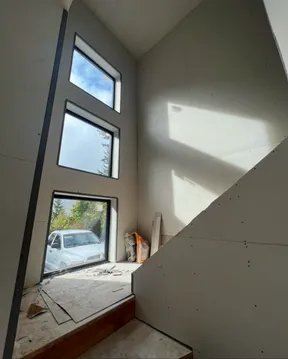
Every project prices around three drivers: texture depth, ceiling height, and trim scope. Light orange peel skim coats faster than coarse skip trowel that needs scraping and floating first. Two-story entryways add scaffolding setup time. Yet in most intact homes around Clark County, skim coating avoids demolition labor, new sheet material costs, and replacement base or case trim, making it the cleaner path when your underlying walls are sound.
Common Questions
Can you skim coat directly over knockdown or orange peel texture?
Yes. When walls are solidly fastened and clean, we knock down sharp peaks first, clean dust or grease near stoves, and apply thin tight skim coats over the texture until the surface reads flat after sanding and priming.
Will a skim coat hold up around doorways and baseboards?
Yes, as long as we sand feather edges clean along casings and scrape caulk ridges first so the new flat plane meets trim cleanly without piling compound onto wood molding.
Is a skim coat cheaper than new drywall?
Usually yes when existing board is flat and firm, because you avoid demolition, disposal, new board, electrical box adjustments, and trim removal. If framing is crooked or multiple walls have water damage, replacement wins.