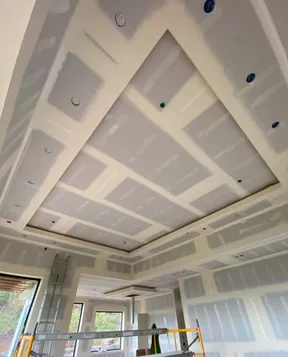
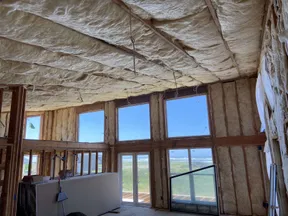
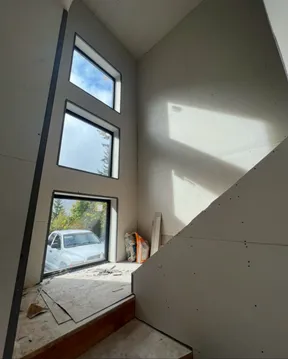
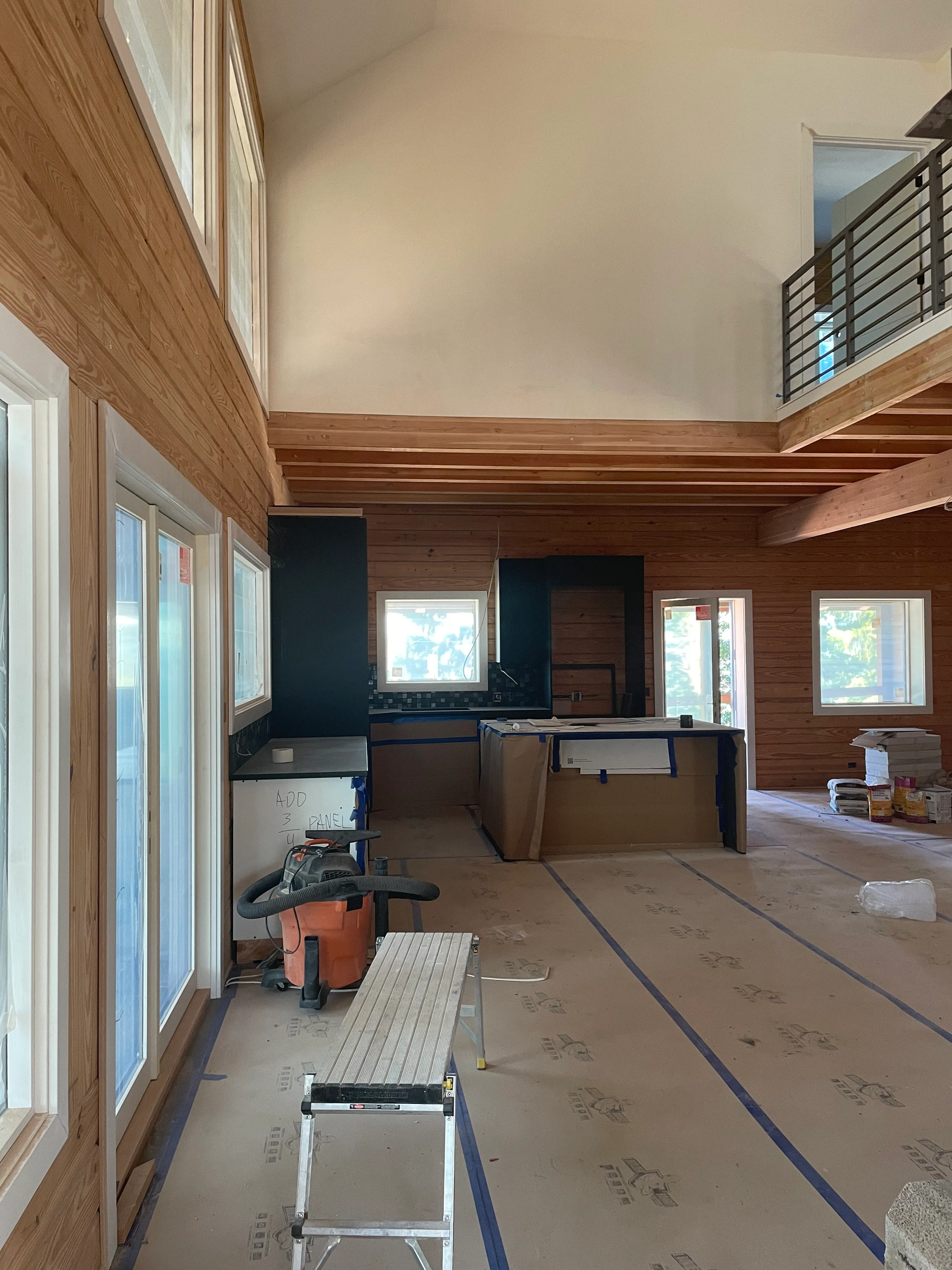
Smooth walls or textured walls. It is one of the first questions every homeowner has to answer when they remodel, build new, or call us for a wall refresh in Vancouver, WA. The trend has shifted hard toward smooth in modern interior design, but smooth walls are not the right answer for every home. Texture is still the practical choice in a lot of situations, and the cost gap between the two is bigger than most homeowners expect.
Here is the honest comparison. What each finish actually is, what they cost, how they hold up, and how to pick the right one for your house and the way you live in it.
Why this decision matters more than picking a paint color
Wall finish is one of the few choices that touches every room of your house at the same time. You do not pick smooth in the kitchen and texture in the living room. Whatever you choose becomes the visual baseline for the entire interior. It also locks in your maintenance budget for the next decade. Smooth walls are higher upkeep. Textured walls are more forgiving. That trade-off matters whether you have a busy family or you are designing a quiet, minimalist retreat.
The finish also affects how every other design decision reads. Smooth walls amplify trim, lighting, and architecture. Textured walls soften them. Get the wall finish wrong for the home you actually live in and the rest of your design choices have to fight against the walls instead of working with them.
What smooth walls actually are
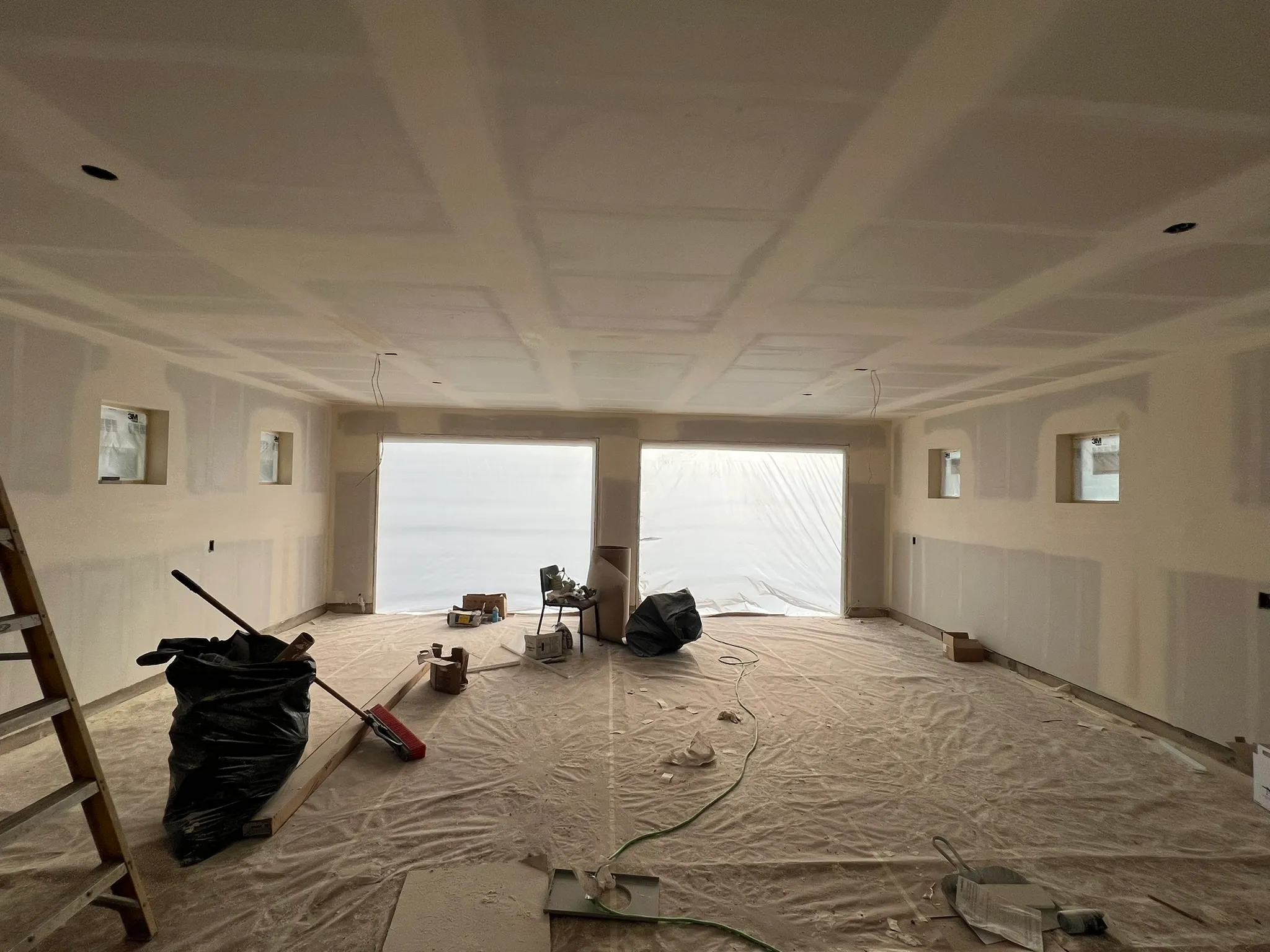
A smooth wall is a Level 5 drywall finish. The drywall gets hung, taped, and mudded the normal way, and then the entire surface gets a skim coat of joint compound applied across every square foot. After the skim coat dries, the wall is sanded flat, inspected under raking light, and any imperfection that catches the light gets touched up and resanded. The goal is a wall with no visible seams, no fastener dimples, and no surface variation at all.
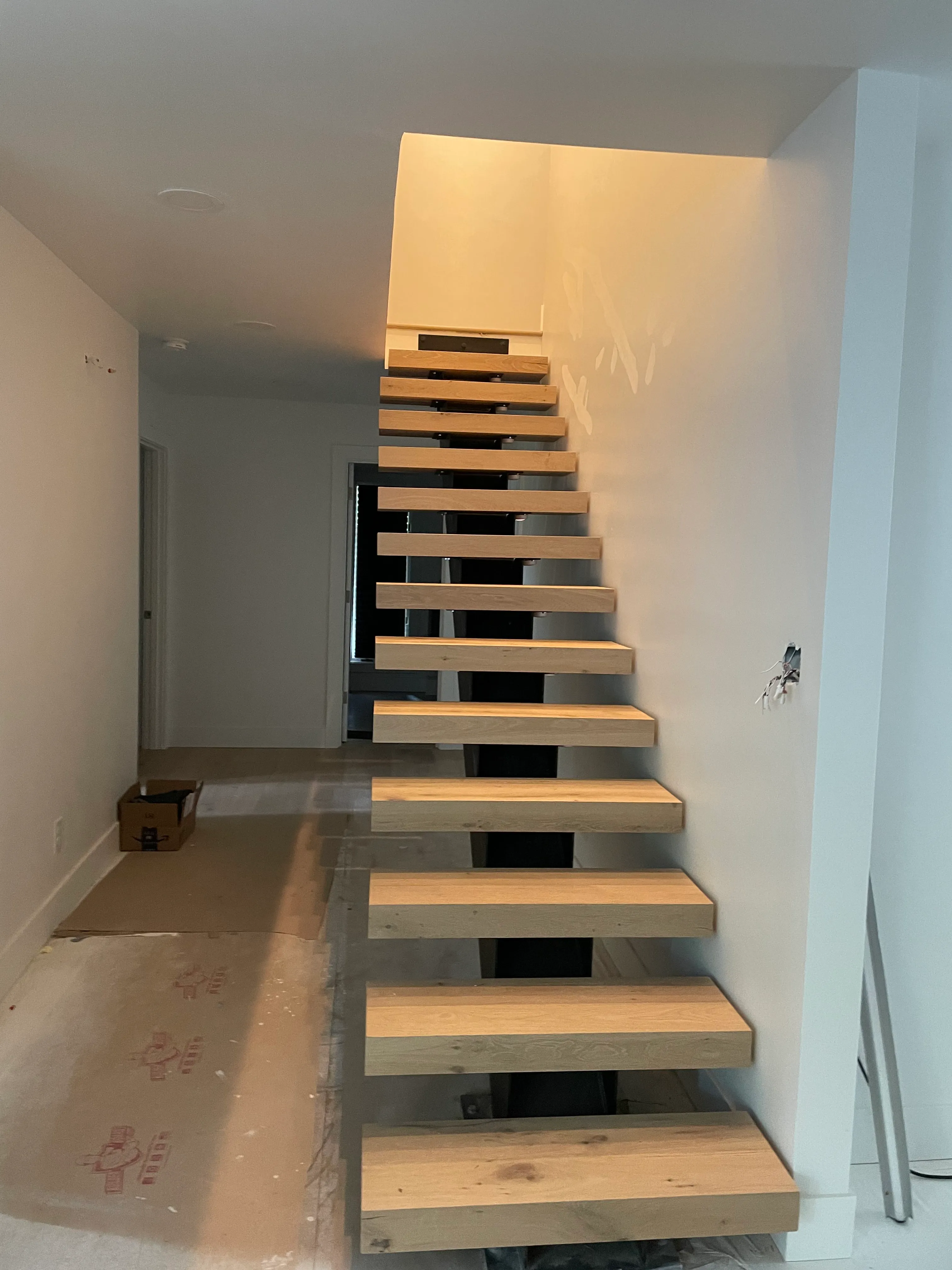
Smooth walls are what you see in modern minimalist homes, designer interiors, art galleries, and high-end commercial spaces. They make a room feel calm, spacious, and intentional. Light moves across them cleanly without the visual noise of texture catching shadows. Trim, art, and light fixtures stand out more because the walls themselves recede.
For more on the finish levels and what Level 5 really requires, our drywall finish levels guide walks through Level 0 through Level 5 in detail.
What textured walls actually are
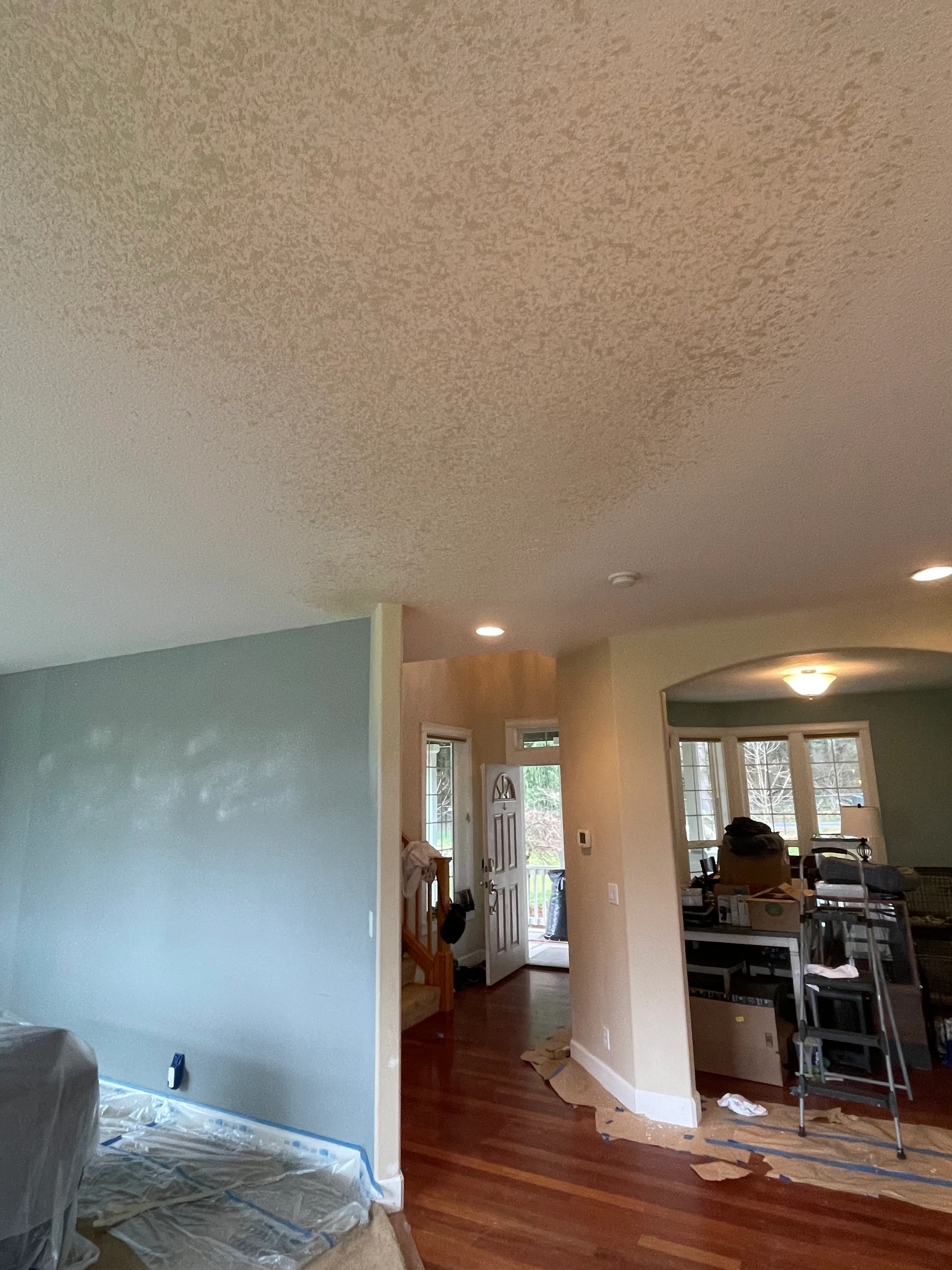
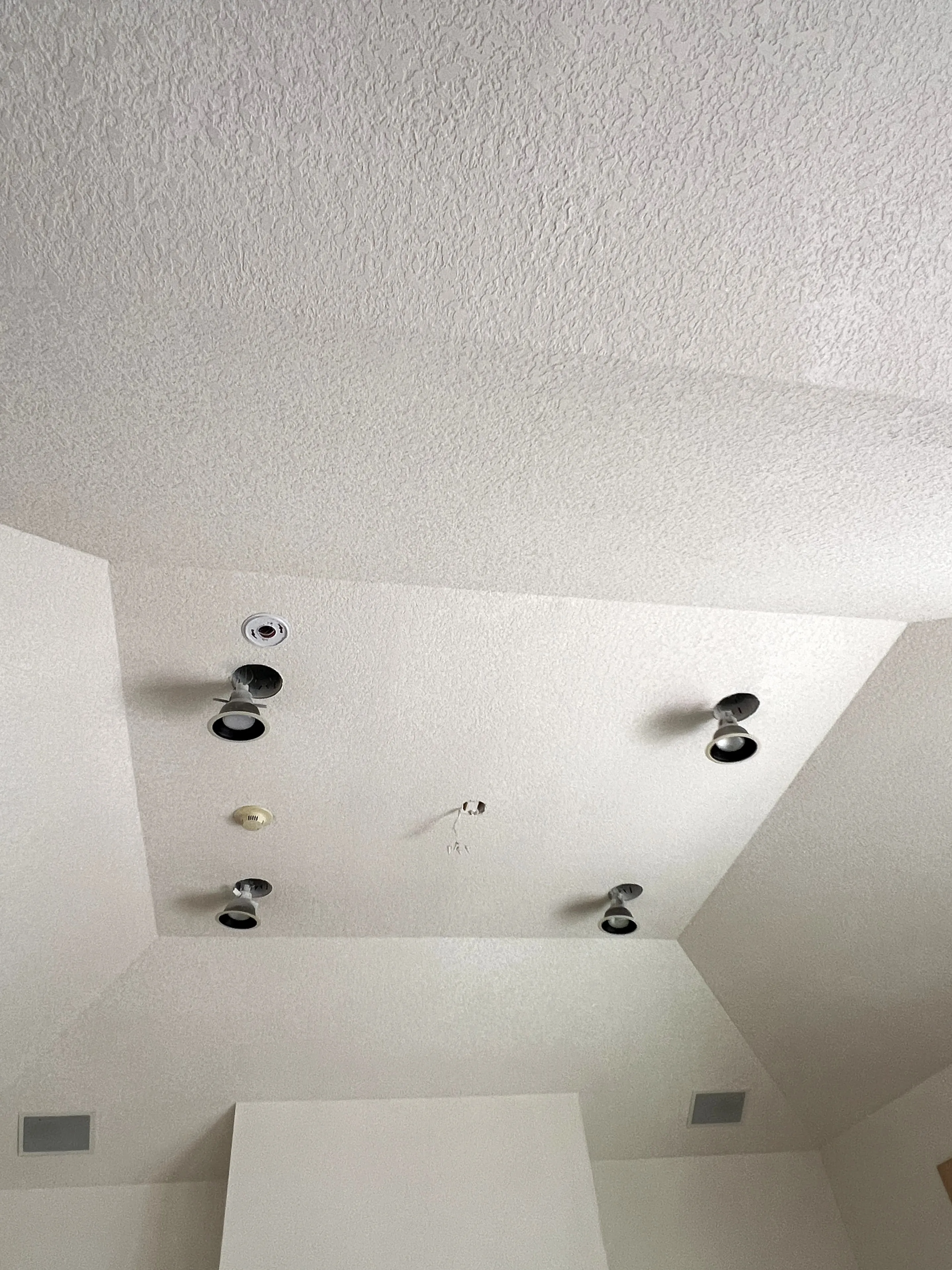
A textured wall has joint compound applied in a deliberate pattern across the surface. The most common textures in the Pacific Northwest are knockdown, orange peel, and skip trowel. Each one is created by spraying or troweling compound onto the wall in a specific way that produces a recognizable look. Hand-applied textures like skip trowel give walls more character and depth. Spray textures like orange peel keep things subtle.
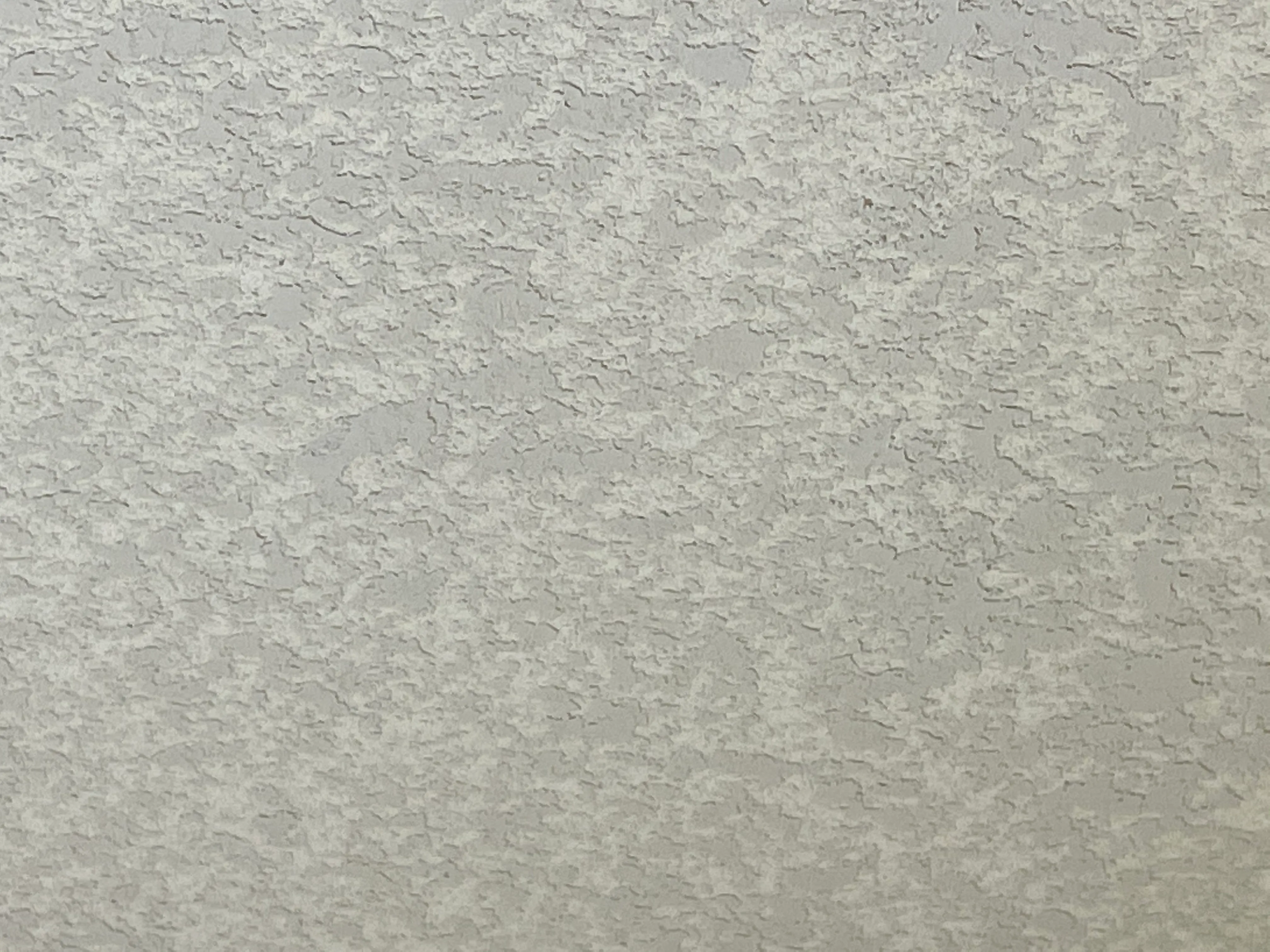
The point of texture is twofold. It hides minor imperfections in the drywall so the finishing stage does not have to be perfect, and it adds visual character that bare drywall does not have on its own. Texture has been the default wall finish in American homes for decades because it is faster, cheaper, and more forgiving than smooth. Our deeper texture comparison covers the differences between the three most popular options.
Cost comparison
The cost difference between smooth and textured walls is the biggest reason most homeowners end up choosing texture even when they like the look of smooth. Smooth walls are not just a style upgrade. They are a significantly more labor-intensive job from start to finish.
Textured walls. A standard knockdown or orange peel finish is a Level 4 finish underneath, which means the drywall is taped and mudded to a normal standard with one coat of compound over fasteners and seams. The texture goes on top and covers minor imperfections. This is the baseline for most new construction and remodel work in Clark County.
Smooth walls. A true smooth wall is a Level 5 finish. The drywall gets the standard taping and mudding, plus a full skim coat across every square foot of wall and ceiling, plus extra sanding, plus inspection under raking light, plus touch-ups. On a typical 2,000 square foot home, the finishing stage of a Level 5 job runs roughly 40 to 70 percent more than the same home finished with knockdown texture. For real numbers in your area, our drywall installation cost guide has Washington-specific pricing.
The hidden cost of paint. Smooth walls also affect your paint choice. Flat and matte paints amplify the smoothness, but they show fingerprints and scuffs faster, which means more frequent touch-ups. Eggshell and satin sheens are easier to clean but reflect more light, which means imperfections show up more. There is no perfect paint for a smooth wall, and homeowners often end up repainting sooner than they would on a textured wall.
Durability and repairs
This is where the practical trade-off lives. Smooth walls and textured walls hold up to similar daily wear, but they show damage and they get repaired very differently.
Day-to-day wear. Textured walls hide scuffs, light scratches, fastener pops, and minor settling cracks. Smooth walls show all of it. A picture frame leaning against the wall too long leaves a visible mark. A vacuum bumping the baseboard leaves a scuff that catches the eye. Move-in dings from furniture are obvious. None of that is a problem on knockdown.
Patching. Patching a textured wall is faster and easier because the texture itself disguises the boundary between the patch and the existing wall. A skilled finisher can blend a knockdown patch so well that you cannot find it after paint. Patching a smooth wall is much harder because the patched area has to be perfectly flat across a much wider zone, with no visible transition. Most smooth-wall patches require a skim coat that extends well beyond the damaged area, sanded down to match. Drywall repair on smooth walls usually costs 30 to 60 percent more than the same repair on a textured wall.
Settling and seasonal movement. Homes move. Wood framing expands and contracts with humidity, foundations settle, and small cracks open up over time. On a textured wall, a hairline crack can disappear into the pattern. On a smooth wall, every crack is visible and needs a proper repair. Pacific Northwest homes get more seasonal movement than people expect because of the wet winters and dry summers, so smooth walls in this climate often need more frequent touch-ups than smooth walls in a more stable climate.
Resale and style considerations
What sells in your neighborhood is a real factor. In the Vancouver, WA and Clark County market, the answer is more nuanced than it used to be.
Higher-end and modern homes. In newer construction, custom builds, and homes priced above the local median, smooth walls read as a premium feature. Buyers who are looking at modern interiors specifically expect smooth walls and the absence of texture is part of what they are paying for. In Camas and the higher-end pockets of Ridgefield, smooth or near-smooth finishes are increasingly common in new builds.
Mid-market and traditional homes. In most of Clark County, the housing stock is built with knockdown or orange peel texture. Switching to smooth walls in a mid-market home does not necessarily increase resale value, and it can feel out of place if the rest of the architecture is traditional. Buyers in this segment often expect texture, and a well-applied knockdown reads as upgraded enough.
Style fit. Smooth walls fit modern, minimalist, contemporary, and Scandinavian interiors. Textured walls fit traditional, farmhouse, Mediterranean, transitional, and Craftsman homes. If your trim is chunky and traditional and your floors are oak, textured walls work with the architecture. If your trim is minimal and your floors are wide-plank or polished concrete, smooth walls amplify the design.
What works in Pacific Northwest homes
Climate matters here. Pacific Northwest homes deal with sustained humidity in fall and winter, dry summers, and noticeable seasonal swings that move framing more than homeowners realize. That movement is part of why texture has been the default in this region for so long. Smooth walls amplify every settling crack and every nail pop, and PNW homes produce more of both.
That does not mean smooth walls are off the table. We do them often in custom homes, primary bedroom remodels, and modern interiors across Vancouver, WA and Camas. The key is doing them right. That means a true Level 5 finish, properly hung drywall with consistent fastening, and homeowners who understand they will need touch-ups every few years.
For homeowners who like the modern look but want lower maintenance, a light orange peel is the smart middle ground. From a few feet away it reads close to smooth, but it still hides the small movements and minor imperfections that PNW homes produce. We apply a lot of light orange peel for exactly this reason.
How to decide
Here is the framework I walk homeowners through when they cannot decide.
Choose smooth walls if you love modern, minimalist interiors. You are building or remodeling a higher-end home where the walls are a design feature. You are willing to pay 40 to 70 percent more for the finishing stage. You are comfortable with more frequent touch-ups. The rooms you are finishing do not take heavy daily wear.
Choose textured walls if you have kids, pets, or a high-traffic household. You want a finish that hides minor damage and seasonal movement. Your home is traditional, transitional, or Craftsman in style. You want to keep the budget closer to typical. You expect to live in the house long enough that maintenance matters as much as the initial look.
Consider the middle ground. A light, well-applied orange peel gives you most of the modern look at a fraction of the cost and maintenance of true smooth walls. For most PNW homeowners, this is the right answer if they like clean walls but are not committed to the smooth aesthetic.
Mix finishes by room. Some homeowners do smooth walls in the primary bedroom, formal dining room, or a statement entry, and texture in the rest of the house. This gives you the high-end feel where it matters and keeps maintenance manageable in the rooms that take more wear.
If you are in Clark County and trying to decide between smooth and textured walls, AvilaCo Drywall can show you samples of both and help you weigh the trade-offs for your specific project. We do new construction, remodels, and full-house refinishes across the area. Reach out for a free estimate or call us at (360) 904-3878.