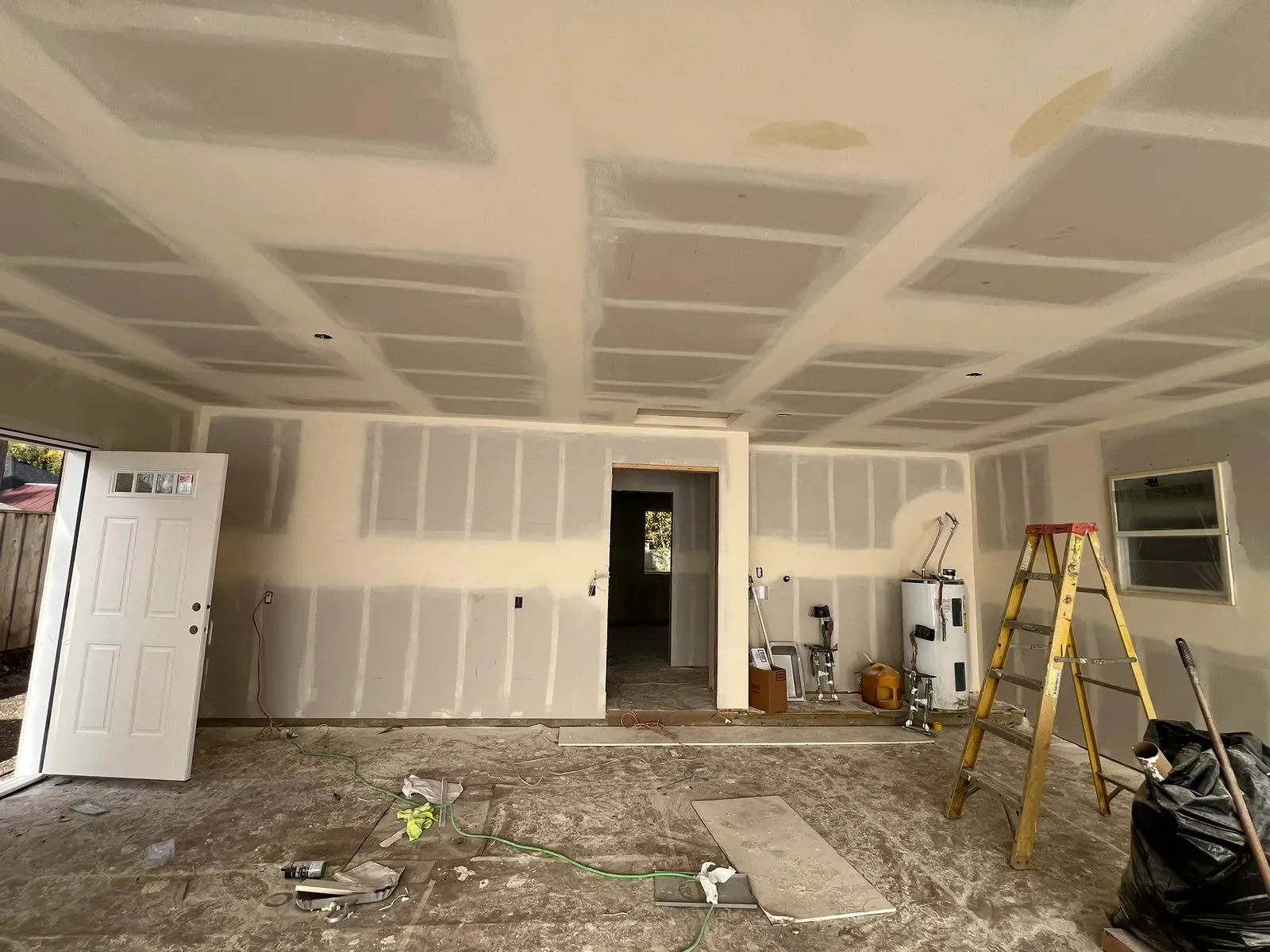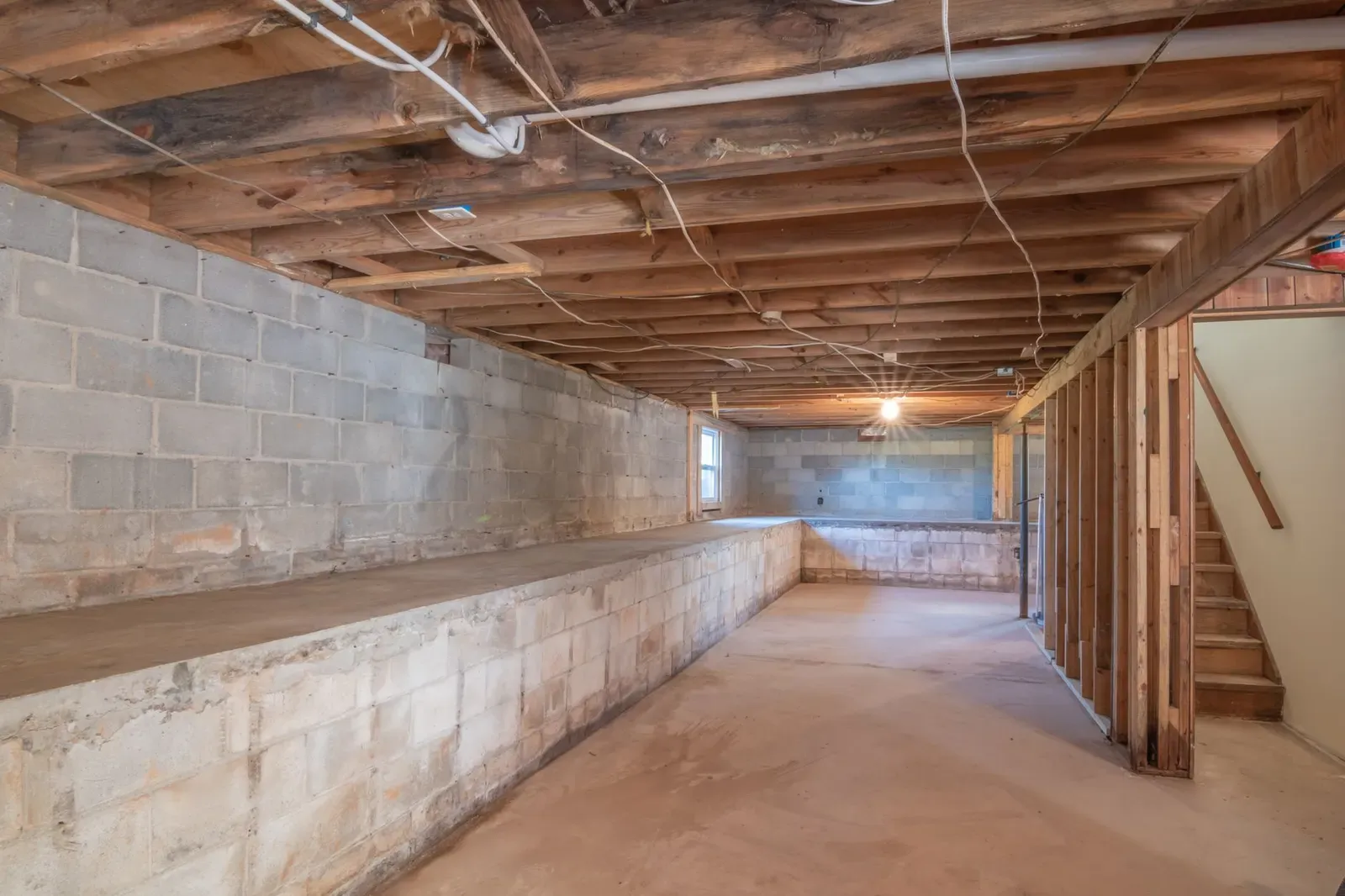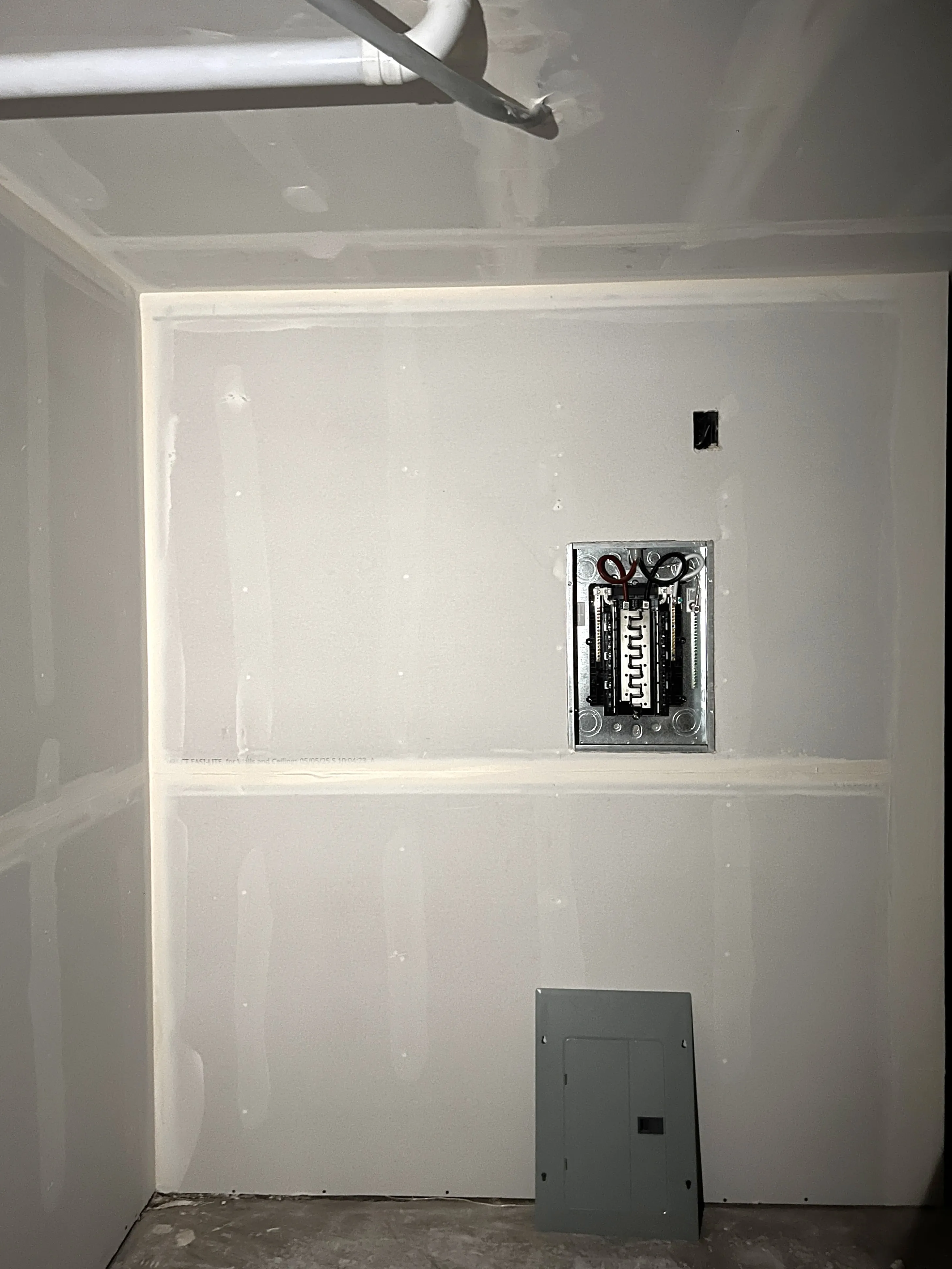
When homeowners around Vancouver and Camas want to block noise from a teenager's bedroom, home office, or main-floor TV over a finished basement, they run straight into two competing recommendations: buy expensive acoustic panels like SilentFX or QuietRock, or hang two layers of standard 5/8-inch drywall with damping compound between them.
Here's what actually makes a wall quiet in a Southwest Washington wood-framed house, when blue acoustic drywall justifies its sheet price, and why the insulation and steel channel underneath do half the heavy lifting either way.
How soundproof drywall and double 5/8 sheetrock differ
Standard gypsum conducts mid-range speech easily because studs act like wooden tuning forks connecting both faces of a wall. Acoustic specialty drywall (the familiar blue boards like CertainTeed SilentFX QuickCut or QuietRock) laminates two thinner gypsum cores around a viscoelastic damping polymer inside a single 1/2-inch or 5/8-inch sheet. That core turns sound vibration into microscopic heat before it reaches your room.
Hanging two sheets of standard 5/8-inch Type X drywall with an acoustic damping compound troweled or rolled between layers follows the exact same physics on site. Both systems add mass plus shear damping, while double 5/8-inch adds extra total thickness (1-1/4 inches of board instead of 5/8 inch).
Where single-sheet soundproof drywall is worth the extra material cost
Factory-laminated soundproof board shines when you cannot sacrifice room depth or disturb existing trim:
- Existing door casings and window extensions stay intact: Keeping total wall thickness at 5/8 inch avoids rebuilding jamb extensions and moving switch boxes forward 5/8 inch on an entire wall.
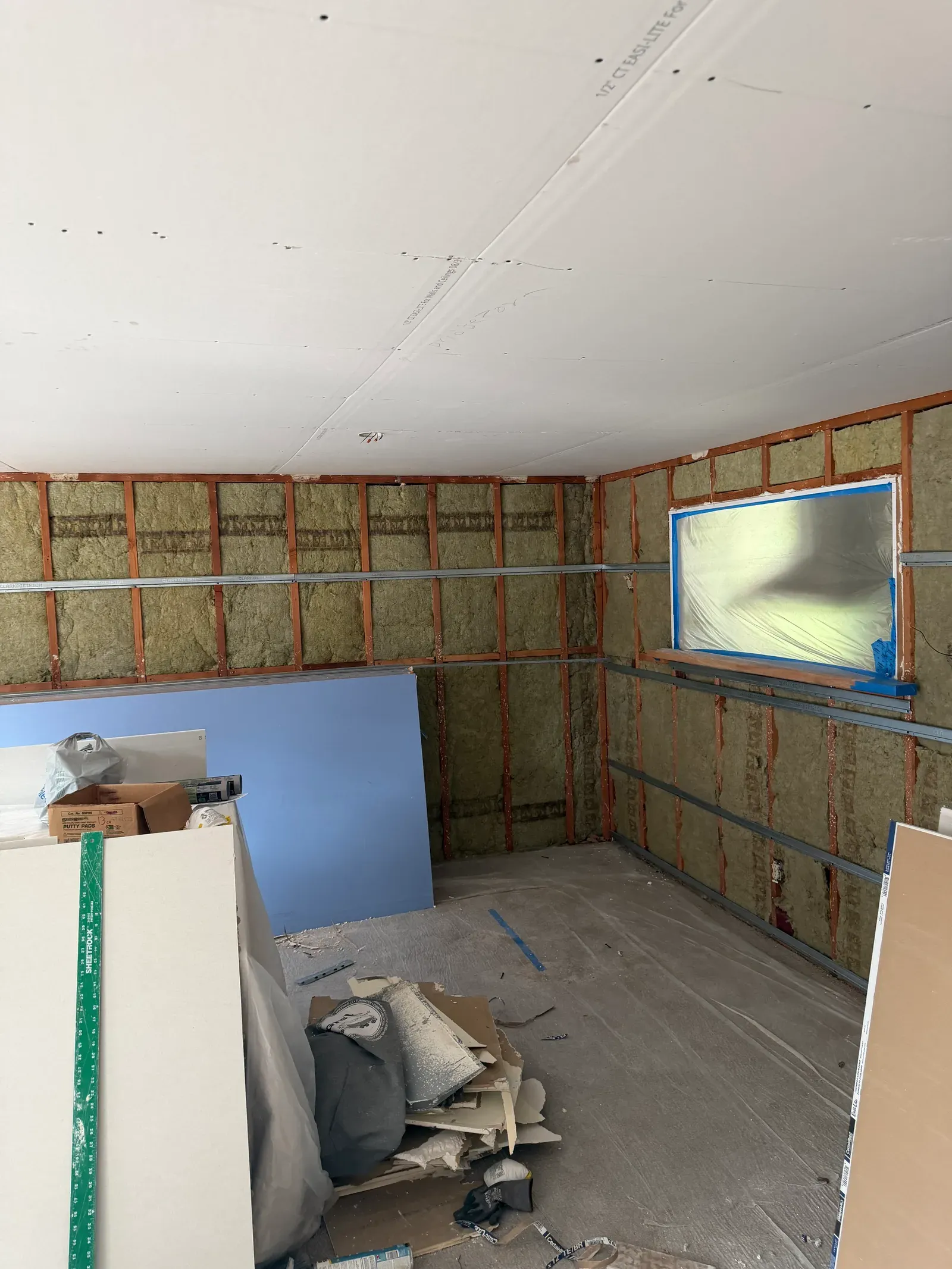
- Open framing paired with resilient channel: In a recent Vancouver build, pairing Rockwool Safe'n'Sound, horizontal resilient channel, and blue SilentFX gave maximum sound isolation without hanging twice as many sheets overhead.
- Tight closets and narrow hallways: Saving an extra half-inch on both walls preserves hallway width and appliance clearances.
Where double 5/8 drywall + damping compound makes more sense
On big basement media rooms, multi-wall additions, or new walls where jamb depths are set before hanging, two layers of standard 5/8-inch drywall often deliver higher low-end mass at lower material cost per square foot. Extra mass helps most against low bass frequencies from subwoofers and stereo speakers, especially when joints between layers are staggered and sealed cleanly.
Four details that ruin either board if skipped
No matter which sheet goes on the studs, real residential soundproofing succeeds or fails on details between trades:
- Mineral wool in the studs: Pack cavities snug with Rockwool Safe'n'Sound so hollow bays stop drumming.
- Resilient channel installation: Screwing drywall into the stud through the channel short-circuits the entire isolation assembly. Correct screw length matters everywhere.
- Back-to-back outlets and recessed lights: Wrap every electrical box with acoustic putty pads so noise cannot shoot straight through thin plastic boxes.
- Acoustic perimeter sealant: Leave a 1/4-inch gap at floor and top edges and fill solid with non-hardening acoustical caulk.
Want to go deeper on bedroom walls? Read our complete guide to soundproofing a room or see how our ceiling and wall soundproofing crew builds quiet assemblies.
Common Questions
Does SilentFX or QuietRock require special tape or mud?
No. Once hung correctly with perimeter acoustic caulk and putty pads behind electrical boxes, we tape, float, texture, and paint it with standard drywall compounds and primers.
Can I just screw soundproof drywall right over my existing bedroom wall?
Yes. Adding a 5/8-inch second sheet (standard Type X with damping compound, or an acoustic panel) right over existing finished drywall boosts voice and TV blocking cleanly, as long as outlet box extenders are added where needed.
Will soundproof drywall stop heavy upstairs footsteps completely?
No wall or ceiling sheet completely eliminates thuds traveling down structural wood joists. Mineral wool plus resilient channel plus heavier drywall reduces voices dramatically and softens impact noise, while carpet pad or acoustic underlayment upstairs tackles footsteps at the source.