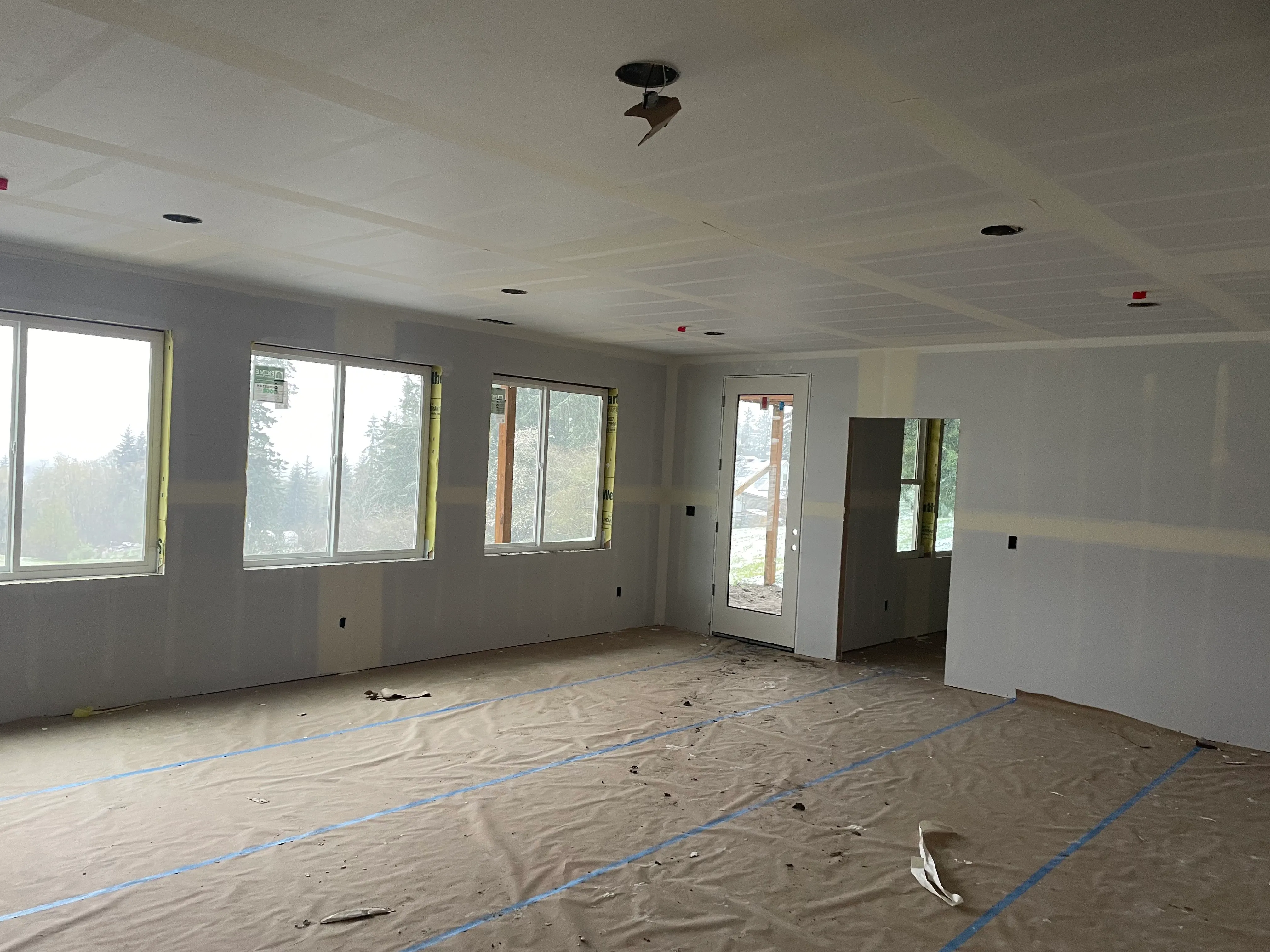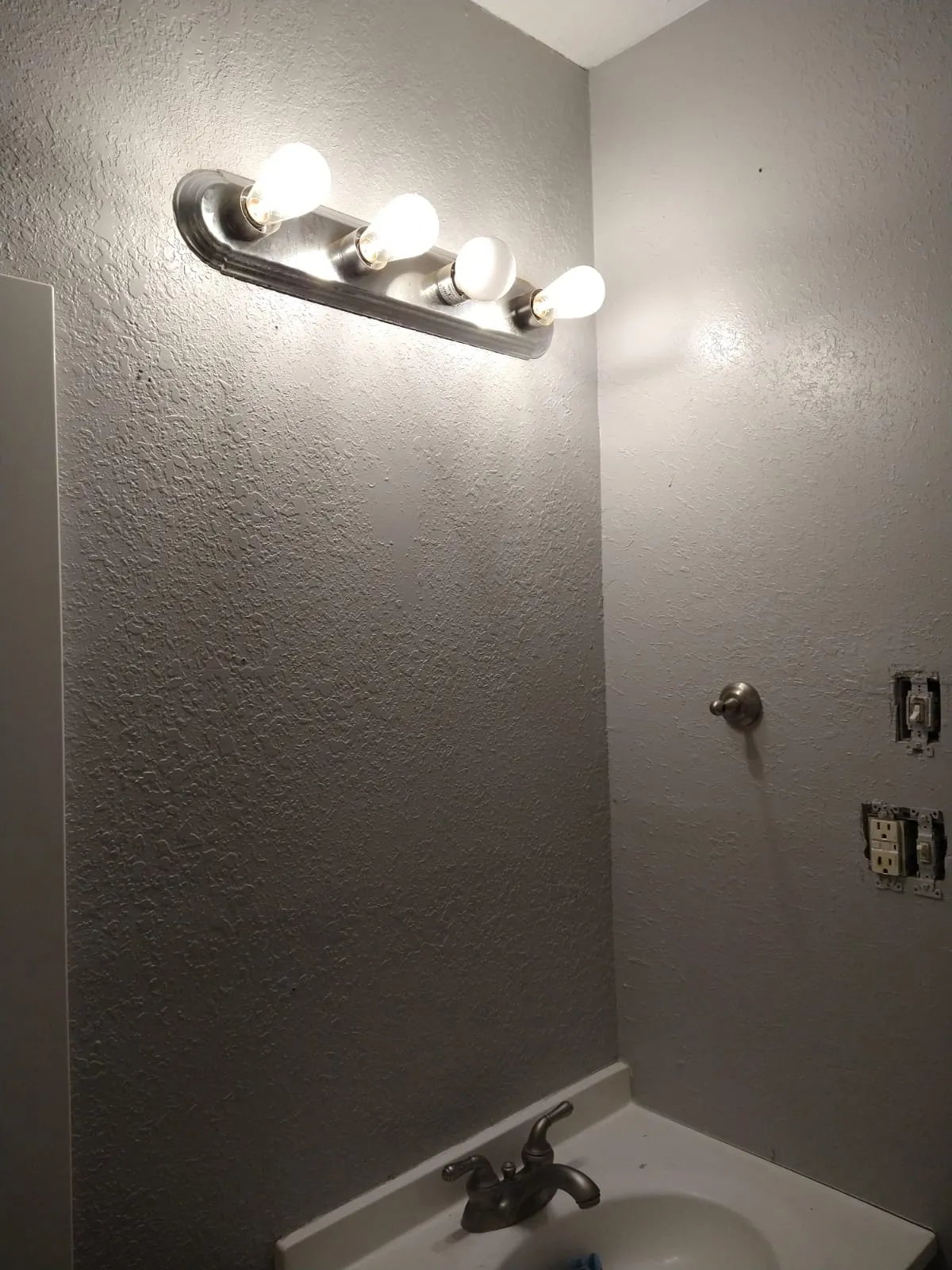
One of the more common questions we get as a drywall contractor in Vancouver, WA is: "Do I need a permit for this?" The answer is "it depends," which isn't satisfying, so let's actually lay it out.
This guide covers when a permit is required for drywall work in Vancouver, WA and the rest of Clark County, how to tell whether you're under City of Vancouver or county jurisdiction, what the building code actually says about drywall, and what inspections to expect. The rules come from the City of Vancouver Permit Center, the Clark County Permit Center, and the Washington State Building Code, which adopts the 2021 International Residential Code (IRC) as its base.
When you need a permit and when you don't
The City of Vancouver Permit Center publishes a clear list of when residential permits are required. Clark County's rules are essentially the same. Here's the practical breakdown for drywall-adjacent work.
Permit required:
- New single-family home construction
- Additions, alterations, and remodels to existing structures
- Converting a basement, attic, or garage into living space
- Adding or removing interior walls
- Adding a second story
- Sheathing repair or replacement
- Adding a garage, carport, or covered patio
- Changing the building footprint in any way
- Electrical, mechanical, or plumbing work tied to a remodel
Permit not required:
- Painting, carpet, cabinets, countertops, and similar finish work
- Single-family and duplex re-roofing or siding (without sheathing changes)
- Window replacement at the same size
- Sheds 120 square feet or smaller, fences 6 feet or shorter, decks 18 inches or less above grade
- Concrete slabs on grade (patios)
For drywall specifically, this means a straight patch and texture match is almost always exempt. The same goes for replacing drywall after a water leak that didn't touch framing. But the moment a wall moves, a basement gets finished, or a garage turns into a bedroom, you're in permit territory.
One thing worth quoting directly. The City of Vancouver notes that "work exempt from permit still needs to meet building code requirements." Skipping the permit doesn't skip the code. A drywall job done outside the code rules is still a problem at resale, at inspection, and at insurance claim time.
City of Vancouver vs Clark County: who handles your permit
Vancouver, WA is split between two jurisdictions. The city limits cover much of the urban core. Everything outside city limits is unincorporated Clark County. Your address determines who issues the permit.
Inside Vancouver city limits: City of Vancouver Permit Center. All residential applications go through ePlans, the city's electronic submission system. Email [email protected] with the completed application to start. The permit specialists line is 360-487-7833. Plan review goes through 360-487-7828. Inspections are scheduled through 360-487-7890.
Unincorporated Clark County: Clark County Permit Center, located at 1300 Franklin Street on the third floor of the Public Service Center in downtown Vancouver, WA. Open Monday through Friday, 8 a.m. to 2 p.m., by appointment. The main line is 564-397-4078, and the email for permit services is [email protected]. Online permitting handles most applications. Paper submittals are no longer accepted.
Several neighborhoods locals think of as "Vancouver" are actually unincorporated Clark County. Hazel Dell and Felida are both county jurisdiction. Salmon Creek is mixed. Cascade Park sits mostly inside city limits. If you're not sure which side you're on, check your address against the City of Vancouver's online jurisdiction map or call the city's permit line. They'll tell you in two minutes which office to call next.
Both jurisdictions enforce the same Washington State Building Code. The differences are mostly procedural. Fee schedules vary slightly. Plan-review timelines move at their own pace. Inspectors are different people. The code itself is the same, which makes our job as a drywall contractor in Vancouver, WA easier, because the wall assemblies we install don't change based on which side of a city limit line we're on.
Drywall and the Washington building code, in plain English
The Washington State Building Code (WAC 51-51) adopts the 2021 International Residential Code with state amendments. For drywall, the parts that matter most are around board type, board location, and fire-rated assemblies.
Standard board. Most interior walls use 1/2-inch standard gypsum board. Ceilings benefit from 5/8-inch board to reduce sag, and 5/8-inch is required when ceiling framing is spaced more than 16 inches on center. New construction in Vancouver, WA often runs 24-inch ceiling framing, which means 5/8-inch becomes the rule on a lot of homes.
Wet areas. The code requires moisture-resistant board (green or purple board) in bathrooms behind tubs, showers, and any surface that gets regularly wet. Cement board or equivalent is required behind tile in tub and shower enclosures. Standard drywall doesn't belong here. We get this question a lot, and it's covered more fully in our bathroom drywall moisture guide.
Garages. This is where most homeowners run into a code requirement they didn't expect. We'll cover it in the next section.
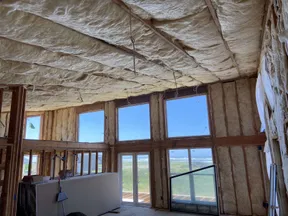
Insulation first. Code requires insulation to go in before drywall, and it has to be inspected before any board covers it. This is a practical reason why the order of trades matters and why a permitted drywall job can't start until insulation passes. If you're combining the two, our insulation crew schedules around the inspection so drywall can start the day after.
Garage drywall: the code rule that catches people
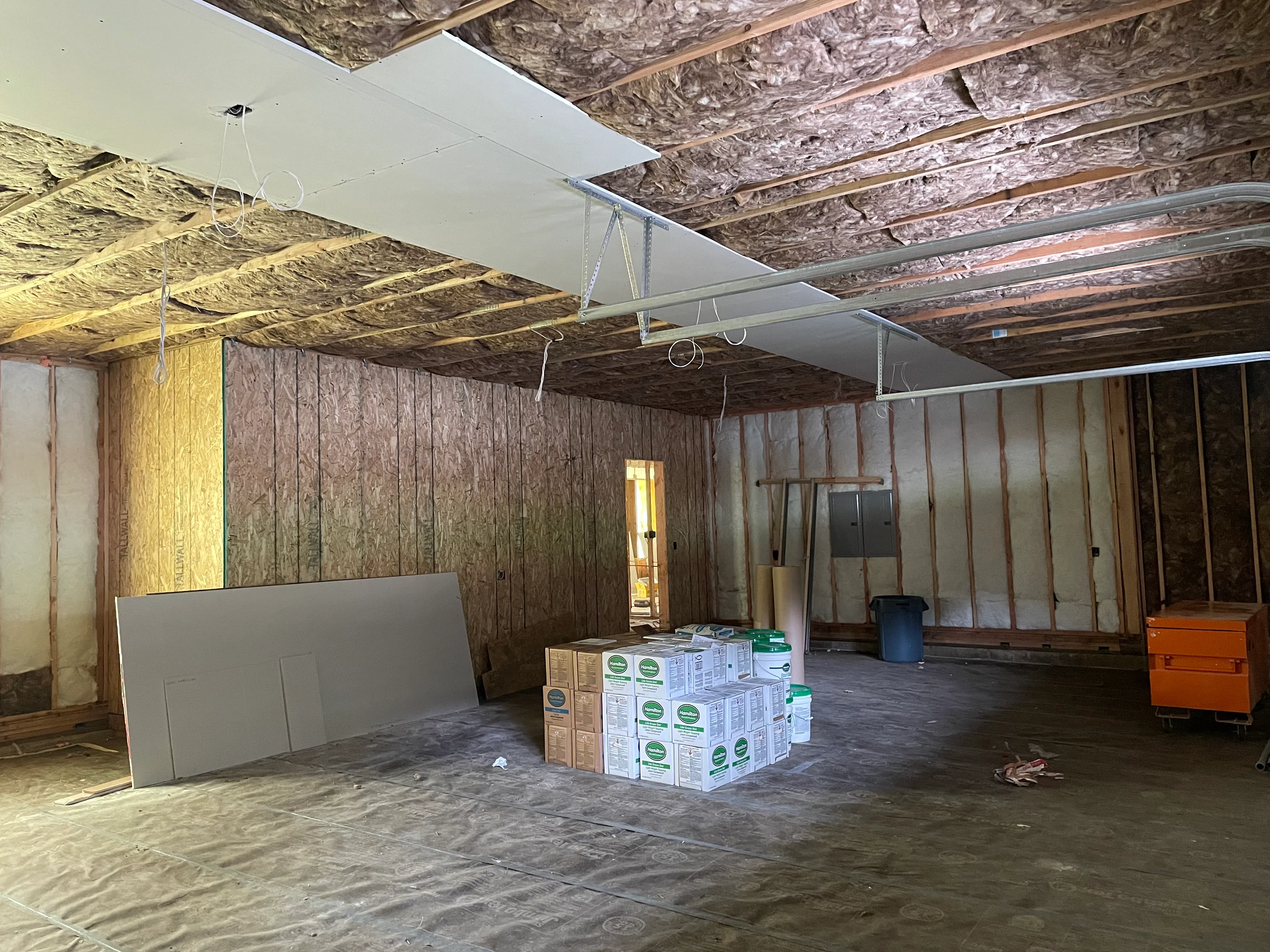
IRC section R302.6 is the dwelling-to-garage fire separation requirement. It's the most common drywall code issue we run into in Clark County, because most homeowners don't know it exists until an inspector flags it.
The rules:
Wall between the garage and the house: Not less than 1/2-inch gypsum board on the garage side.
Wall between the garage and a habitable room above (a bonus room or bedroom over the garage): Not less than 5/8-inch Type X gypsum board.
Ceiling between the garage and a habitable room above: Not less than 5/8-inch Type X gypsum board.
Structures supporting the separation: Not less than 1/2-inch gypsum board.
Type X is fire-rated drywall. It's thicker, denser, and contains glass fibers that slow the burn-through rate to at least one hour under standard testing. It costs more per sheet than standard board, and it has to be installed with the right fasteners at the right spacing. An inspector will check for it. A drywall contractor in Vancouver, WA who's worked on garage finishes in Clark County will spec it on the estimate without you having to ask.
We wrote a longer breakdown of garage drywall code, insulation options, and finish levels in our garage drywall guide if you want the full picture before you start.
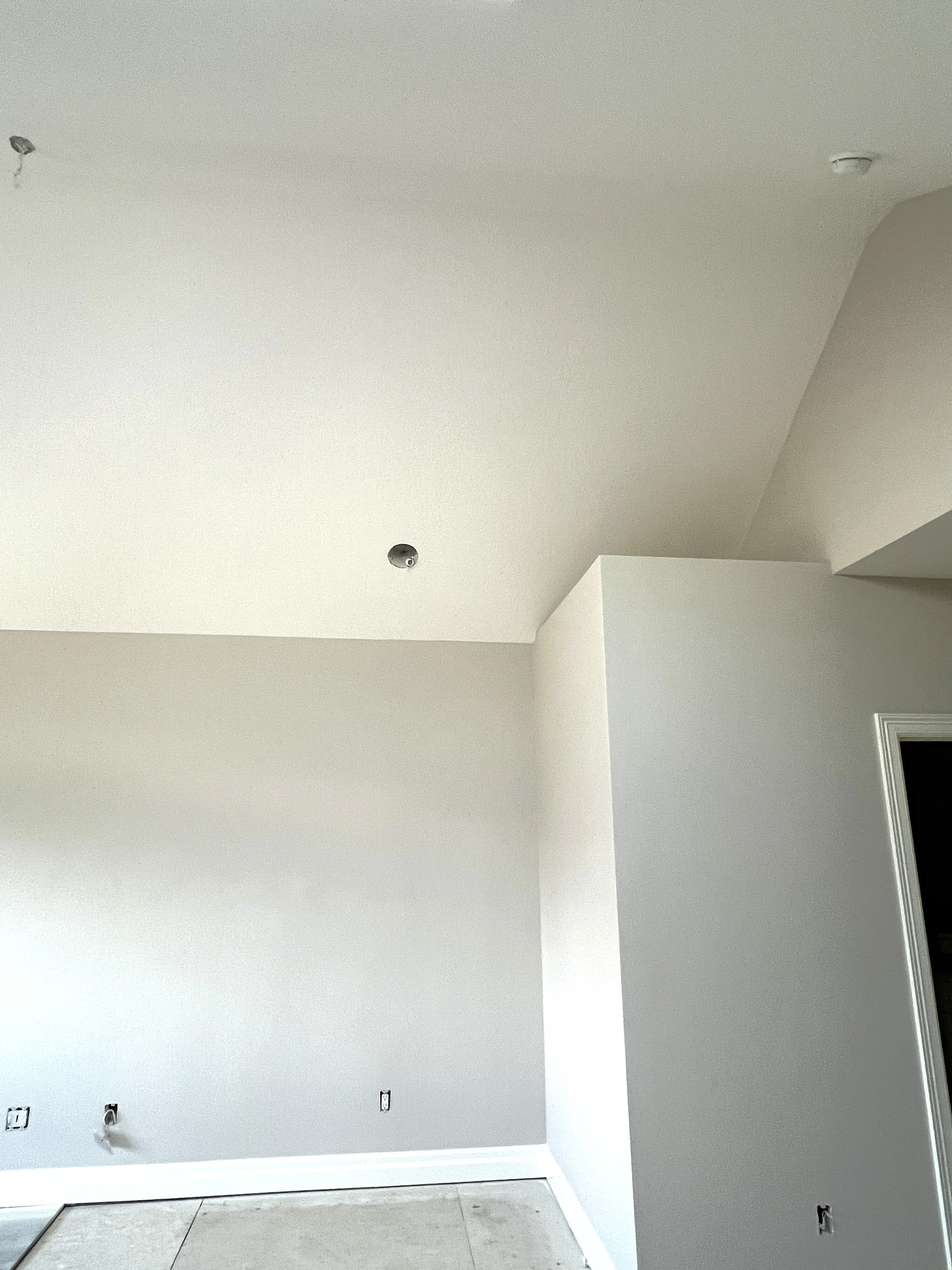
Inspections you should expect on a permitted job
On a permitted residential project in Vancouver, WA, several inspections happen in sequence before drywall can go up. Skipping or rescheduling one of these pushes everything else back, so the order matters.
Foundation and footing inspection. Before any wood frames up.
Framing inspection. Once walls, headers, and roof framing are in. The inspector confirms structural members, header sizing, and connections match the approved plans.
Rough-in inspections. Electrical, plumbing, and mechanical rough-ins are inspected separately. All the in-wall work has to pass before drywall closes it up. If your electrician misses a junction box or your plumber leaves a connection short, you find out now, not after the boards are up.
Insulation inspection. After insulation goes in, before drywall. The inspector verifies the right R-value in the right places (walls, ceilings, vaulted assemblies, rim joists).
Drywall (nailing) inspection. In some jurisdictions, a separate inspection checks that drywall has been hung and fastened correctly before tape and mud go on. Residential work doesn't always trigger this, though fire-rated assemblies in garages usually do. Confirm with your inspector.
Final inspection. Everything finished, painted, fixtures installed, ready for occupancy.
A drywall contractor in Vancouver, WA who knows this sequence schedules around it. Our crew won't start hanging board until insulation has been signed off, because we don't want to be the reason a job gets red-tagged. If insulation hasn't been inspected, we wait.
What this means for your drywall project
Three practical takeaways:
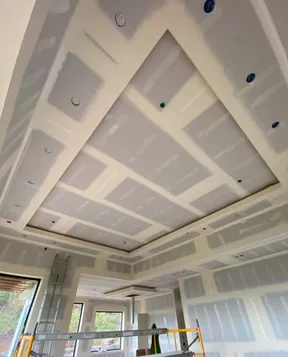
If your project is just drywall, you probably don't need a permit. Patching a hole, replacing a damaged ceiling section, retexturing a wall, removing popcorn ceiling. These are finish-work scopes that fall under "no permit required." Your drywall repair work can start as soon as we can schedule it.
If your project is part of a remodel, the permit is part of the bigger picture. A kitchen remodel that moves electrical and plumbing is a permitted job. The drywall scope rolls under that permit. Your general contractor or homeowner-permit pulls the paperwork. We come in once framing and insulation are signed off.
If your project is a basement finish, garage conversion, or addition, plan for the permit timeline. Plan review takes weeks. Some projects need engineering or architectural drawings. Don't expect to call us on Monday and have drywall going up by Friday. We work fast once the inspections clear, but the inspections have to happen first.
One more thing worth knowing. Inspectors in Vancouver, WA and Clark County are mostly straightforward. They want to see code-compliant work, they'll flag what's wrong, and they'll re-inspect after corrections. A drywall contractor in Vancouver, WA who's been in the market a while has a relationship with the local inspection process. We've seen what they look for, we've corrected work for them, and we know how to set up a job so it passes the first time.
Working with AvilaCo Drywall on permitted jobs
We're based in Battle Ground, about twenty minutes from most Vancouver, WA neighborhoods, and we work as a drywall sub under general contractors and direct with homeowners across Clark and Cowlitz Counties. We schedule around inspection windows, we install fire-rated assemblies to code, and we coordinate with your insulation and electrical crews so nothing holds up your inspection sequence.
If you're planning a project that needs a drywall contractor in Vancouver, WA and you've got questions about the permit, the code, or the timeline, give us a call at (360) 904-3878. We'll walk through the scope, tell you what we see on the code side, and give you a written estimate that matches what the permit will require.