Frequently asked questions
Straight answers to the questions homeowners and builders ask most about drywall, wall texture, decorative finishes, insulation, and hiring a contractor in Clark & Cowlitz Counties.
Drywall
How much does drywall cost per square foot in Washington state?
Most drywall installation projects in Washington run between $1.50 and $3.50 per square foot installed, depending on the scope. That range covers hanging, taping, mudding, and a basic finish. Higher ceilings, custom hand textures, or difficult access can push costs toward the upper end. For a typical 1,500 sq ft home interior, expect roughly $4,500–$10,000 including materials and labor. We provide free, itemized estimates for projects in Clark and Cowlitz Counties so you know exactly what you're paying for before any work starts.
What is the difference between drywall and sheetrock?
Nothing functional. Sheetrock is a brand name owned by USG Corporation — it's their version of drywall, like Kleenex is to tissues. All Sheetrock is drywall, but not all drywall is Sheetrock. Contractors in the Pacific Northwest use the terms interchangeably. When you're getting quotes for drywall installation, the brand of board matters less than the type (standard, moisture-resistant, fire-rated) and the quality of the finishing work.
What are drywall finish levels 1 through 5?
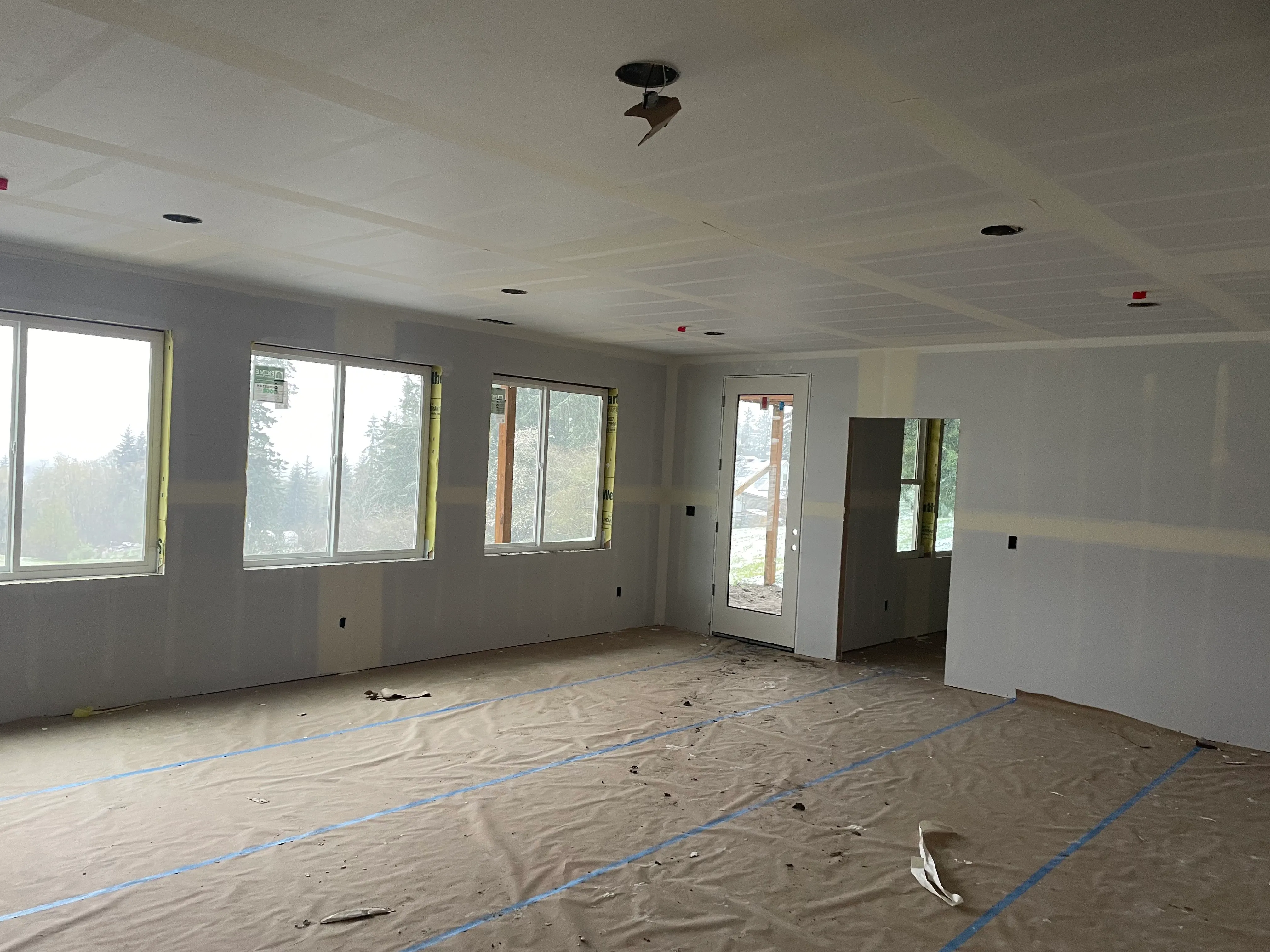
Drywall finish levels define how smooth and refined the surface is after taping and mudding. Level 0 is bare board with no finishing — used in unfinished spaces. Level 1 has tape embedded in joint compound, typical for above-ceiling areas. Level 2 adds a skim coat over tape and screws — common in garages. Level 3 gets two coats of compound on joints and is suitable for heavy textures. Level 4 adds a third coat and light sanding — the standard for most painted walls. Level 5 is a full skim coat over the entire surface for a flawless finish, required for high-gloss paint, decorative plaster, or areas with harsh lighting. Most residential projects in Vancouver, WA call for Level 4, but we do Level 5 when the finish demands it.
What is moisture-resistant drywall and when do I need it?
Moisture-resistant drywall (often called green board or purple board) has a water-repellent facing that holds up better in humid environments. You'll typically need it in bathrooms, laundry rooms, kitchens, and basements — anywhere moisture is present but the wall isn't directly exposed to water. For areas with direct water contact like shower surrounds, cement board or a surface like microcement is the better choice. Washington state building code requires moisture-resistant board in wet areas, and inspectors in Clark County check for it.
How should I prepare my home for drywall work?
Clear the rooms where work will happen — move furniture out or to the center and cover it with plastic. Remove wall hangings, curtains, and anything fragile. If we're doing a full drywall installation, make sure electrical and plumbing rough-ins are inspected and approved first. We handle dust containment with plastic barriers and floor protection, but the less stuff in the work area, the faster and cleaner the job goes. For occupied homes, we typically work room by room to minimize disruption.
Can you install new drywall over existing drywall?
You can, but it's not always the best approach. Adding a second layer works for covering damaged plaster or outdated texture when the existing surface is still structurally sound and flat. The downsides: it adds weight to the framing, reduces room dimensions slightly, and requires extending all electrical boxes and trim. If the existing drywall has moisture damage, mold, or significant structural issues, it needs to come down first. We'll assess the existing walls during your estimate and recommend the right approach for your situation.
Texture & Finishing
What is the difference between knockdown, orange peel, and skip trowel texture?
Knockdown is sprayed on and then flattened with a knife, creating an organic, mottled pattern — it's the most popular texture we install in Clark County homes. Orange peel is a finer, bumpy spray texture that looks like the surface of an orange — common in newer construction and easier to touch up. Skip trowel is applied by hand with a curved knife, leaving a layered, Mediterranean-style look with more depth and character. Each has a different feel and maintenance profile. If you're not sure which to choose, we bring texture samples to your estimate so you can see and feel them on an actual wall. Learn more about our hand texture services.
Can textured walls be made smooth?
Yes. The process depends on the existing texture. Light textures like orange peel can sometimes be skim-coated directly — we apply thin layers of joint compound over the entire surface, sand it smooth, and prime it. Heavier textures like knockdown or skip trowel may need to be scraped down first before skim coating. It's labor-intensive work that typically requires a Level 5 finish to look right, especially under flat or low-sheen paint. We handle this regularly for homeowners updating older homes in Vancouver, WA and surrounding areas.
Which wall texture is best for hiding imperfections?
Knockdown and skip trowel are the best at disguising minor imperfections in the drywall surface — nail pops, slight ridges at seams, and hairline cracks blend into the pattern. Orange peel hides less but still outperforms a smooth finish. A smooth (Level 5) finish hides nothing — every flaw shows, especially under side lighting. If you're finishing a remodel or covering older walls, a hand-applied texture gives you both style and forgiveness.
Can you change wall texture without removing the drywall?
In most cases, yes. We can apply new texture over existing drywall as long as the surface is sound and properly prepped. For a texture change — say, going from orange peel to knockdown — we scrape or skim the old texture, repair any damage underneath, and apply the new finish. The drywall itself stays in place. This is a common request during remodels in older Battle Ground and Camas homes where the original texture feels dated.
Decorative Finishes
What is the difference between venetian plaster, lime wash, and Fresco Harmony?
Venetian plaster is a traditional multi-layer technique using slaked lime and marble dust, burnished to a deep, polished sheen. It's beautiful but labor-intensive and expensive. Lime wash is a thinner, single-coat application that gives walls a soft, chalky, Old World look with natural color variation. Fresco Harmony is a modern decorative coating that achieves a similar organic, textured aesthetic to both but applies more efficiently and offers better consistency. It's become our most-requested decorative finish because it delivers the high-end look at a more accessible price point. We covered this topic in depth in our comparison blog post.
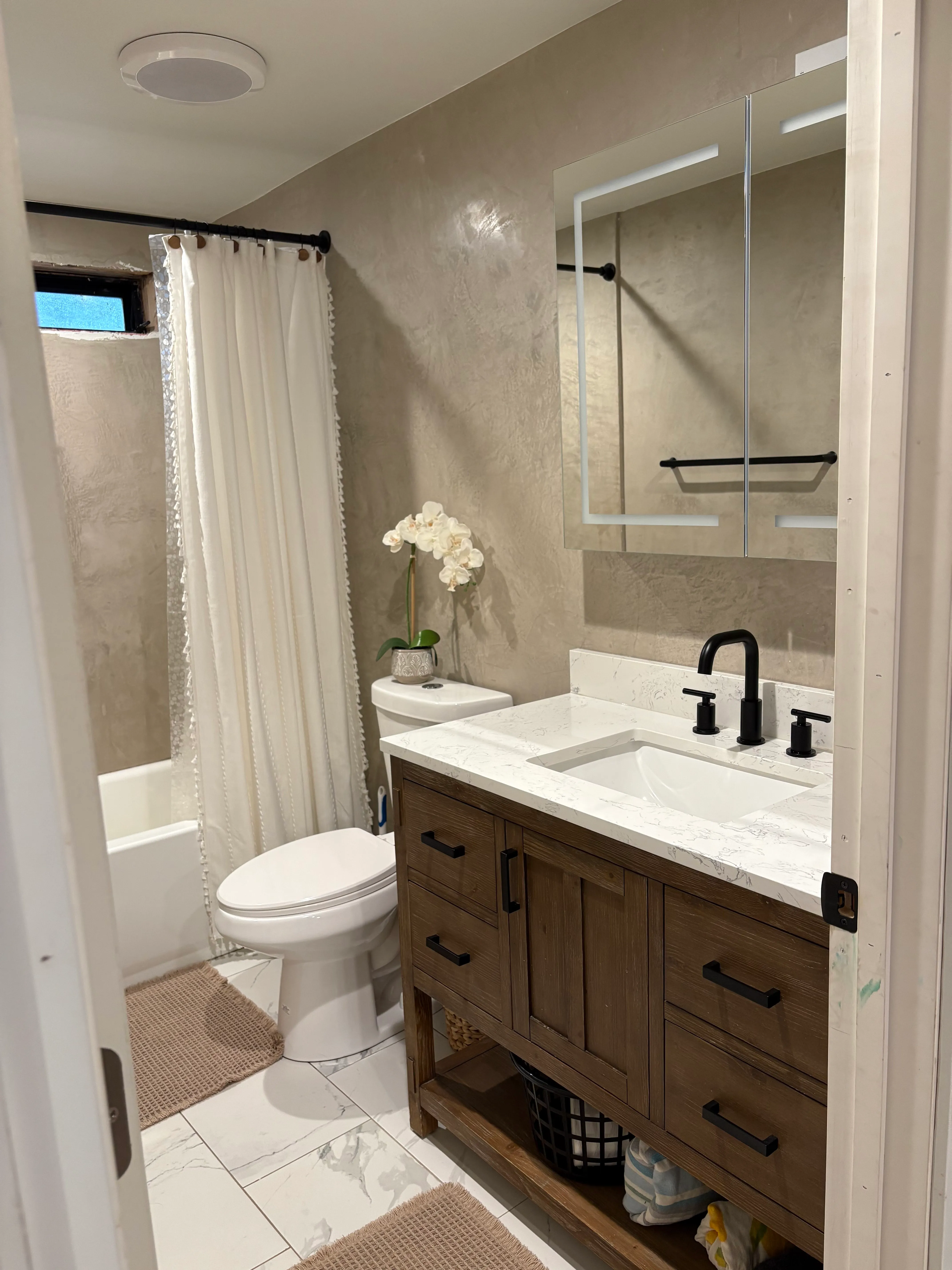
Can microcement be used in showers?
Yes — showers are one of the most popular applications for microcement. When properly applied with the right primer, mesh reinforcement, and sealed topcoat, microcement creates a seamless, waterproof surface that eliminates grout lines entirely. It can go directly over existing tile in many cases, avoiding a full tear-out. The key is correct sealing — we use a polyurethane or epoxy topcoat rated for continuous water exposure. Microcement showers need resealing every few years depending on use, but the maintenance is minimal compared to scrubbing grout.
How long does microcement last?
Microcement surfaces typically last 15–25 years with proper maintenance. It's a cement-polymer composite, so it's inherently durable — resistant to impacts, stains, and moisture when sealed correctly. Floors see the most wear and may need resealing every 3–5 years. Walls and countertops last longer between maintenance. The finish develops a subtle patina over time, which most homeowners consider part of its character. Cracks from structural movement can occur but are repairable without redoing the entire surface.
Is decorative plaster waterproof?
It depends on the product. Traditional lime-based decorative plaster is moisture-resistant but not waterproof — it breathes and handles humidity well (bathrooms, kitchens) but shouldn't take direct water spray. Fresco Harmony has better moisture resistance and works in high-humidity spaces. For surfaces exposed to direct water — showers, backsplashes behind sinks — microcement with a sealed topcoat is the right choice. We help homeowners pick the right finish for each room during the estimate.
Can decorative plaster be applied over painted drywall?
Yes, in most cases. The existing paint needs to be in good condition — well-adhered, no peeling, no moisture damage. We scuff-sand the surface and apply a bonding primer before the plaster goes on. Glossy or semi-gloss paint needs more aggressive prep to ensure adhesion. If the existing drywall has texture, we may need to skim it smooth first since decorative plaster and Fresco Harmony look best on a flat substrate. No need to tear out existing drywall — prep work makes it ready.
What maintenance does microcement require?
Day-to-day, microcement is low-maintenance — clean it with a pH-neutral cleaner and a soft mop or cloth. Avoid abrasive scrubbers and harsh chemicals like bleach or vinegar, which can degrade the sealant. Floors should be resealed every 3–5 years depending on foot traffic. Walls and countertops need resealing less frequently. Avoid dragging heavy furniture across microcement floors without felt pads. The maintenance is comparable to hardwood floors — easy once you know the basics.
Is microcement more expensive than tile?
Installed cost is similar for mid-range projects. Microcement typically runs $15–$30 per square foot installed, while tile ranges from $10–$30+ depending on the tile itself plus labor for setting, grouting, and cleanup. Where microcement saves money is on complex surfaces — curved walls, shower niches, irregularly shaped spaces — where tile requires extensive cutting and waste. Microcement also eliminates grout, which means less long-term maintenance cost. For large, simple surfaces like a bathroom floor, tile may be cheaper. For seamless, modern looks on complex surfaces, microcement often wins on value.
Insulation
What R-value do I need for my home in Clark County, WA?
Washington state energy code (based on climate zone 4C for Clark and Cowlitz Counties) requires minimum R-21 for exterior walls and R-49 for attic/ceiling insulation in new construction. Existing homes often have R-13 walls and R-30 attics — well below current code. Upgrading to code-minimum during a remodel makes a noticeable difference in comfort and energy bills, especially through Pacific Northwest winters. We assess your current insulation levels during our estimate and recommend the right R-value for each area of your home. Learn more about our insulation installation services.
What is the difference between batt insulation and blown-in insulation?
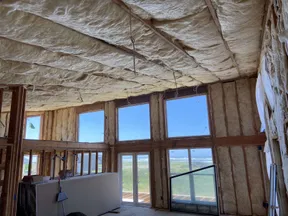
Batt insulation (fiberglass or Rockwool) comes in pre-cut rolls that fit between standard stud spacing — it's the most common type for new drywall installation and remodels where walls are open. Blown-in insulation (cellulose or fiberglass) is loose fill pumped into closed cavities or attic spaces. Batts work best when you have open stud bays and need precise placement around wiring and plumbing. Blown-in is better for retrofitting existing walls without removing drywall and for attics with irregular joist spacing. We install both types depending on what the project calls for.
Can insulation be added to existing walls without removing drywall?
Yes — blown-in insulation can be injected through small holes drilled in the drywall or exterior siding. The holes are patched and finished afterward. This is the standard approach for retrofitting older homes in Vancouver, WA and surrounding areas where tearing out walls isn't practical. The trade-off is that you can't inspect or correct issues inside the wall cavity (moisture, wiring) the way you can with an open-wall install. For remodels where the drywall is already coming down, batt insulation in the open cavity is the better approach.
Does insulation help with soundproofing between rooms?
Standard fiberglass batt insulation provides modest sound dampening — it's better than empty wall cavities but won't block loud conversations or music. For real soundproofing, Rockwool (mineral wool) insulation is significantly better because of its density. We install Rockwool batts for homeowners who want sound control between bedrooms, home offices, or media rooms. For maximum sound isolation, combine Rockwool insulation with resilient channel and a double layer of drywall — that assembly can cut sound transmission dramatically. We can spec the right approach for your insulation project.
How do I know if my home is under-insulated?
Common signs: rooms that are noticeably colder in winter or hotter in summer than the rest of the house, drafts near exterior walls, high energy bills relative to your home's size, and ice dams forming on the roof in winter. Older homes in Clark County (pre-2000) frequently have inadequate insulation by current standards. You can check your attic insulation depth yourself — if you can see the tops of the ceiling joists, you likely have R-19 or less (current code calls for R-49). For walls, a thermal camera or a professional energy audit gives you the clearest picture. We evaluate insulation as part of any drywall or remodel project.
What does Washington state energy code require for insulation?
For Clark and Cowlitz Counties (climate zone 4C), Washington's residential energy code requires: R-21 for 2×6 exterior walls (or R-13 cavity + R-5 continuous), R-49 for ceilings/attics, R-30 for floors over unconditioned spaces, and R-15 for basement walls. These apply to new construction and significant remodels. The code was updated in 2023 and is among the more demanding in the country. Building inspectors in Vancouver, Battle Ground, and Ridgefield enforce these requirements strictly. We ensure every insulation installation meets or exceeds current code.
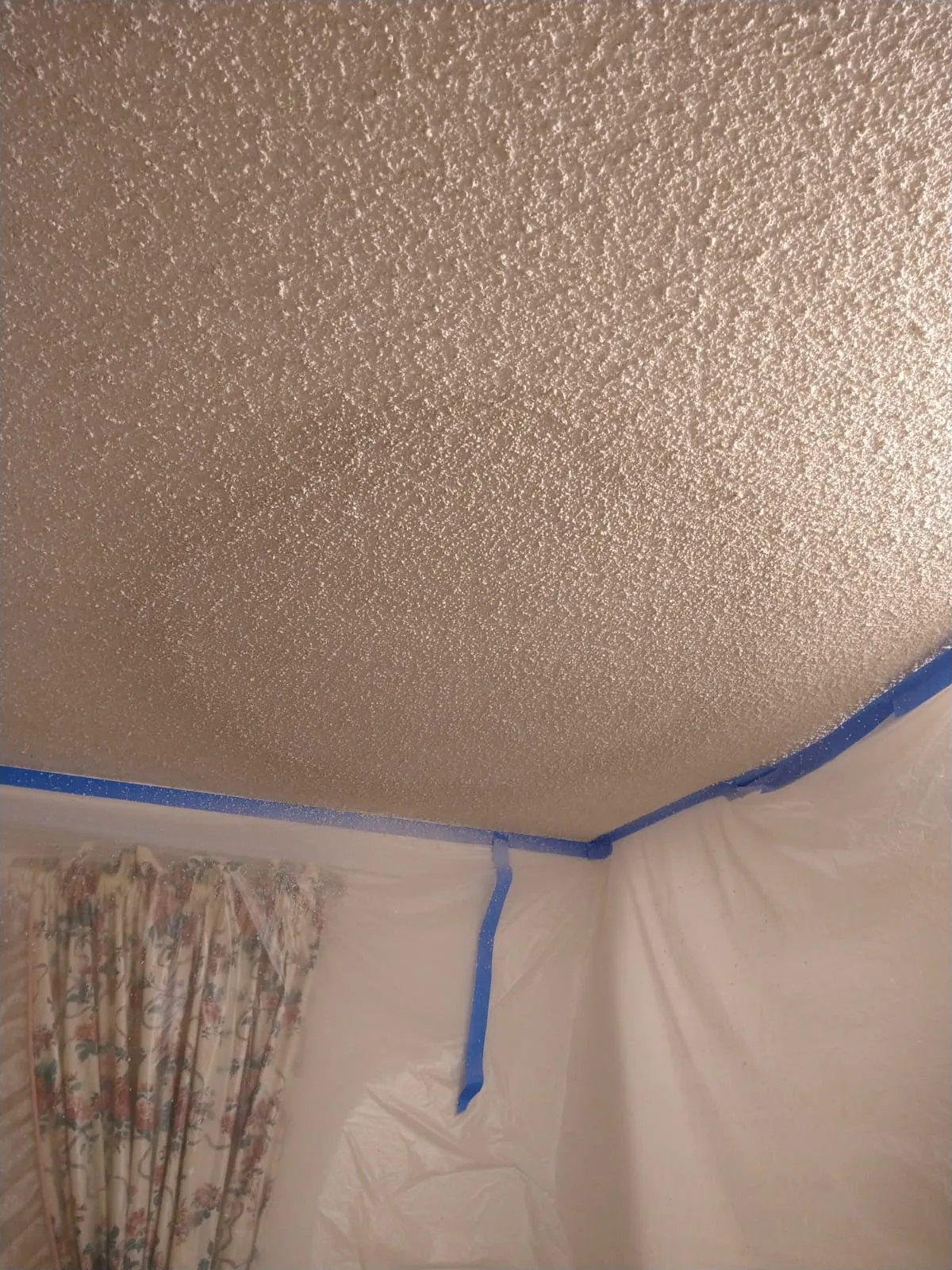
Popcorn Ceilings
How do I know if my popcorn ceiling contains asbestos?
If your home was built before 1980, there's a real chance the popcorn texture contains asbestos. Homes built between 1980 and 1990 have a lower but non-zero risk. You cannot tell by looking at it — the only way to know is testing. You can buy a DIY test kit and send a sample to a certified lab, or hire an asbestos testing company to collect and analyze samples. In Washington state, if asbestos is confirmed, removal must follow L&I regulations including proper containment and disposal. We recommend testing before any popcorn ceiling removal project, and we can point you to local testing resources in Clark County.
Is popcorn ceiling removal worth it for resale value?
In most cases, yes. Popcorn ceilings are consistently cited as a top buyer turn-off in real estate surveys. Removing them and replacing with a clean, modern finish — smooth or light knockdown — makes rooms feel larger, brighter, and more updated. The ROI varies, but real estate agents in the Vancouver, WA market generally agree that popcorn removal pays for itself by making the home more competitive, especially in the $350K–$600K range where buyers have options and first impressions matter.
Can you paint over popcorn ceilings instead of removing them?
You can, but it's a band-aid. Painting popcorn ceilings freshens them up temporarily, but the texture still collects dust, looks dated, and can't be cleaned easily. Paint also makes future removal harder because it seals the texture to the drywall. If you're planning to sell or update your home within the next few years, removal and a fresh finish is the better investment. If you just need to brighten a rental or a room you're not ready to renovate yet, a coat of flat white ceiling paint is a reasonable short-term fix.
What does a ceiling look like after popcorn removal?
After scraping, the ceiling gets skim-coated, sanded, and primed. You can choose a smooth finish (clean, modern look) or a light texture like knockdown or orange peel. Most homeowners in Clark County go with smooth or a very light knockdown. The final result is a flat, paint-ready surface that looks like new construction. If the existing drywall underneath has significant damage — seams showing, water stains, soft spots — we repair or replace those areas before finishing. The goal is a ceiling that looks like popcorn was never there.
Painting & Prep
How long should new drywall dry before painting?
Joint compound needs at least 24 hours to dry between coats, and the final coat should cure for 24–48 hours before sanding. After sanding, apply primer and let it dry per the manufacturer's instructions (usually 2–4 hours for latex primer). The primer coat is critical on new drywall — it seals the porous surface so paint absorbs evenly. Skipping primer or painting too soon leads to uneven sheen, visible seams, and peeling. In the Pacific Northwest, higher humidity can extend drying times, especially in winter. Our crew accounts for this on every painting project.
What primer should be used on new drywall?
PVA (polyvinyl acetate) drywall primer is the standard for new, unpainted drywall. It's specifically designed to seal the porous paper face and joint compound so your topcoat goes on evenly. For decorative plaster or high-end smooth finishes, a higher-build primer may be needed. If the drywall has been patched or repaired, use a primer-sealer to even out absorption differences between the patch and the original surface. We always prime new drywall before painting — it's a step that's easy to skip and expensive to fix later.
Why does paint peel on new drywall?
The most common causes: no primer (paint can't bond properly to raw drywall paper), painting over damp compound (moisture gets trapped and pushes the paint off), or dusty surfaces (sanding dust wasn't cleaned before priming). Less common but still possible: painting in high humidity without adequate ventilation, or using a paint that's incompatible with the primer. If you're dealing with peeling paint on new drywall, the fix is to scrape the loose paint, sand smooth, clean thoroughly, prime with PVA primer, and repaint. For extensive peeling, professional repair saves time and gets a better result.
Hiring & Process
How do I choose a drywall contractor in Washington state?
Start with licensing — Washington requires a valid contractor license (verify on the L&I lookup tool). Check that they carry general liability and workers' comp insurance. Beyond that, look for: a crew that does their own work (not subcontractors), clear written estimates with scope and pricing, local references you can actually call, and a portfolio of recent work. Avoid contractors who ask for large upfront deposits, won't provide a written contract, or can't give you a straight answer on timeline. We're a licensed, insured, local crew serving Vancouver, WA and Clark & Cowlitz Counties — happy to answer any questions before you commit.
What should a drywall estimate include?
A good estimate should itemize: square footage of drywall, board type and thickness, finish level, texture type, number of coats, and any prep work (demolition, insulation, framing repairs). It should clearly state what's included and what's not — trash removal, painting, electrical/plumbing coordination. Watch for vague line items like "drywall work — $X" with no breakdown. A detailed estimate protects both you and the contractor from scope disagreements later. Our estimates are free, itemized, and include a walkthrough of the project scope so there are no surprises.
Do I need a permit for drywall work in Clark County?
It depends on the scope. Replacing drywall in the same location (like a repair) typically does not require a permit. New construction, additions, garage conversions, and structural modifications require building permits — and the drywall is part of that permitted scope. Insulation upgrades may also trigger an energy code review. In Clark County, permits are handled through Clark County Community Development; the city of Vancouver has its own permitting office. We can advise on whether your project needs a permit during the estimate.
How long does a typical drywall project take?
A single room (patch, tape, texture, paint) takes 3–5 days. A full-home drywall installation on new construction (1,500–2,500 sq ft) typically takes 2–3 weeks from hanging through final texture. Drying time between mud coats is the biggest factor — each coat needs 24+ hours, and you can't rush it without compromising quality. Popcorn ceiling removal in a typical home runs 3–7 days. Add time for insulation if it's part of the scope. We provide a timeline during the estimate and keep you updated throughout.
What is the difference between a drywall contractor and a general contractor?
A drywall contractor specializes in hanging, taping, finishing, and texturing drywall — that's the core trade. A general contractor (GC) manages an entire construction project and coordinates multiple trades (framing, electrical, plumbing, drywall, paint). If you're doing a standalone drywall project — finishing a basement, removing popcorn ceilings, repairing damage — hiring a drywall contractor directly is faster and more cost-effective than going through a GC. For full remodels or new builds where multiple trades are involved, a GC coordinates the schedule and a drywall crew like ours slots into the sequence.
Still have questions?
We're happy to talk through your project and give you a straight answer. Get a free estimate or call us directly — no pressure, no sales pitch.