Clark County gets about 42 inches of rain a year. From October through May, it's wet more often than it's dry. That kind of sustained moisture shows up in your home eventually, and one of the first places you'll notice it is your drywall.
But rain isn't the only reason drywall gets damaged. Houses settle. Pipes leak. Kids put holes in walls. Doorknobs punch through when someone opens a door too hard. Some of that damage is cosmetic and easy to fix. Some of it means there's a bigger problem behind the wall.
Here's how to tell what you're dealing with, and when drywall repair is enough versus when you need to replace sections entirely.
Why drywall damage is more common in Clark County
Drywall is made of gypsum sandwiched between paper. Paper absorbs moisture. In a climate like Vancouver, WA and the surrounding Clark County area, moisture is constant for more than half the year. Cold exterior walls collect condensation when warm indoor air hits them. Basements stay damp. Bathrooms without proper ventilation hold humidity long after you're done showering.
Over time, that moisture weakens the paper face of the drywall, softens the gypsum core, and creates conditions where mold can grow. It's not a question of if your drywall will eventually need attention. In this climate, it's when.
The 5 signs your drywall needs attention
1. Cracks that keep coming back
A hairline crack above a doorframe is pretty normal. Houses settle, framing shifts, and drywall moves with it. You can fill a small crack with compound, sand it, and paint over it.
But if you fix a crack and it shows up again in the same spot a few months later, something is still moving. Diagonal cracks running from the corner of a door or window frame usually mean the framing is shifting from foundation settlement. Horizontal or stair-step cracks along seams can mean the tape is failing or the joint compound wasn't applied properly in the first place.
Recurring cracks need a proper drywall repair. That means cutting out the affected area, retaping, and building up fresh compound so the seam holds. A quick skim of mud over the top won't stop it from cracking again.
2. Water stains, discoloration, or bubbling
Yellow or brown stains on your ceiling or walls are almost always water. Something above or behind that section is leaking. It could be a roof leak, a pipe, condensation from an HVAC duct, or even moisture wicking up from a slab.
If the stain is dry and the drywall behind it is still firm, drywall repair might be enough. Cut out the stained section, patch it with fresh board, tape, mud, and match the texture. But the leak needs to be fixed first. Patching over active water damage is a waste of time and money.
Bubbling or peeling paint on your drywall is another moisture sign. The paint lifts because water is getting into the drywall face from behind. In Washougal and Camas homes, we see this most often on exterior-facing walls during the wet season.
3. Soft, crumbly, or spongy spots
Press your hand against the wall. If it gives, feels soft, or crumbles when you push on it, the gypsum core is compromised. This usually means prolonged moisture exposure. The board has absorbed water long enough that the gypsum has started to break down.
Soft drywall can't be patched. The damaged board needs to come out entirely and be replaced. You also need to find out where the moisture is coming from and fix that before putting new drywall up.
4. Visible mold or a musty smell
Mold on drywall shows up as black, green, or dark gray spots, usually starting small and spreading over time. Sometimes you'll smell it before you see it. A persistent musty odor near a wall, especially in a bathroom, basement, or laundry room, is a strong sign of mold growth behind the drywall.
Mold grows on drywall because the paper face is cellulose, and cellulose is food for mold. Add moisture and warmth, and mold can establish itself within 24 to 48 hours of water exposure. Clark County's climate gives it exactly those conditions for months at a time.
If you see mold on the surface, there's almost certainly more behind the wall. This is not a drywall repair situation. The affected sections need to be cut out and replaced. The wall cavity needs to be inspected and treated before new board goes up.
5. Sagging or bulging sections
Drywall that's sagging away from the framing or bulging outward has lost its structural connection to the studs or joists. On ceilings, this usually means the fasteners have pulled through the softened board, or the board itself has gotten too heavy from moisture absorption. On walls, it can mean water has pooled behind the board and pushed it outward.
Sagging drywall is a safety concern, especially on ceilings. It can come down. Don't wait on this one. Get it looked at, removed, and replaced.
Drywall repair vs. replacement: how to decide
The general rule is straightforward:
Drywall repair works for: Small holes (doorknob holes, nail holes, anchor holes), hairline cracks, nail pops, minor corner bead dents, and surface-level water stains where the board behind is still solid.
Replacement is needed for: Soft or crumbling board, widespread water damage, mold penetration, sagging sections, and any area where the structural integrity of the drywall is gone.
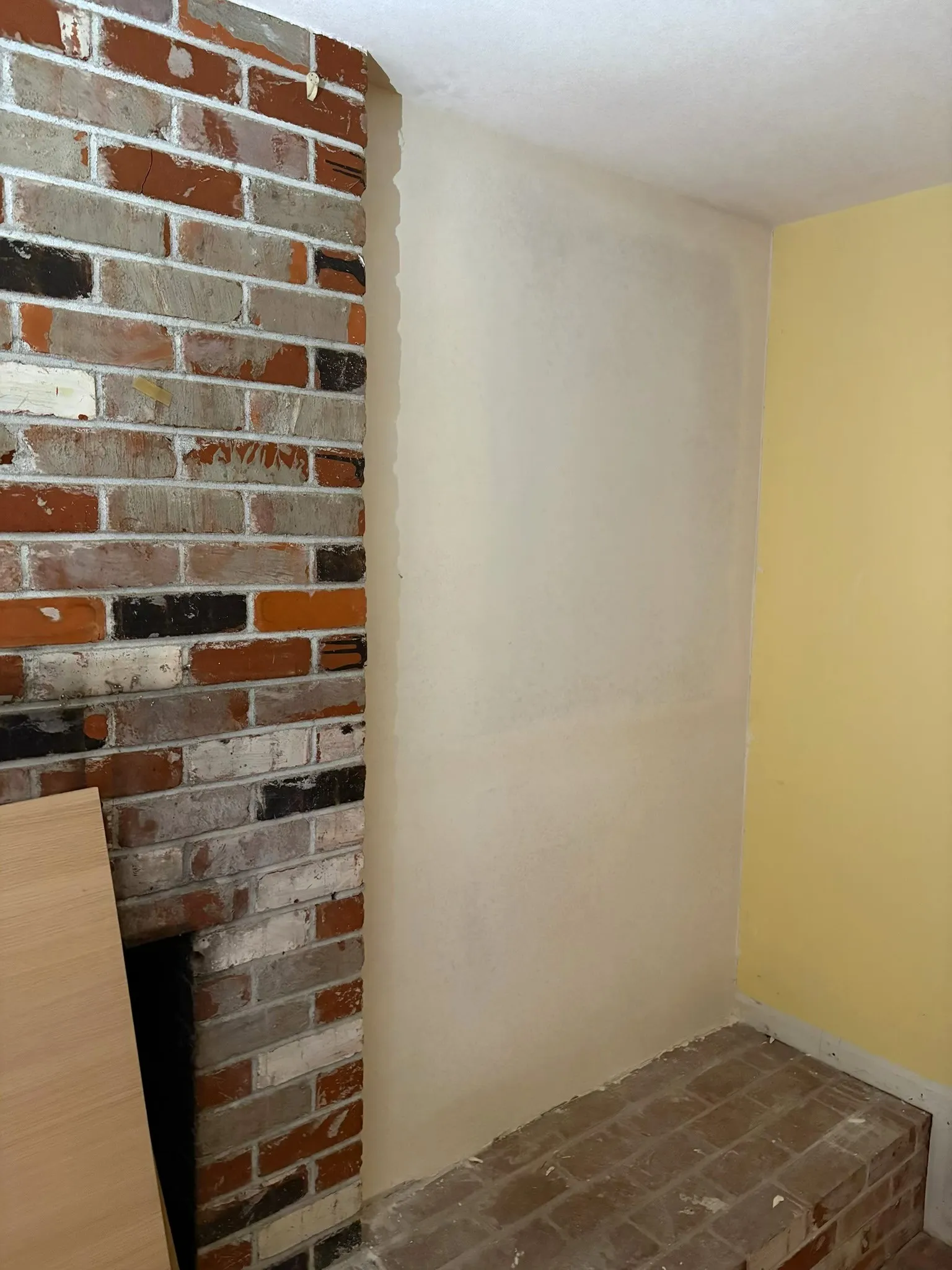
There's a middle ground too. Sometimes a wall has a few square feet of damage surrounded by perfectly good drywall. In that case, a professional drywall repair crew will cut out just the damaged section, patch in a new piece of board, and tape and texture it to match the rest of the wall. You don't have to replace the entire sheet.
Why moisture and mold deserve extra attention in Clark County
Mold isn't just a cosmetic problem. It's a health concern. Mold spores in the air cause respiratory issues, allergic reactions, headaches, and can make existing conditions like asthma significantly worse. For families with young kids or elderly members, it's something to take seriously.
In Clark County specifically, the conditions for mold are present for a large chunk of the year. October through May is wet. Homes in Battle Ground, Ridgefield, Hazel Dell, and throughout Vancouver deal with condensation on cold walls, damp basements, and bathroom humidity that hangs around longer than it should.
If you find mold on your drywall, the repair process involves more than just cutting out the board. The framing and wall cavity need to be inspected. If mold has spread to the studs, those need to be treated before new drywall goes in. The moisture source needs to be identified and fixed. And the new drywall should be moisture-resistant board if the area is prone to dampness.
What professional drywall repair looks like
When you call a contractor for drywall repair, here's what the process typically involves:
Assessment. The contractor looks at the damage, checks the board behind any stains or soft spots, and determines whether it's a patch job or a section replacement.
Removal. Damaged drywall gets cut out cleanly. If there's mold or moisture behind the wall, the cavity gets inspected.
New board. Fresh drywall is cut to fit and secured to the framing.
Taping and mudding. The seams get taped and covered with joint compound. Multiple coats, with sanding between each one.
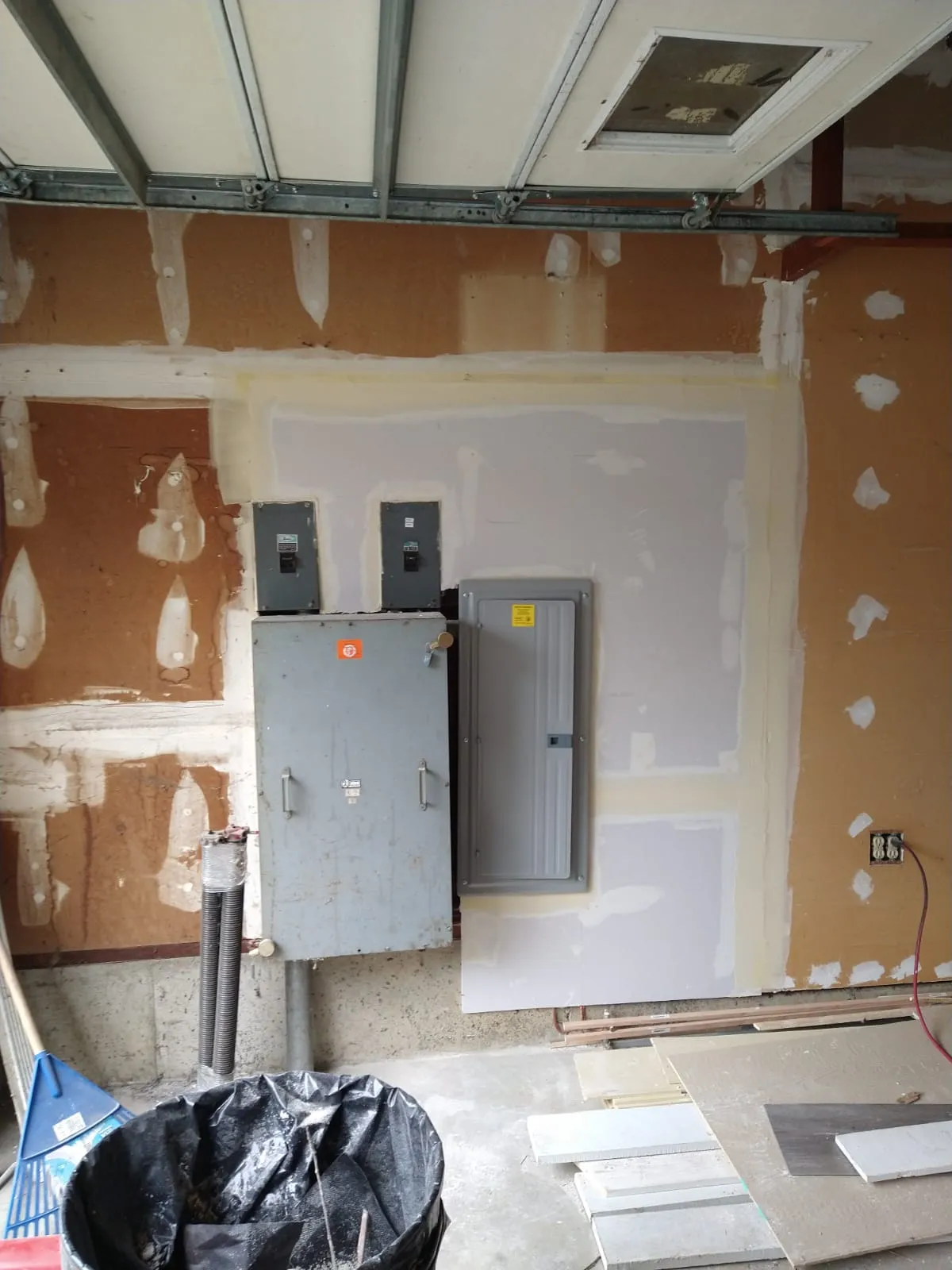
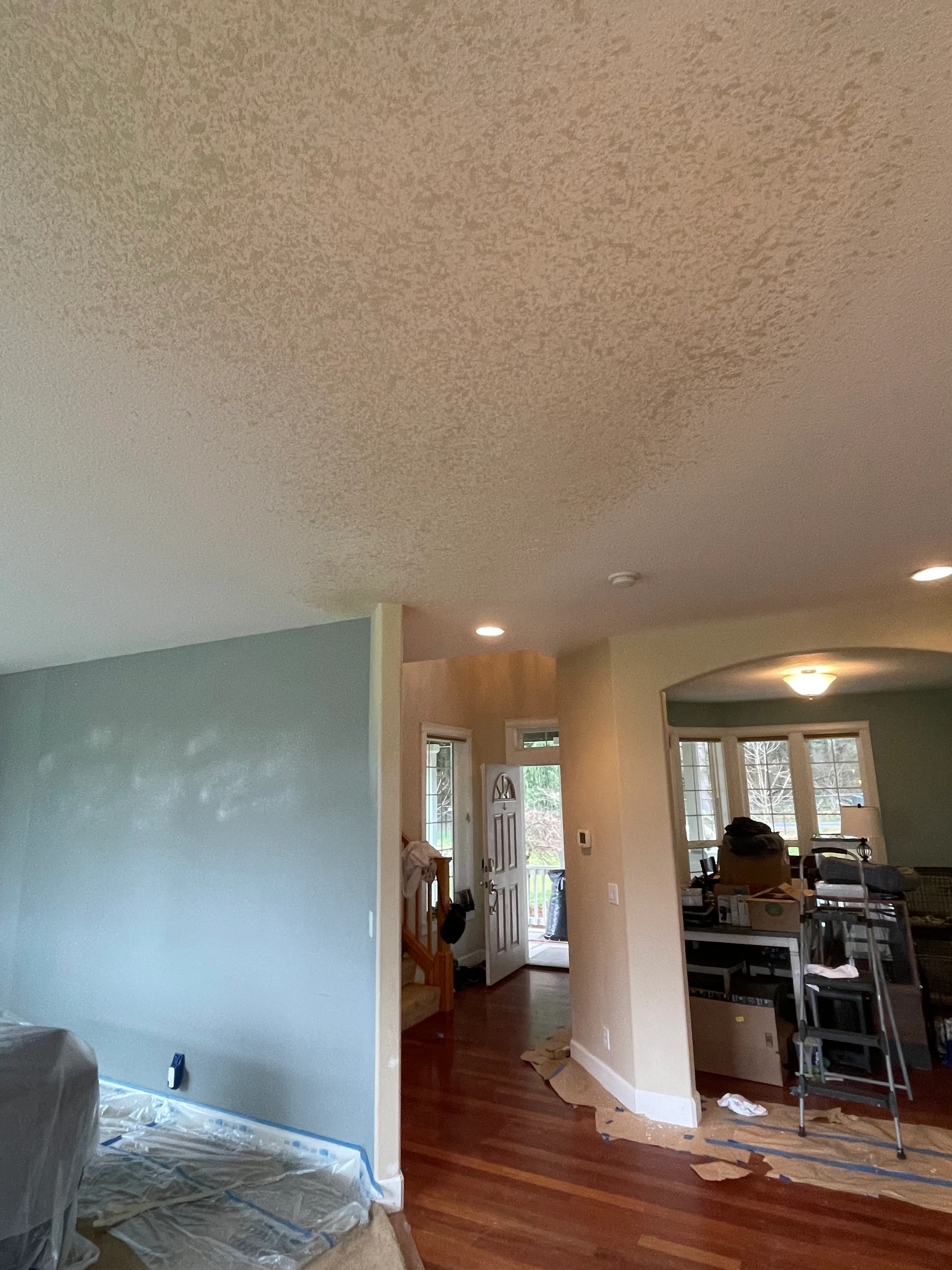
Texture matching. This is the part that separates a good drywall repair from a bad one. The patched area needs to match the surrounding wall texture. Knockdown, orange peel, skip trowel, smooth finish. Whatever your walls have, the patch needs to blend in so you can't see where the drywall repair was done.
Paint-ready surface. Once the texture is dry, the wall is ready for painting.
DIY drywall repair vs. hiring a contractor
Small stuff is fine to do yourself. A doorknob hole, a nail pop, a small dent in the corner bead. The hardware store sells patch kits for exactly these kinds of fixes. Sand it, fill it, sand it again, paint it. You don't need a contractor for that.
But anything beyond basic patching is where DIY drywall repair starts to go sideways. The two biggest problems homeowners run into are texture matching and hidden damage.
Texture matching is the #1 reason DIY drywall repairs look off. Getting knockdown or orange peel texture to blend into an existing wall takes practice and the right tools. A patch that's flat and smooth surrounded by textured wall sticks out immediately, and it's visible from across the room.
Hidden damage is the other issue. A water stain on the surface might be the only visible sign of a much bigger problem behind the wall. Mold, rotted framing, ongoing leaks. If you patch over it without investigating, the problem keeps growing.
If you're in Clark County and you've got drywall damage beyond the small stuff, AvilaCo Drywall can come take a look and give you an honest assessment. If a simple patch does the job, that's what we'll recommend. We handle drywall repair across Vancouver, Battle Ground, Camas, Ridgefield, Washougal, and the surrounding area. Reach out for a free estimate or call us at (360) 904-3878.