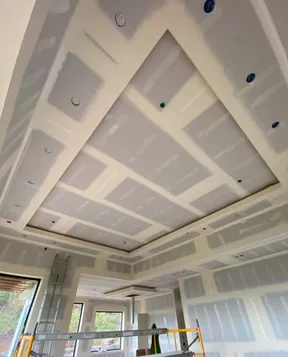
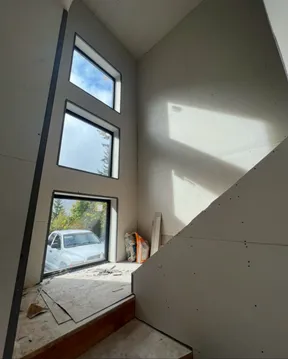
Every drywall job ends with a texture decision. Whether you're building a new home in Vancouver, WA, finishing a basement, or remodeling a room, someone is going to ask you what texture you want on the walls. Knockdown, orange peel, and skip trowel are the three options that come up most often, and they each look and feel different.
The texture you choose affects how your walls look, how easy they are to maintain, and how much the finishing stage of your drywall installation costs. Here's what each one actually is, how it gets applied, and how to pick the right one for your project.
Why wall texture matters more than people think
Texture does more than cover up drywall seams. It sets the visual tone of the room. A heavy skip trowel finish gives a wall depth and character. A light orange peel keeps things clean and modern. Knockdown splits the difference with enough pattern to be interesting without being busy.
Texture also affects maintenance. Some patterns hide scuffs and minor imperfections well. Others show every ding. If you have kids, pets, or high-traffic areas, that matters. And if you ever need to patch a section after a repair, some textures are much easier to blend than others.
Builders and homeowners in Clark County tend to gravitate toward knockdown and orange peel for production homes, and skip trowel for custom work. But there's no wrong answer. It comes down to what look you want and how the room gets used.
Knockdown texture
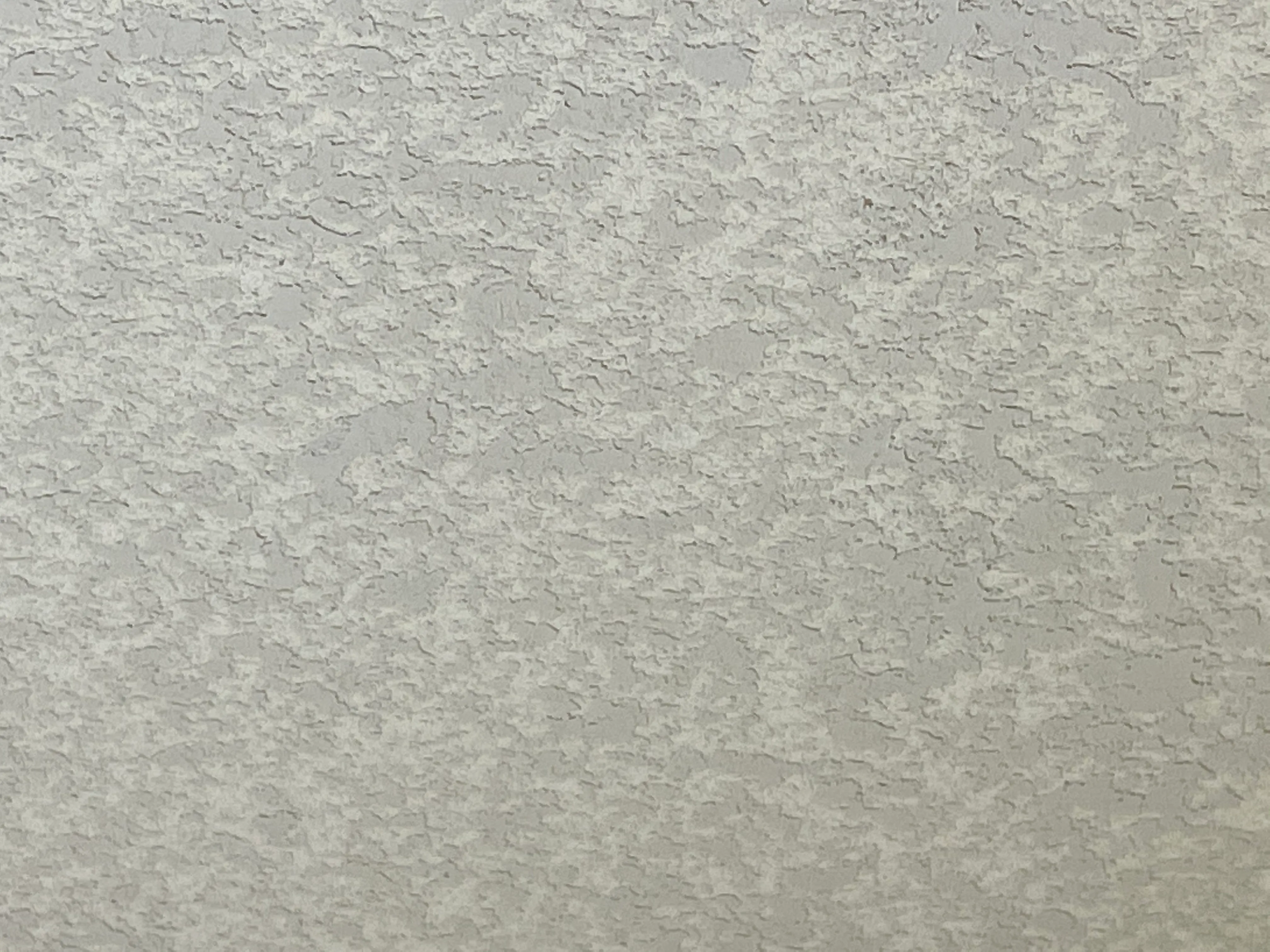
Knockdown is the most popular wall texture in the Pacific Northwest and it's what we apply more than anything else. The name describes the process: joint compound gets sprayed onto the wall in a splatter pattern, left to set up for a few minutes, and then knocked down with a wide drywall knife. The knife flattens the peaks of the splatter, creating a pattern of irregular flat islands with slight valleys between them.
How it's applied. The compound gets loaded into a hopper and sprayed through a texture gun. The splatter size and density depend on the nozzle, air pressure, and material consistency. After spraying, the compound sits for 10 to 15 minutes until the surface starts to firm up. Then the finisher runs a knockdown knife across the wall, flattening the tops without smearing the pattern. Timing is everything. Too soon and it smears. Too late and the compound is set and won't flatten.
What it looks like. Knockdown has a Mediterranean or stucco-inspired feel. The flat, irregular shapes create visual depth and catch light in interesting ways. It's textured enough to add character but smooth enough that it doesn't feel rough to the touch.
Best uses. Living rooms, bedrooms, hallways, dining rooms. Knockdown works in almost any room. It's a versatile, mid-range texture that looks good in both traditional and contemporary homes.
Pros. Hides drywall imperfections well. Easy to paint. Popular enough that most contractors can apply and repair it. Gives walls more visual interest than flat or orange peel without being as heavy as skip trowel.
Cons. Requires good timing and technique. A bad knockdown job shows immediately, with uneven flattening or smeared spots. Slightly more expensive than straight spray texture because of the hand-finishing step.
Orange peel texture
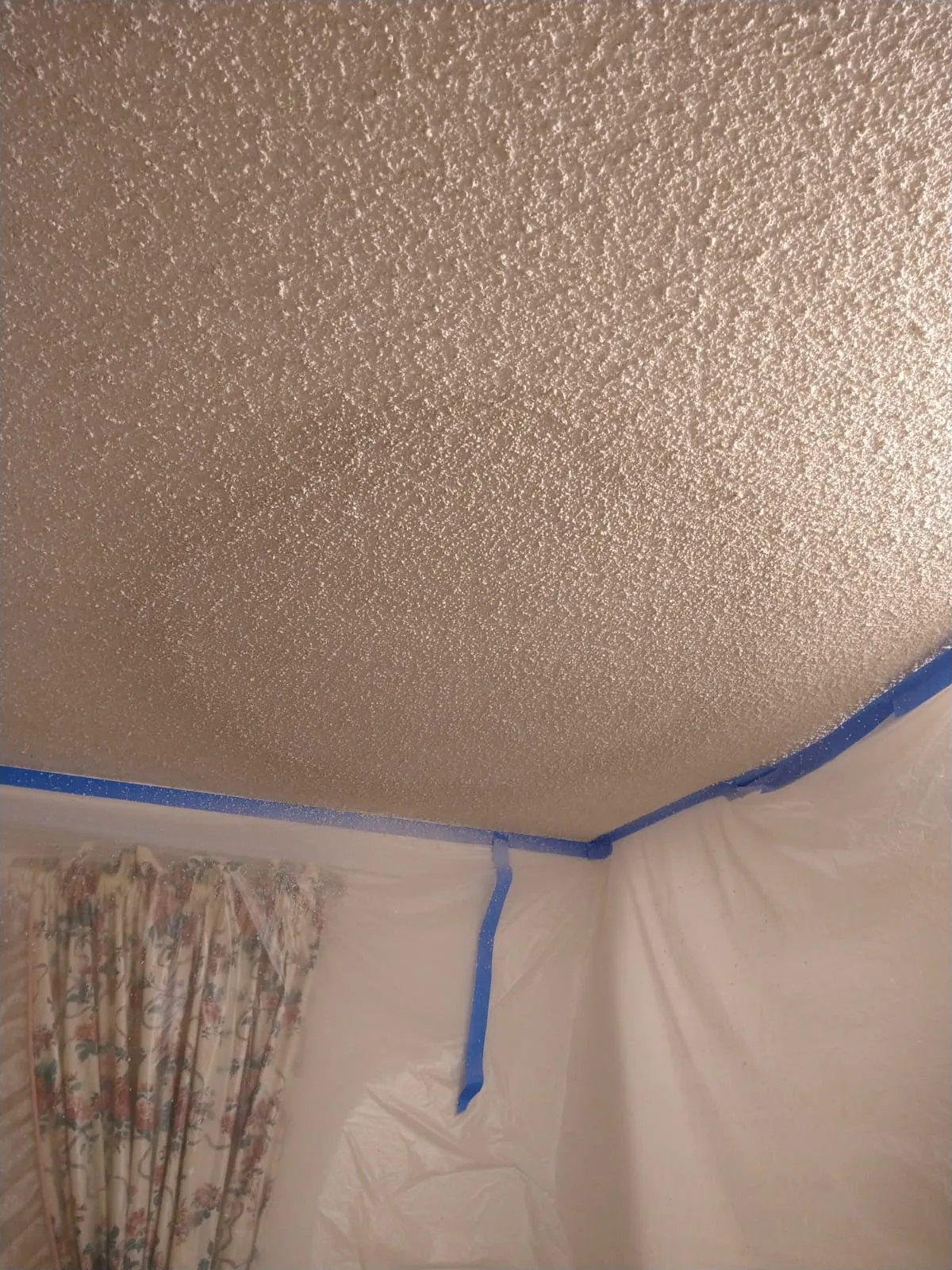
Orange peel is named after what it looks like: the dimpled surface of an orange rind. It's a spray-only texture with no hand finishing involved. The compound gets sprayed onto the wall in a fine, even splatter and left to dry as-is.
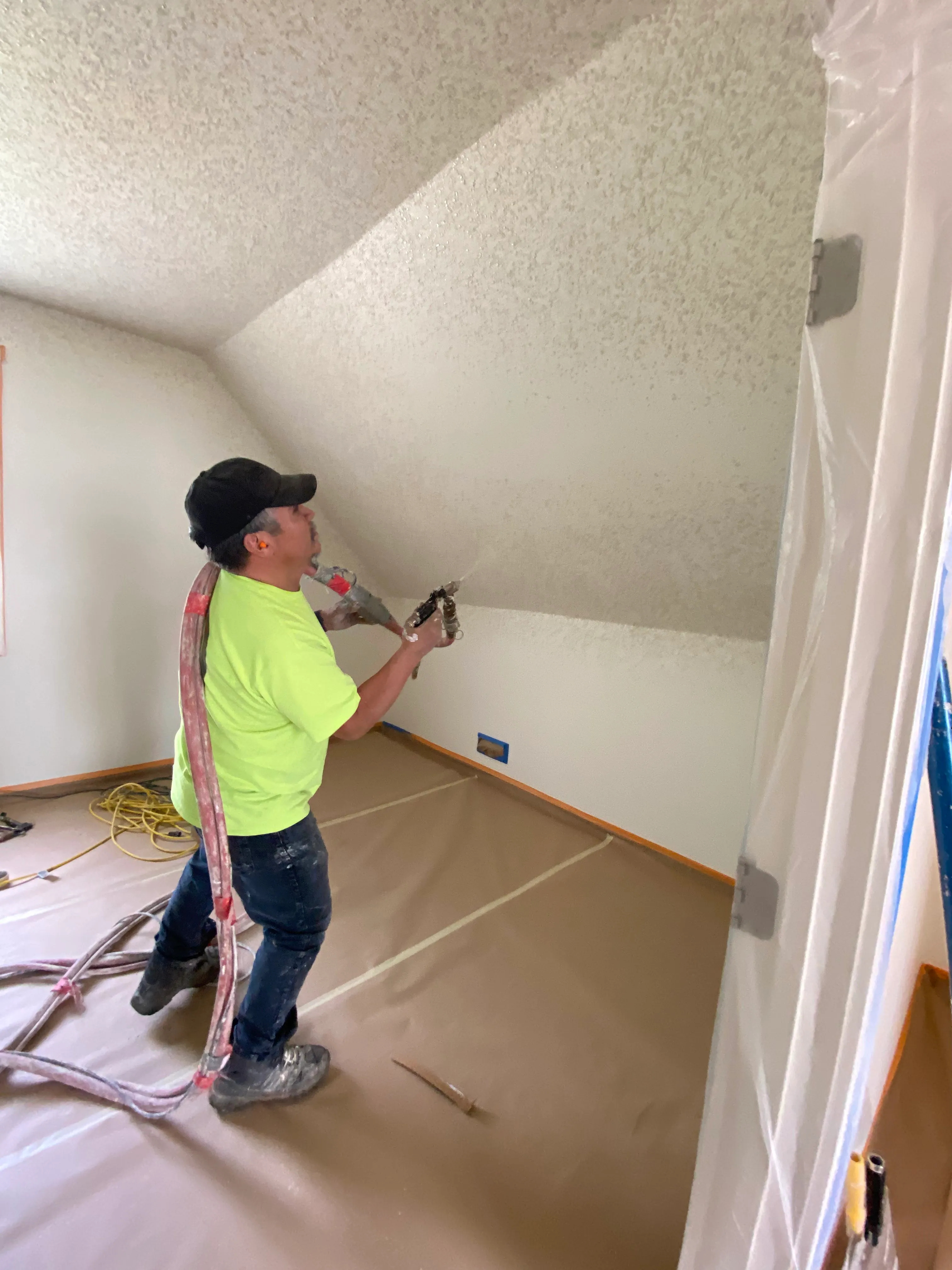
How it's applied. Similar to the first step of knockdown. Joint compound gets sprayed through a hopper gun. The difference is the nozzle setting, air pressure, and the consistency of the compound are adjusted to produce a finer, more uniform splatter. The spray goes on lighter than knockdown, and there's no knockdown step. The texture dries exactly as it was sprayed.
What it looks like. Subtle and uniform. Orange peel is the most understated of the three textures. It adds just enough surface variation to hide minor imperfections in the drywall without creating a noticeable pattern. From a few feet away, it reads close to smooth, but up close you can see the fine bumps.
Best uses. New construction, apartments, rental properties, any room where you want a clean background. Orange peel is the default texture in a lot of production housing because it's fast to apply and gives a consistent result across large areas.
Pros. Fastest and most affordable texture to apply. Consistent and uniform across large walls and ceilings. Easiest to repair and patch because the random pattern is simple to replicate. Cleans easily.
Cons. Can look generic or builder-grade if that's not the aesthetic you're after. Doesn't hide larger imperfections as well as knockdown or skip trowel. Less visual depth than heavier textures.
Skip trowel texture
Skip trowel is a hand-applied texture that creates a layered, organic pattern on the wall. There's no spray gun involved. The finisher applies joint compound directly to the wall with a curved trowel, skipping it lightly across the surface so the compound catches in some spots and misses others. Each pass adds another layer of texture.
How it's applied. A thin layer of joint compound gets spread onto the wall with a trowel held at a slight angle. The finisher moves the trowel in random arcs and sweeps, letting it skip across the surface. Where the trowel touches, the compound gets smoothed. Where it skips, a ridge of compound stays raised. The result is a pattern of smooth and textured areas that overlaps with each pass, building depth and visual complexity.
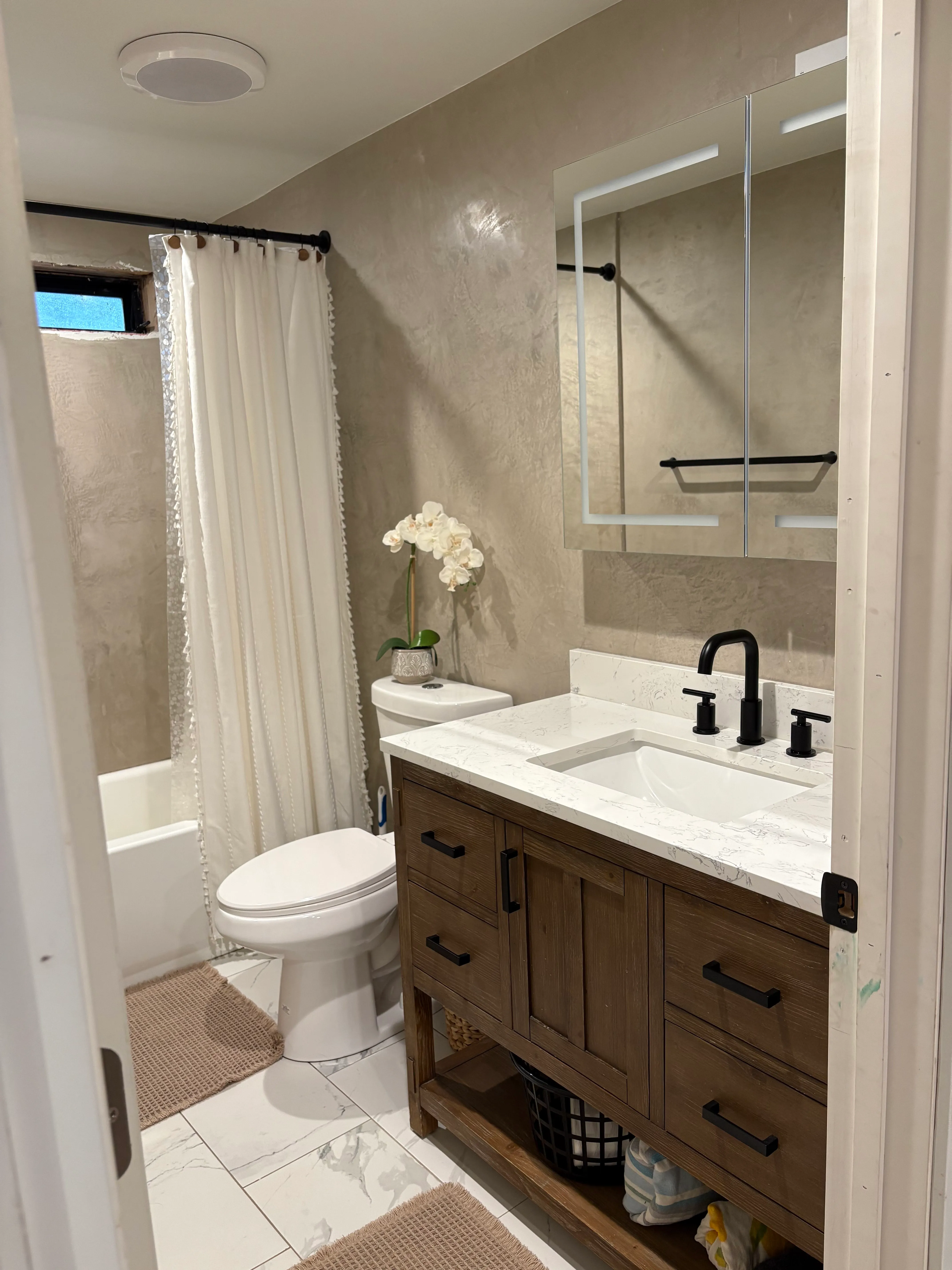
What it looks like. Skip trowel has an Old World, plaster-like quality. The overlapping trowel marks create a finish that feels handcrafted, because it is. No two walls look exactly the same. The texture has more depth and dimension than knockdown or orange peel, with visible trowel strokes and layered compound that catches light from different angles.
Best uses. Custom homes, formal living spaces, dining rooms, primary bedrooms, and any room where you want the walls to make a statement. Skip trowel is popular in higher-end homes around Camas and Vancouver where homeowners want something more distinctive than standard spray texture.
Pros. Unique, handcrafted appearance. Excellent at hiding imperfections. Adds significant visual depth and character. Works beautifully in both traditional and rustic-modern interiors.
Cons. Most expensive of the three because it's entirely hand-applied. Takes longer to complete. Harder to repair because matching the hand pattern requires skill. Not every contractor does it well.
Side-by-side comparison
Here's how the three textures stack up across the factors that matter most when you're making a decision.
Application method. Orange peel is spray-only. Knockdown starts with spray and finishes by hand. Skip trowel is 100% hand-applied with a trowel. The more hand work involved, the more time and skill the job requires.
Cost. Orange peel is the most affordable. It covers large areas fast with minimal labor. Knockdown costs a bit more because of the hand-finishing step. Skip trowel is the most expensive since a skilled finisher is working every square foot by hand. For a typical room, expect skip trowel to run roughly 30 to 50 percent more than knockdown, and knockdown to run 15 to 25 percent more than orange peel.
Visual impact. Orange peel is subtle and stays in the background. Knockdown has moderate texture with a Mediterranean feel. Skip trowel is the most visually distinctive with an artisan, plaster-like quality.
Durability. All three hold up well in normal use. Skip trowel's heavier texture is slightly more prone to catching dust and cobwebs. Orange peel's smoother surface is the easiest to wipe down. Knockdown lands in the middle.
Repairability. Orange peel is the easiest to patch and blend because the random spray pattern is straightforward to replicate. Knockdown is manageable for an experienced finisher. Skip trowel is the most difficult to match since every section was applied by hand with unique strokes.
Resale appeal. In the Clark County market, knockdown and orange peel are safe choices that appeal to the widest range of buyers. Skip trowel is appreciated in higher-end homes but can feel dated or heavy in smaller spaces if it's not done well.
How to choose the right texture
Start with the context of your project.
New construction. If you're building a new home, you're choosing texture for every room at once. Most homeowners go with one primary texture throughout the house for consistency. Knockdown is the most popular choice for new builds in the Vancouver area because it has enough character to feel intentional without being too busy. Orange peel works if you prefer a cleaner, more modern look. Some homeowners do knockdown in the main living spaces and upgrade to skip trowel in the primary bedroom or formal dining room for added character.
Remodel or addition. If you're adding onto an existing home, matching the existing wall texture is usually the priority. If you have orange peel throughout and you're finishing a new basement, you probably want orange peel down there too. If you're doing a full remodel and repainting anyway, it's a good opportunity to change your texture if you've been wanting something different. A popcorn ceiling removal project, for example, is a natural time to upgrade to knockdown on the ceiling.
Modern vs. traditional. Contemporary homes tend toward lighter textures. Orange peel or a light knockdown fit that aesthetic. Traditional, farmhouse, Mediterranean, or rustic-modern homes can handle heavier textures like skip trowel or a pronounced knockdown. Think about your trim, flooring, and cabinetry. The wall texture should complement the overall feel, not compete with it.
Maintenance tolerance. If you want walls that are easy to clean and simple to repair, orange peel is your best bet. If you're okay with a little more effort in exchange for a more distinctive look, knockdown is a solid middle ground. Skip trowel requires the most care when it comes to repairs and touch-ups.
Resale considerations. If you're building or remodeling with resale in mind, knockdown is the safest play in the Clark County market. It looks intentional and upgraded without being polarizing. Orange peel is universally acceptable. Skip trowel reads as a premium finish in the right home but can narrow your buyer pool if it's applied too heavily or in every room.
What about smooth finish?
We get asked about smooth walls regularly. Smooth, or Level 5, finish means no texture at all. The drywall gets taped, mudded, and sanded to a perfectly flat surface. It's the look you see in a lot of modern, high-end homes and designer spaces.
Smooth walls look incredible when they're done right. The problem is they show everything. Every minor imperfection in the drywall, every seam, every fastener dimple, every ding from daily life. The surface has nothing to hide behind. That means the drywall installation and finishing have to be flawless, and the cost reflects that. A Level 5 finish is more labor-intensive than any texture because the sanding, skim coating, and inspection process is meticulous.
Smooth finish also requires more maintenance over time. Scuffs, nail holes from hanging pictures, and minor impacts are immediately visible and need repainting to look right again. If you love the modern clean look and you're prepared for the upkeep, it's a beautiful choice. But for most homeowners in Vancouver and Camas, one of the three textured options gives you a better balance of looks and practicality.
If you're in Clark County and trying to decide on a wall texture, AvilaCo Drywall can walk you through samples and help you pick the right finish for your home. We apply knockdown, orange peel, skip trowel, and custom hand textures for new construction and remodels across the area. Reach out for a free estimate or call us at (360) 904-3878.