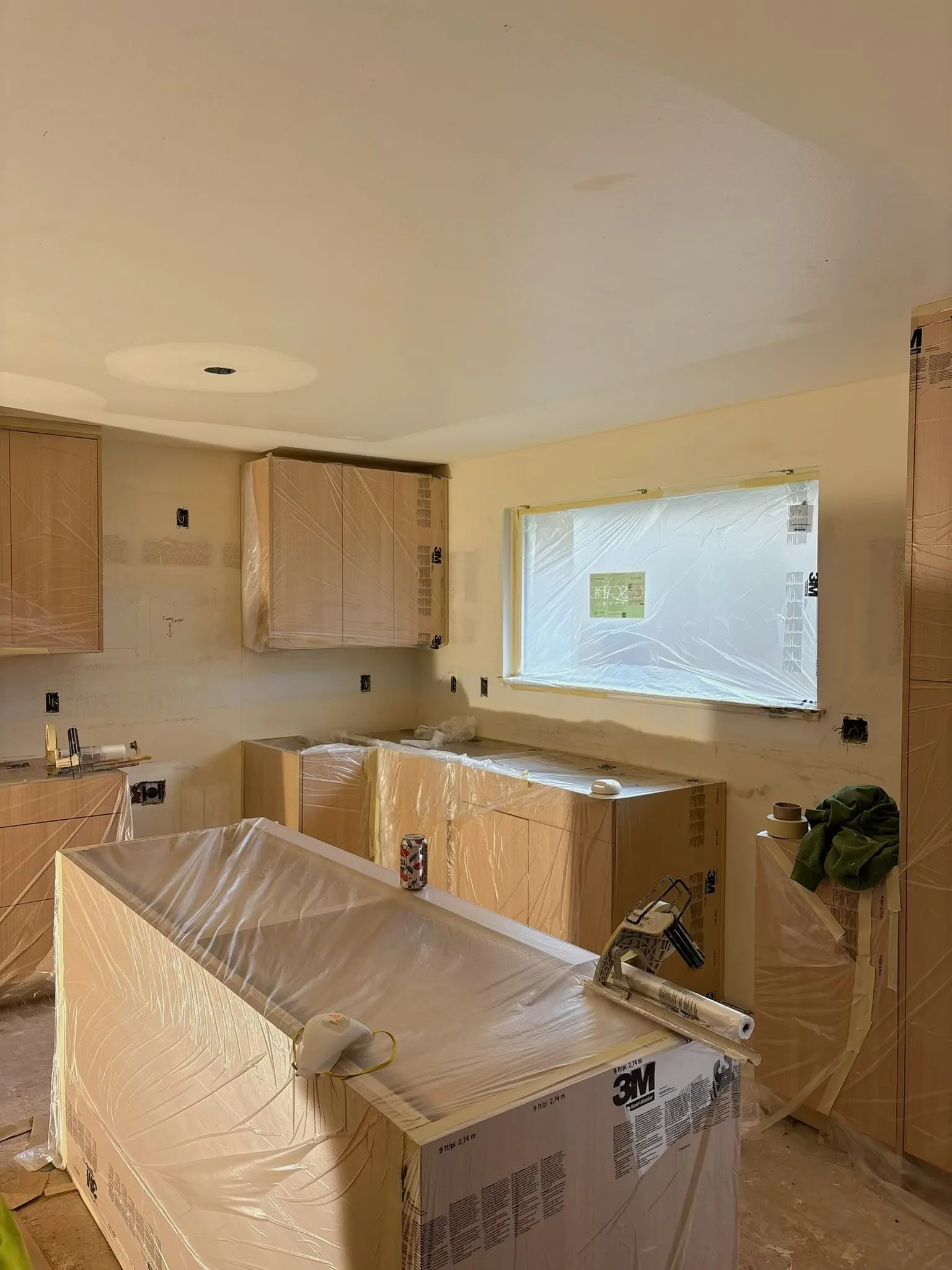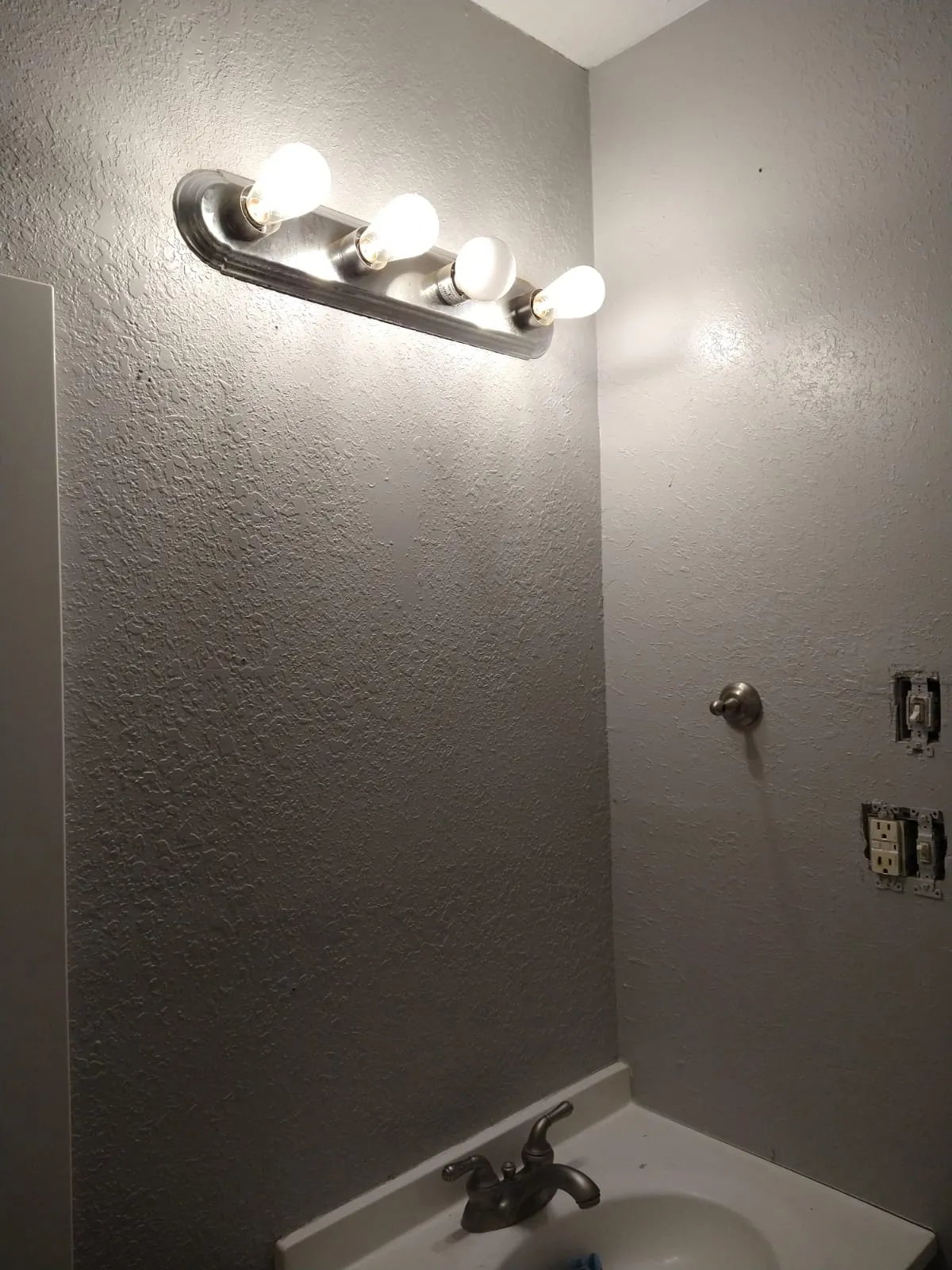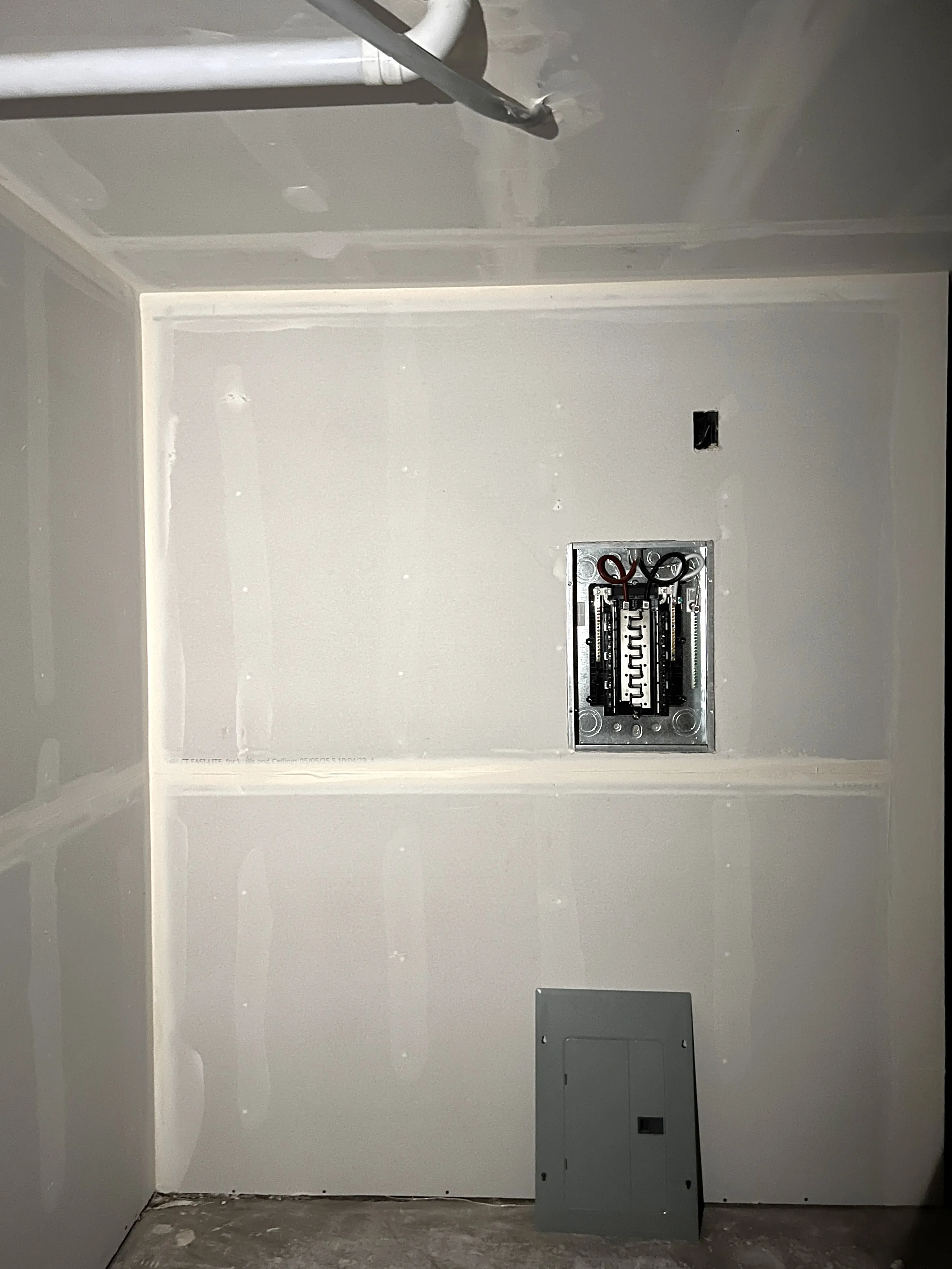
When you're building a new home, finishing a basement, or remodeling a room, one of the first decisions you'll face is what goes on the walls. Drywall, shiplap, and wood paneling are the three options that come up most often, and each one carries different implications for your budget, timeline, maintenance, and the overall feel of the space.
This isn't just an aesthetic choice. The wall treatment you pick affects fire safety, sound insulation, moisture resistance, and resale value. If you're a homeowner in Vancouver, WA or anywhere in Clark County, here's what you need to know before committing.
Why this decision matters more than you think
Walls are the largest surface area in any room. Whatever you put on them sets the visual tone, affects acoustic quality, and determines how much ongoing maintenance you'll deal with for the life of the home. Choosing the wrong wall treatment can mean spending thousands to redo a room five years from now when the trend fades or the material doesn't hold up.
There's also the code question. In Washington state, building code requires fire-rated assemblies for interior walls in habitable spaces. That requirement shapes what you can and can't do with shiplap and paneling in ways that most homeowners don't realize until they're mid-project. We'll get into that below.
Then there's resale. Neutral, well-finished drywall appeals to virtually every buyer. Heavy shiplap or paneling throughout a home narrows your audience. That doesn't mean you should avoid character. It means you should be strategic about where you add it.
Drywall: the industry standard for good reason
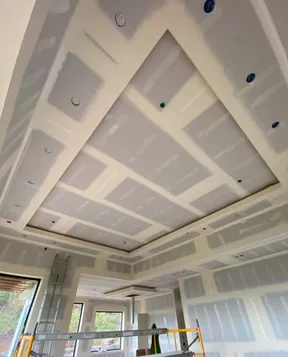
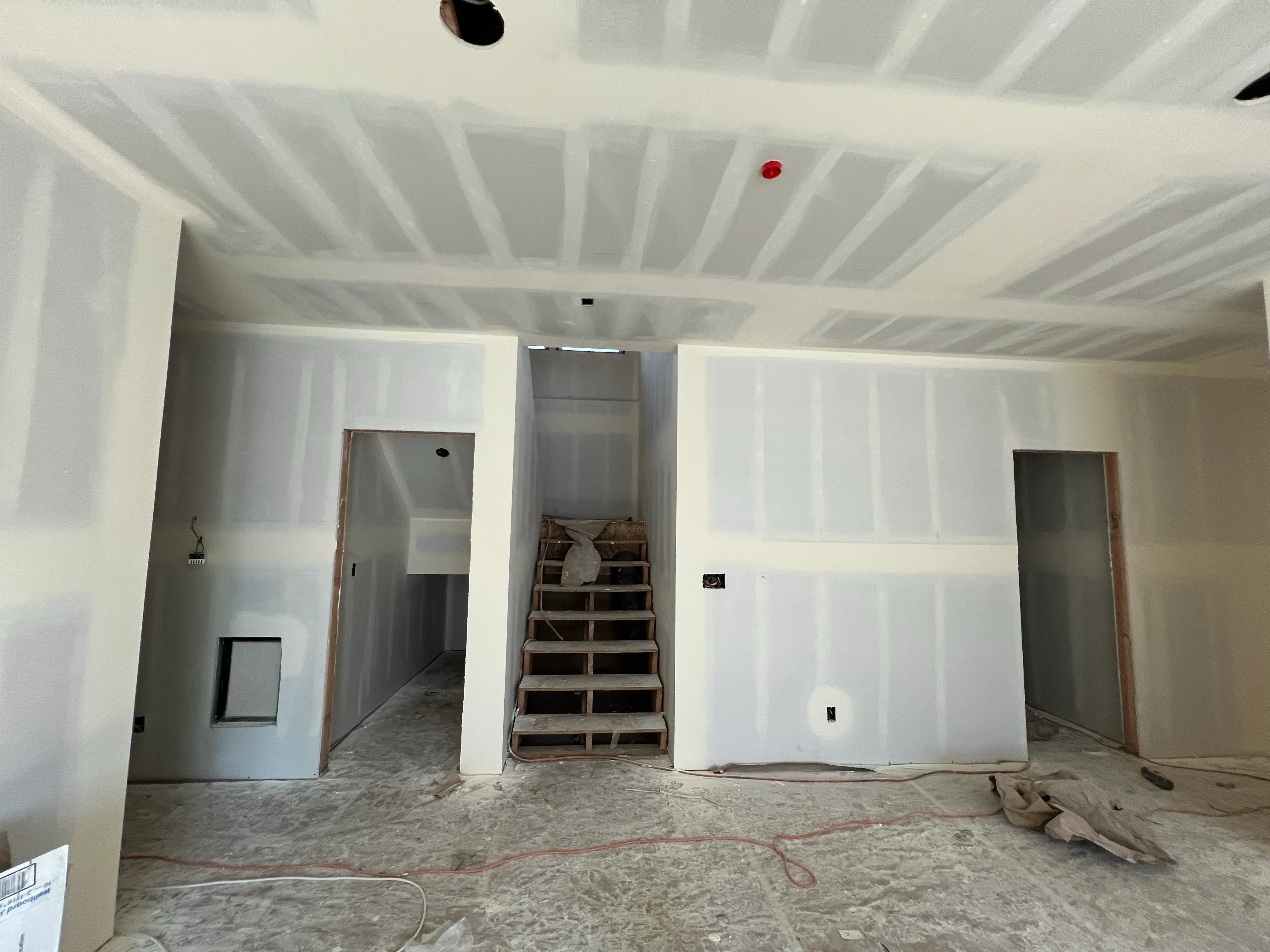
Drywall is the default wall surface in residential construction across the United States, and it earned that position. A standard drywall installation runs $2.50 to $4.50 per square foot fully finished and painted, making it the most cost-effective way to cover interior walls. For a typical 12x14-foot bedroom, that's roughly $1,200 to $2,200 for all four walls, finished and ready for furniture.
Versatility. Drywall accepts any paint color, any wall texture, and any decorating style. You can go from farmhouse to mid-century modern just by changing the paint. Try doing that with knotty pine paneling.
Fire rating. Standard 1/2-inch drywall provides a 30-minute fire rating. Type X 5/8-inch drywall, required in garages and certain multi-family assemblies, provides a 1-hour fire rating. This fire resistance is the primary reason building code requires drywall as a substrate even when you're covering it with another material. Wood burns. Gypsum doesn't.
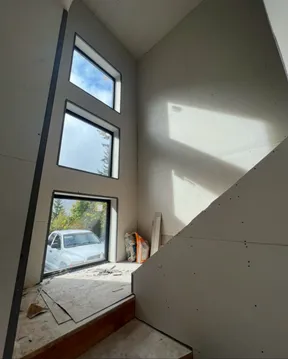
Smooth or textured. Drywall can be finished to a smooth Level 5 surface for a modern, clean aesthetic, or it can receive knockdown, orange peel, or skip trowel texture for visual depth. That flexibility means drywall works in every room of the house, from a formal living room to a utility closet.
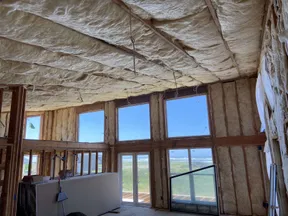
Sound control. Drywall contributes to sound attenuation between rooms, especially when combined with insulation in the wall cavity. Double layers of drywall on shared walls, staggered stud framing, and sound-dampening compound between layers can create serious acoustic separation. Shiplap and paneling can't match this without drywall behind them.
The downsides. Drywall is susceptible to moisture damage. In rooms with high humidity or water exposure, you need moisture-resistant variants like green board or purple board. Drywall also shows imperfections. Nail pops, settling cracks, and seam ridges become visible over time, especially on smooth finishes. And drywall dents more easily than wood. A doorknob or a moved piece of furniture can leave a mark.
Best for: Every room in the house. New construction, rentals, remodels. Drywall is the foundation that everything else builds on.
Shiplap: the trend with hidden costs
Shiplap exploded in popularity thanks to home renovation shows, and it does look good. Real shiplap consists of horizontal wood planks with a rabbet joint that creates a small shadow gap between each board. That gap gives the wall a clean, rhythmic pattern that adds character and visual interest without feeling busy.
Cost. Real wood shiplap materials run $4 to $7 per square foot. MDF shiplap is cheaper at $2 to $4 per square foot for materials. Installation adds $3 to $6 per square foot depending on complexity, corners, and outlet cutouts. For that same 12x14 bedroom, shiplap on all four walls would run $3,500 to $6,500 for materials and labor. And that's on top of the drywall that likely needs to be behind it.
The character factor. Shiplap brings warmth, texture, and architectural interest to a room. It photographs well, which matters if you care about how your home presents online. The horizontal lines make rooms feel wider. The shadow gaps create depth that flat walls lack.
The maintenance reality. Shiplap collects dust in every single gap between boards. If you have allergies, that matters. Painting over shiplap requires getting into those gaps with a brush or sprayer, which takes significantly more time than rolling a flat wall. And once you paint shiplap, going back to a smooth wall means removing every plank and patching the wall behind it.
Fire code. Raw wood shiplap is not fire-rated. In most residential applications in Washington state, you need a fire-rated drywall layer behind shiplap in habitable rooms. That means you're paying for drywall installation plus shiplap installation. Some homeowners don't realize this until the inspector shows up.
Best for: Accent walls in living rooms, bedrooms, or entryways. Farmhouse, coastal, and modern-rustic aesthetics. Shiplap works best as a feature, not as the primary wall surface throughout an entire home.
Wood paneling: the comeback
If you hear "wood paneling" and picture dark, grooved sheets from a 1970s basement rec room, that's not what we're talking about. Modern wood paneling has evolved significantly. Today's options include thin-plank natural wood panels, vertical slat accent walls, reclaimed barnwood, and engineered wood veneer panels that are a fraction of the thickness of old-school sheet paneling.
The old stuff vs. the new stuff. Traditional 4x8 sheet paneling was cheap, fast to install, and looked it. The grooves were printed, not real. The "wood grain" was a photograph glued to a thin composite sheet. Modern plank paneling uses real wood or high-quality MDF with actual dimension and texture. Vertical slat walls use individual boards spaced apart for a dramatic, architectural look. The quality difference is night and day.
Cost. Modern thin-plank wood panels run $5 to $12 per square foot for materials, depending on the species and finish. Reclaimed wood panels are even more at $8 to $15 per square foot. Vertical slat walls, which require individual board installation with precise spacing, can run $10 to $20 per square foot installed. Budget-friendly sheet paneling still exists at $1 to $3 per square foot, but it looks budget-friendly.
The appeal. Wood paneling adds warmth and acoustic softness to a room. Wood absorbs sound better than flat drywall, which is why recording studios and home theaters often use wood treatments on walls. It hides damage well. A scratch on a wood panel adds to the patina. A scratch on drywall looks like damage.
The downsides. Wood paneling is flammable and requires a fire-rated substrate behind it in most residential applications, same as shiplap. The wrong style of paneling can make a room feel dated, dark, or closed in. Paneling also needs an underlayment or furring strips for proper installation, adding labor and material costs.
Best for: Accent walls in dens, home offices, basements, and media rooms. Vertical slat walls in entryways and dining rooms. Feature walls where you want warmth, texture, and acoustic benefit.
The hidden cost most homeowners miss
Here's the detail that changes the math on shiplap and paneling: in most residential applications, you still need drywall behind them.
Washington state building code, like most jurisdictions following the IRC, requires fire-rated wall assemblies in habitable spaces. Standard 1/2-inch drywall satisfies that requirement. Raw wood does not. So when you choose shiplap or paneling for a bedroom, living room, or kitchen, you're typically paying for full drywall installation plus the decorative wood layer on top.
That means the real cost comparison isn't drywall versus shiplap. It's drywall versus drywall plus shiplap. For a single accent wall, the added cost is manageable. For an entire room or an entire floor, it adds up fast. A 1,500-square-foot open floor plan with shiplap throughout could easily cost $8,000 to $12,000 more than drywall alone, once you account for both layers plus the additional labor.
There's also the depth consideration. Drywall is 1/2-inch thick. Adding 3/4-inch shiplap planks on top brings the wall surface out to 1-1/4 inches from the stud face. That affects outlet box depth, window and door trim, and transitions to adjacent walls that don't have shiplap. These details require planning and add to labor costs.
What works in Clark County's climate
Vancouver, WA averages around 40 inches of rain per year, and our winters bring months of sustained humidity. That climate puts extra pressure on wall materials, especially in rooms without consistent climate control like garages, enclosed porches, and basements.
Drywall handles typical Pacific Northwest indoor humidity well when properly finished with quality primer and paint. Moisture-resistant drywall should be used in bathrooms, laundry rooms, and any space prone to water exposure. Standard drywall in conditioned living spaces performs fine here year-round.
Real wood shiplap and paneling are more vulnerable. Wood expands and contracts with humidity changes. In our climate, that means gaps between shiplap boards can open up in dry summer months and tighten in wet winter months. Over several years, this seasonal movement can cause paint cracking at seams, visible gap changes, and in poorly ventilated spaces, mold growth behind the boards where moisture gets trapped between the wood and the drywall substrate.
MDF and composite alternatives avoid the moisture movement problem but have their own weakness. MDF swells and degrades if it gets wet. Composite and PVC shiplap products handle moisture well and are a better choice for bathrooms or high-humidity spaces if you want the shiplap look.
For most homes in Clark County, drywall is the most reliable, moisture-resilient wall surface. If you're adding shiplap or paneling accents, stick to conditioned interior spaces and make sure there's adequate ventilation behind the wood layer.
The practical recommendation
After installing drywall in hundreds of homes across Clark County, here's what we tell homeowners who ask us about wall treatments.
Use drywall as the foundation everywhere. It's the most cost-effective, code-compliant, versatile, and resilient wall surface available. With the right texture and paint, drywall looks as good as anything else and keeps your options open for the future.
Add shiplap or paneling strategically as accent treatments. One accent wall in a living room. A shiplap feature behind the bed in the primary bedroom. A wood slat wall in the entryway. These targeted applications add character and visual interest without blowing up your budget or committing every surface to a single trend.
Don't chase trends on every wall. Shiplap is popular right now. In five years, it might feel as dated as the beadboard wainscoting trend from the 2000s or the oak paneling from the 1990s. Drywall never goes out of style because it's the canvas, not the statement. When you're ready for a change, you repaint. That's a weekend project, not a renovation.
Consider resale. If you plan to sell within 10 years, neutral drywall with one or two well-placed accent walls is the safest play. Buyers want to see themselves in a home, and a blank slate gives them that opportunity.
If you're planning a build or remodel in the Vancouver, WA area and want help thinking through wall treatments, AvilaCo Drywall can help. We handle the drywall foundation, and we can advise on how to prep for shiplap or paneling accents if that's the direction you're going. Get in touch for a free estimate or call us at (360) 904-3878.