One of the first questions homeowners ask us is: how much is this going to cost? Fair question. Whether you're building new in Battle Ground, finishing a basement in Vancouver, or converting a garage somewhere in Cowlitz County, you want a real number before you commit.
The problem with drywall pricing is that the range online is so wide it's almost useless. You'll see everything from $1.00 to $5.00 per square foot with no context. This guide breaks down what drywall installation actually costs in Washington state, what drives the price up or down, and how to make sure you're comparing estimates fairly.
The quick answer on drywall installation cost
For standard drywall installation in Clark County and Cowlitz County, most homeowners pay between $1.50 and $3.50 per square foot installed. That includes board, hanging, taping, mudding, and a standard finish. Texture is sometimes included, sometimes priced separately.
For a typical room, that translates to roughly $800 to $2,000. For a full new construction home, you might be looking at $8,000 to $20,000 or more depending on size and complexity. Those are real numbers from projects we've done across the Vancouver, WA area, not national averages pulled from a database.
But the per-square-foot number only tells part of the story. What moves you from the low end to the high end depends on several factors.
What affects the cost of drywall installation
No two drywall projects cost the same, even if they're the same square footage. Here's what makes the difference:
Total square footage. This is the biggest variable. More wall and ceiling area means more board, more mud, and more labor hours. Keep in mind that drywall square footage includes ceilings, not just walls. A 1,500 square foot home might have 5,000 or more square feet of drywall surface once you account for walls and ceilings in every room.
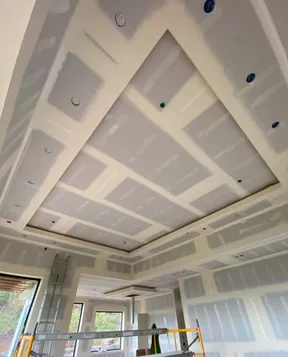
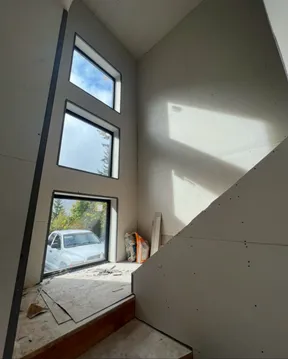
Ceiling height. Standard 8-foot ceilings are straightforward. Once you get into 9-foot, 10-foot, or vaulted ceilings, the crew needs scaffolding, the sheets are harder to handle overhead, and the work takes longer. Tall ceilings are common in newer homes around Battle Ground and Ridgefield, and they add real cost to the project.
Board type. Standard 1/2-inch drywall is the least expensive. But your project might call for 5/8-inch ceiling board, moisture-resistant board in bathrooms, fire-rated Type X in the garage wall, or mold-resistant board in a basement. Specialty boards cost more per sheet and can add 10 to 25 percent to your materials cost.
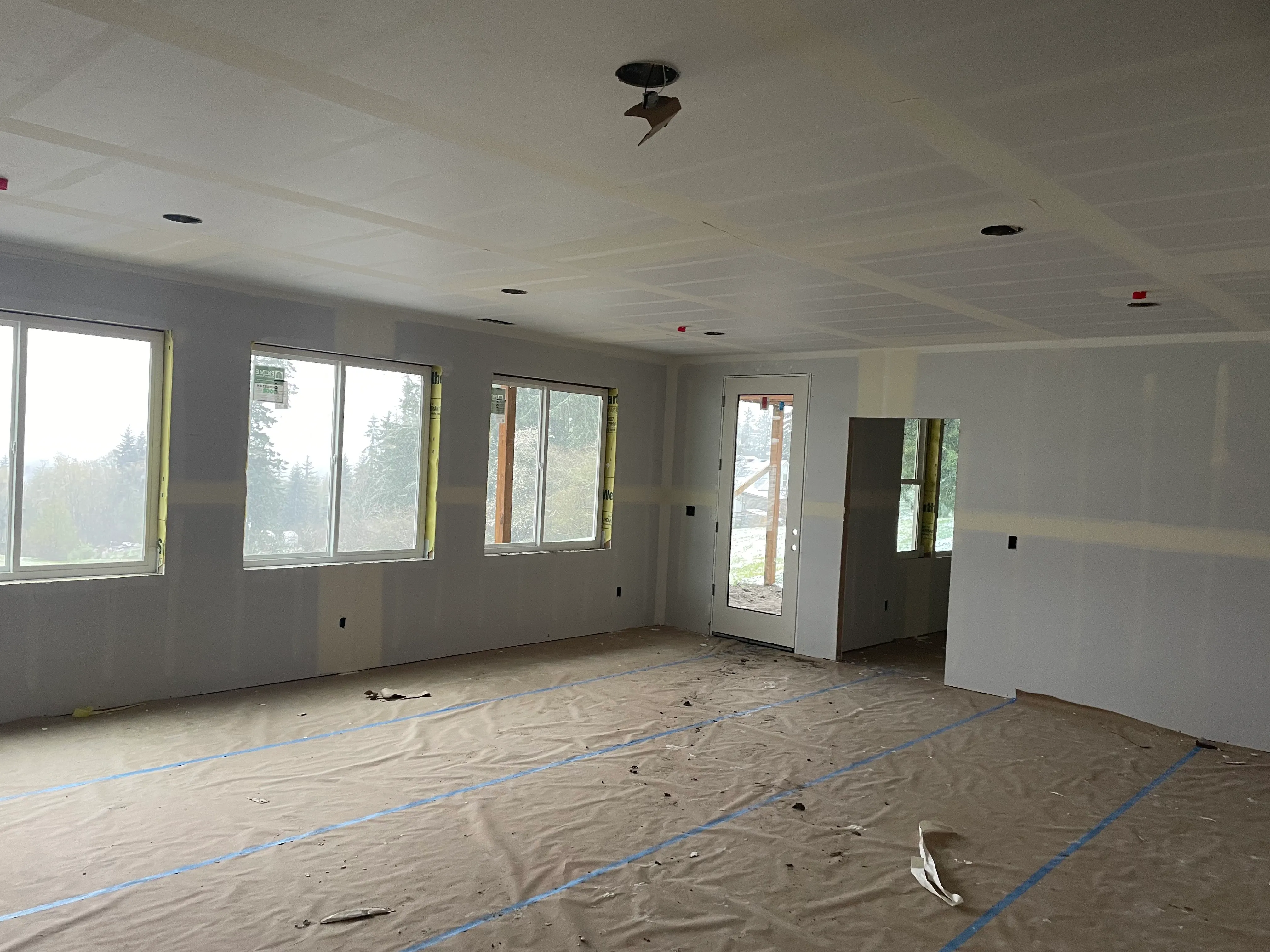
Finish level. A Level 3 finish (good enough for textured walls) costs less than a Level 4 or Level 5 finish. Level 5 involves skim-coating every surface and is reserved for smooth walls with glossy or dark paint. Most residential work lands at Level 4 with texture.
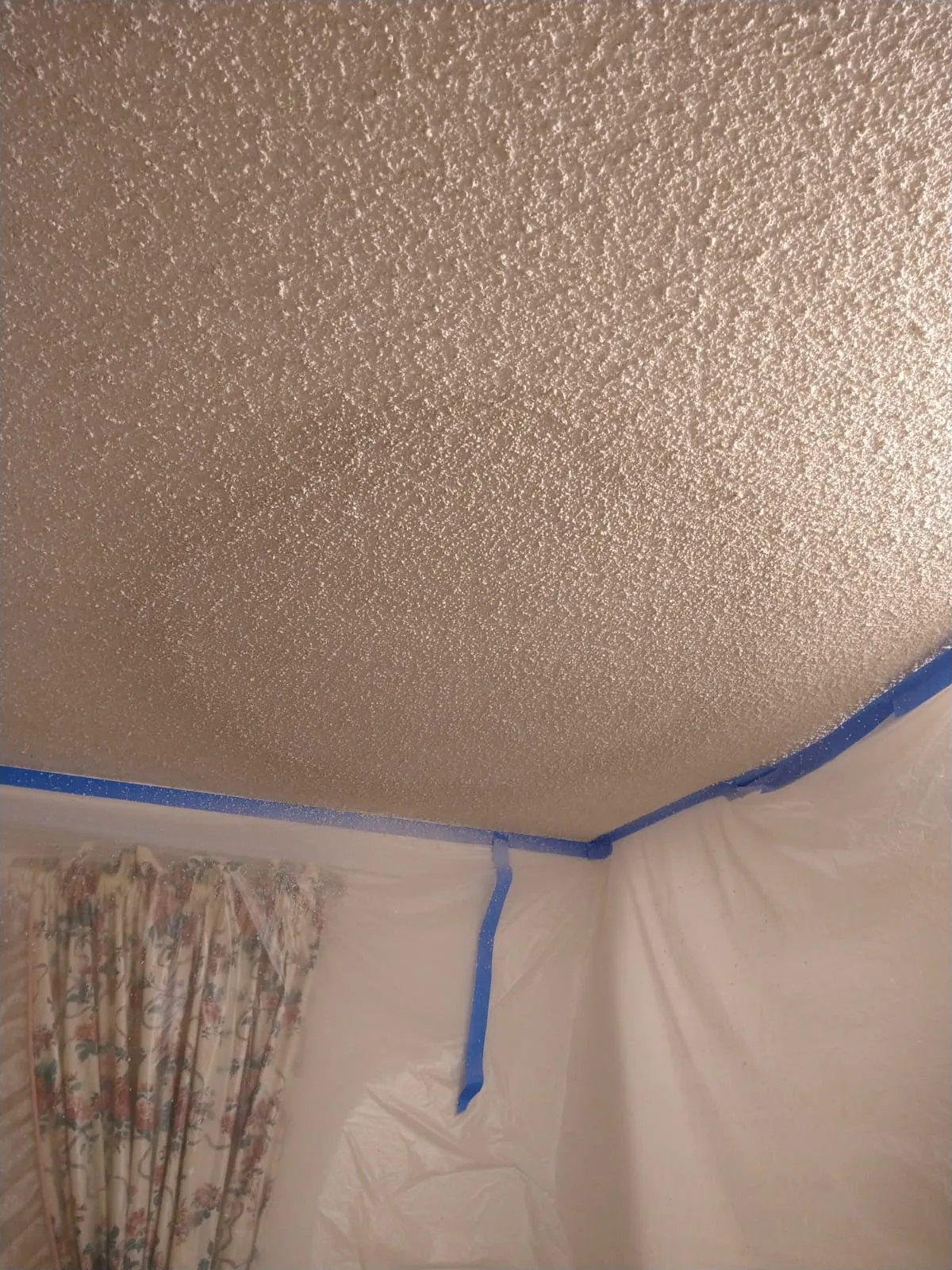
Texture type. Hand-applied textures like skip trowel and knockdown take more skill and time than a sprayed orange peel. The texture you choose affects both the look and the price. Matching existing texture on a remodel is another cost factor entirely.
Access and layout complexity. Open floor plans with long, uninterrupted walls are easier to board than homes with lots of small rooms, hallways, archways, and built-in niches. More cuts, more corners, and more detail work means more labor.
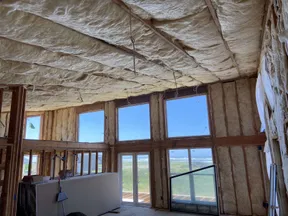
Insulation needs. If your project also requires insulation, that work happens before drywall and adds to the total. Bundling both with one contractor can save you money compared to hiring two separate trades.
Drywall cost by project type
Here are ballpark ranges for common projects in the Clark County and Cowlitz County area. These assume standard board types and a Level 4 finish with texture unless noted otherwise.
Single room patch or small repair: $300 to $800. This covers cutting out damaged sections, patching, taping, and blending the texture. Drywall repair pricing depends heavily on the size and number of areas involved.
Basement finish: $3,000 to $8,000. Basements in western Washington often need moisture-resistant or mold-resistant board, which adds to the cost. Ceiling height and whether you're drywalling around ductwork and beams also matter.
Garage conversion: $2,500 to $5,500. Fire-rated board is required on shared walls with the living space. Most garage conversions also need insulation, and some need framing adjustments before drywall can go up.
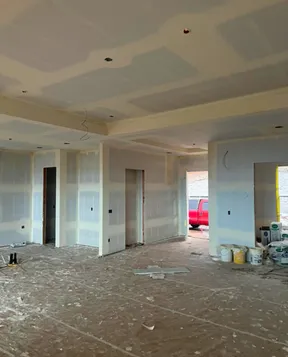
Full new construction home (1,500-2,500 sq ft): $8,000 to $20,000. New builds move faster and cost less per square foot than remodels. The final price depends on home size, ceiling heights, number of rooms, and finish level.
Whole-home remodel: $10,000 to $25,000+. Remodels involve demolition, disposal, working around existing finishes, and often require texture matching to blend new work with old. This is the most variable category.
Materials vs. labor: where the money goes
A lot of homeowners assume drywall board is the expensive part. It's not. On a typical residential drywall installation, the cost split looks roughly like this:
Materials: about 30 percent. This includes drywall sheets, joint tape, joint compound (mud), screws, corner bead, and any specialty board. A standard 4x8 sheet of 1/2-inch drywall runs a few dollars. Even specialty boards aren't breaking the bank on a per-sheet basis.
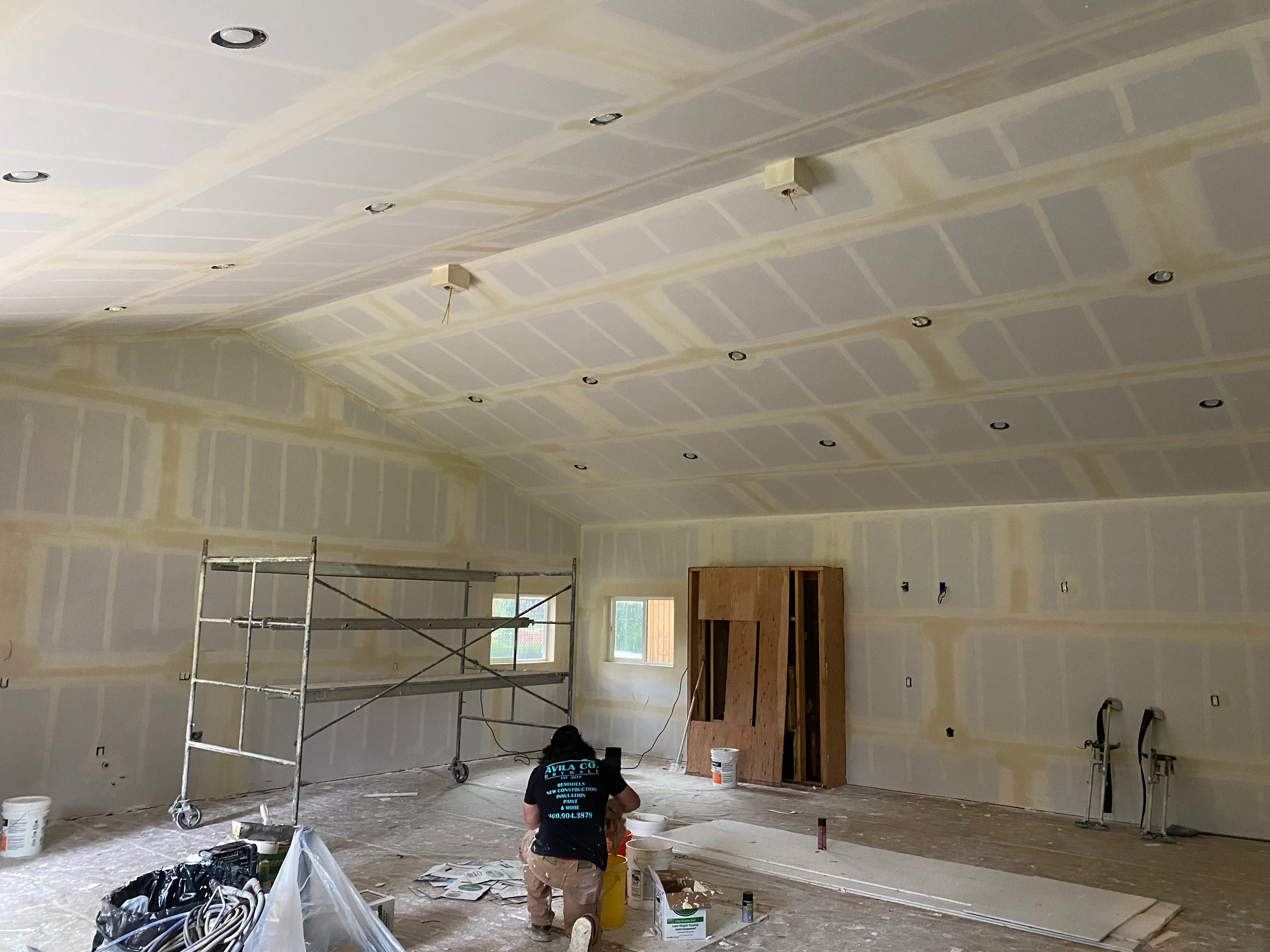
Labor: about 70 percent. This is where the real cost lives, and there's a good reason for it. Drywall installation is physically demanding and skill-intensive work. Hanging ceiling boards overhead, taping and mudding joints so they disappear, sanding everything smooth, and applying texture evenly across every surface takes trained hands and experience.
The taping and finishing phase is especially labor-heavy. Each coat of joint compound needs to dry before the next one goes on. Most projects need two to three coats, sometimes more for high-end finishes. That's multiple days of skilled work spread across dry time. There's no shortcut that doesn't show up in the final result.
This is also why the cheapest bid isn't always the best value. A crew that rushes through the finishing process or skips a coat will leave you with visible seams, nail pops, and uneven texture that you'll notice every day after the paint goes on.
Hidden costs to watch for
The drywall estimate is one piece of the puzzle. Here are costs that catch homeowners off guard if they're not on the radar:
Insulation. If the wall cavities are open and uninsulated, insulation needs to go in before drywall. This is an additional cost, but it's not optional. Building code requires it, and it makes a real difference in energy efficiency and comfort, especially through a Clark County winter.
Electrical and plumbing rough-in delays. Drywall can't go up until all the in-wall work is done and inspected. If your electrician or plumber is behind schedule, your drywall project gets pushed back. These delays don't cost you on the drywall estimate itself, but they extend your overall project timeline and can create scheduling conflicts.
Moisture or mold remediation. On remodels, you sometimes find problems behind the old drywall. Water damage, mold, or rot in the framing. This has to be addressed before new board goes up. It's an unexpected cost, but it's one you can't ignore.
Texture matching on remodels. If you're drywalling one room in a home where the other rooms have an existing texture, the new texture needs to match. This is harder than it sounds, especially with older hand-applied textures. It takes a skilled finisher and sometimes extra time to get the blend right.
Disposal and cleanup. Drywall generates waste. Cutoffs, old board from demolition, sanding dust. Some contractors include disposal in their price. Others charge separately. Ask before you sign so there's no surprise at the end.
Getting accurate drywall estimates
The best way to know what your drywall installation will cost is to get two or three estimates from licensed contractors in your area. Here's what to look for and what to watch out for:
Itemized beats lump sum. A good estimate breaks out the work: hanging, taping, texturing, materials, disposal. This lets you compare estimates on an apples-to-apples basis. If one contractor's number is 40 percent lower than the others, look at what's missing from the scope rather than assuming you found a deal.
Board type should be specified. The estimate should state what type of drywall they plan to use and where. If it just says "drywall" with no detail, ask. You want to know they're using the right board in the right places.
Finish level and texture should be clear. Are they giving you a Level 3 finish with orange peel, or a Level 4 with knockdown? These aren't the same cost, and they're not the same result. Get it in writing.
Red flags. No written estimate. No proof of insurance. A price that's dramatically lower than everyone else. Wanting a large deposit before any work starts. Subcontracting the work to a crew you've never met. Any of these should give you pause.
Ask about the crew. Will the same crew that hangs the board also do the taping and texturing? Continuity matters. A crew that handles the full drywall installation process from start to finish takes ownership of the work in a way that passed-around projects don't.
If you're in Vancouver, WA, Clark County, or Cowlitz County and want a straight answer on what your project will cost, reach out to us for a free estimate. We'll walk through the scope, give you an itemized price, and answer every question you've got. No pressure, no games. Call us at (360) 904-3878.